


- Capital One Ventures led a $150 million investment in Sentra and will be joining its board.
- Unit 8200’s former commander and former cyber chief co-founded Sentra.
- The company intends to expand its field and channel sales, enhance its brand and marketing and enter new markets.
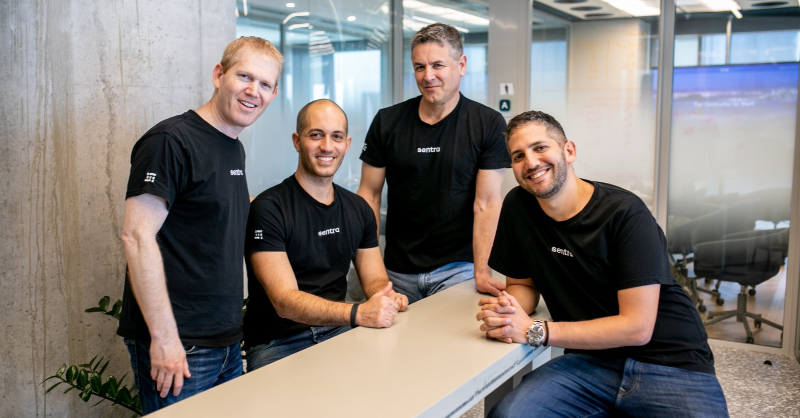
Asaf Kochan headed Israel’s cyber intel Unit 8200 until early 2021. Together with Yoav Regev, who had previously led the unit’s cyber division, he launched Sentra in 2021 to help companies locate and protect their sensitive cloud data.
Capital One Ventures just invested $150 million in Sentra and will be joining the board.
The announcement ties the funding to over 300% YoY growth. Based in New York and Tel Aviv, the company has five existing investors: Bessemer Venture Partners, Zeev Ventures, Standard Investments, Munich Re Ventures and Key1 Capital.
With the new funds, the company’s total funding now exceeds $250 million.
From Unit 8200 to data at rest
Kochan headed Unit 8200 for four years, while Regev spent almost 25 years in Israel’s military intelligence community and left as a colonel and head of the cyber department. Another co-founders, CTO Ron Reiter, sold his startup Crosswise to Oracle for $50 million in 2016, and Yair Cohen, product lead, was a senior product manager at Datadog.
Before launching Sentra, the four founders reached out to about 200 companies to gauge their data awareness. Standard Investments led the $30 million Series A in January 2023, and Key1 Capital led the $50 million Series B in due course.
Sentra’s primary offering is still data visibility. AI agents that operate on company data are now the primary consumers of enterprise data, and many have access to unclassified files.
“AI agents are now the busiest consumers of enterprise data, and many of them inherit access to data that hasn’t been fully classified or governed. Traditional perimeter controls weren’t built for agents moving at machine speed. What organisations can do is make sure the data those agents reach is already secured. Sentra protects data where it lives and controls which identities, human and AI, can reach it, so organisations can deploy AI more quickly while staying in control,” said Sentra co-founder and chief executive Yoav Regev.
Sentra reviews data stored in advance. Before an agent takes any action, it identifies and classifies sensitive data, maps who has access to it, and removes any access that isn’t required. It will flag and remove any anomalous access while the agent is active, then report what the agent would have been able to reach, providing business context for the security, legal, and compliance teams.
It consolidates four older product types, such as data security posture management, data detection and response, data access governance, and data loss prevention, and analyses data in the customer’s environment without ever copying it.
Why a bank is taking a board seat
Capital One Ventures positions itself as a strategic investor and has previously made investments in this space. In March 2023, it, along with Citi Ventures, invested in Securiti, a Sentra competitor which Veeam agreed to acquire for $1.725 billion in October 2025. The portfolio also comprises Snowflake and security analytics company Securonix.
Sentra will allocate funds to four product areas: visibility into the agents, copilots, models, and the sensitive data they can access; continuous least-privilege access for all identities; protection of data at rest before agent access; and rapid containment of any unexpected agent behaviour.
The company also intends to expand its field and channel sales, enhance its brand and marketing and enter new markets. Dealroom reported 85 employees for Sentra in April 2025.
The Cyera problem
Cyera is the benchmark for Sentra’s funding rounds. Tech Funding News reported that Cyera’s valuation rose fourfold to $12 billion in 18 months after a $600 million raise in June 2026. Cyera reported 3.4x YoY growth after raising $400 million in January and remains an active buyer.
Others are merging too. Securiti is now part of Veeam. Google Cloud owns Wiz, which has used Sentra’s data classifications in its security graph since April 2026. Another group is watching the agents as they work: Zenity raised a $125 million Series C in August 2026, led by Norwest, to enable them to control agent activity within company systems.
Sentra takes a different approach, focusing first on securing the data and doing considerably less agent monitoring.
TFN have seen the same trends play out in smaller-sized funding rounds. Crux Labs is benchmarking its AI agents against human judgement, and Saviynt raised $700 million at a $3 billion valuation for its identity security business. Grand View Research estimates the market at $2.2-$2.5 billion in 2026, with a 13.9% CAGR through to 2033.
Sentra plans to collect the data first and then monitor the agents. The competition, with more money and more M&A, is building platforms that do both. The fresh investment buys them more time, but whether it translates into real market share will depend on factors not revealed in the release, such as how many agents companies actually use and who will pay for governance.



