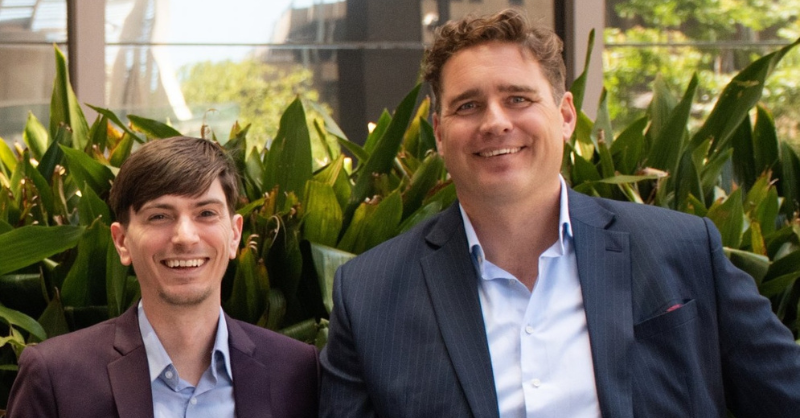
- After Rondo and Antora both turned down the founder’s offer to run the projects, he set up the development company himself.
- Good Heat raised €2 million in a funding round led by SET Ventures, with Shell Ventures and Investible also joining in.
- Good Heat sells steam via 10- to 20-year contracts. Project Arcadia is aiming for financial close in April 2027.
In late 2024, Bauke van Gent asked Rondo, Antora, and other thermal storage companies for a budget so he could develop and finance projects using their heat batteries. All of them said no.
Today, his startup, Good Heat, raised €2 million, led by SET Ventures with Shell Ventures and Investible, to become what the others chose not to be.
The pitch the manufacturers turned down
Van Gent was previously head of commercial at Neoen in Australia, where he was involved in the offtake deals for wind, solar and battery projects. His colleague Tom Geiser left Neoen in 2023 to lead Rondo Australia, and that’s when Van Gent first came across heat batteries, which “are great at soaking up cheap electrons and then converting them to heat.”
The big issue is cost. Van Gent puts the capital required for Project Arcadia, Good Heat’s Australian project, at €70 million, and European projects are likely to be the same or even more. Industrial buyers are reluctant to spend that kind of money on these projects, as he says, “they want to deploy that balance sheet to making better toilet paper.”
Van Gent admits it made perfect sense for the manufacturers to say no as they’re in the business of selling technology, not of running projects. He left Neoen in early 2025 to set up Good Heat.
Geiser joined from Rondo at the end of 2025. They raised A$2 million last year, mostly from Australian investors, to develop Arcadia, and moved their HQ to Amsterdam in mid-2025.
How the model works
Good Heat develops, finances, owns and operates heat batteries at the customer site and sells the steam under a Heat Purchase Agreement. The contracts are typically for 10, 15 or 20 years, with the customer committing to a minimum annual heat volume.
The price can be fixed or a discount to a gas benchmark. Industrial buyers can generally only lock in gas prices for one or two years, so a long-term contract provides cost certainty and enables financing.
To protect its margins, Good Heat hedges its electricity input costs via long-term power purchase agreements, and it also has a battery charging flexibility product that it can monetise. It trades directly in Australia and works with trading platforms in Europe. The company is in discussions with several infrastructure funds about project finance.
Van Gent says there are no direct competitors at the moment. Most of the money in the space is going to technology: Epyr’s €15 million Series A in October is a good example, as is Antora’s $550 million Series C.
Pipeline: six European projects under exclusivity
Good Heat has a pipeline of over 100mwt across the Netherlands, Belgium, Germany and Poland via partnerships with energy companies. Van Gent has two in the Netherlands, two in Belgium, one in Germany and one in Poland, all under exclusivity. The Dutch and Belgian projects are the most advanced. The customers are in the chemicals, food and general manufacturing sectors, though no names have been given.
In Australia, Arcadia has both a technology provider and an offtaker in place and is looking at financial close in April 2027.
Industrial heat is a massive market, and almost 90% of it still comes from fossil fuels. The cost of that dependence is absolutely apparent at every site we visit.
“Industrial heat is an enormous market: a fifth of all the energy the world uses, and almost 90% of it still comes from fossil fuels. The cost of that dependence is obvious at every site we see. We have built a pipeline across two continents, and this financing lets us scale the team to deliver it. Our message to industry: take the heat, leave the project to us,” added van Gent.
An oversubscribed round, aimed at Europe
Van Gent says the round was oversubscribed even after they increased the size. This is SET Ventures’ first investment in industrial heat. Its fourth fund is €200 million, and typical initial investments are in the €2-5 million range, so this is at the lower end.
“Industrial heat isn’t held back by technology; it’s held back by the complexity of delivering and financing the projects. We’ve seen this play out in wind and solar: once independent developers took over, the market scaled. Our research into industrial process heat pointed to exactly this model, and Bauke and Tom have the track record to build it,” said Anton Arts, managing partner at SET Ventures.
The funding will be used primarily for headcount and software development. Good Heat currently has five people on board (three in Amsterdam, two in Australia) and plans to add five more to the Amsterdam team soon, with further growth expected in Sydney.
Van Gent anticipates that grid congestion will drive buyers toward storage solutions. He believes heat batteries are “cutting off fossil fuels, but also cutting off the constraints we see on the grid today.”
Arcadia’s financial close in April 2027 will indicate whether infrastructure funds share this perspective.