- Bessemer Venture Partners raised $5.75 billion in a single close across two new funds.
- The firm split the capital $1.75 billion for early-stage bets and $4 billion for growth deals.
- It joins Accel, Kleiner Perkins and Bain Capital Ventures in stacking fresh AI capital this year.
Bessemer Venture Partners has spent more than a century deciding which technology shifts are real and which are noise. Its verdict on AI: real enough to justify $5.75 billion in new capital, and split almost evenly toward two very different kinds of conviction. Of that total, $1.75 billion goes to seed and early-stage investing, and $4 billion goes to growth-stage deals.
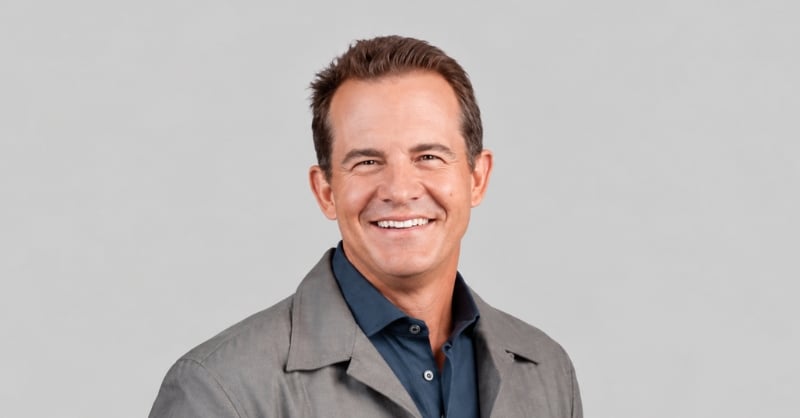
Bessemer Partner Byron Deeter said the shift reflects how AI-native companies are compounding. “AI-native companies are scaling faster than any category of technology we’ve backed before,” he said, adding that the expansion of the firm’s growth practice is built to let it lead “concentrated, high-conviction rounds” whether it met a company at seed or is meeting it for the first time.
Betting across the AI stack
Founded in 1911 and headquartered in Redwood City, California, Bessemer has backed more than 260 AI-native companies since 2022 and deployed over $3 billion across the stack, from compute and infrastructure to foundation models and agents.
Roughly 70% of its investments are still made at the early stage, a discipline the firm says the new $1.75 billion fund is designed to protect even as its growth ambitions expand.
Bessemer Partner Jeremy Levine framed it as continuity: “While the playbook has evolved, our conviction has not: identify transformative technology shifts early, back exceptional founders before the market fully recognizes the opportunity, and continue investing as their ambition compounds.”
Bessemer’s vision is easiest to read in its own book. Perplexity, a Bessemer-backed AI search company, reached a $23 billion valuation in January 2026. Abridge, an AI medical-scribe platform also in its portfolio, raised $300 million at a $5.3 billion valuation. AI inference infrastructure company Baseten, another Bessemer holding, closed $1.5 billion at up to a $13 billion valuation earlier in 2026. Add Anthropic, Cognition, Ramp and Waymo, and the growth-stage thesis stops sounding theoretical: these are companies raising at a pace that would have looked reckless three years ago and now looks routine.
VCs are raising bigger pools for AI
Bessemer isn’t alone in deciding that more capital is the only way to keep a seat at the table through a company’s entire life. Accel closed $3.5 billion across four funds in 2026, including a $1.35 billion global expansion vehicle plus $800 million each for the US and for Europe and Israel, and $550 million for India. Bain Capital Ventures closed its eleventh fund at $1.6 billion earlier in September, targeting early AI infrastructure and physical AI. Kleiner Perkins raised $3.5 billion across two funds in March 2026, split $1 billion for early-stage bets and $2.5 billion for growth.
The pattern across all four firms is the same: build one pool that can write a first check and another that can defend a position all the way to a late-stage round, because the companies that matter aren’t going public on the old schedule anymore.
Bessemer says its early-stage and growth arms will now run as a single, continuous strategy rather than two separate businesses waiting for the other to hand off a company. Whether that structure survives the next downturn in AI valuations is the more interesting question than the size of the check.