


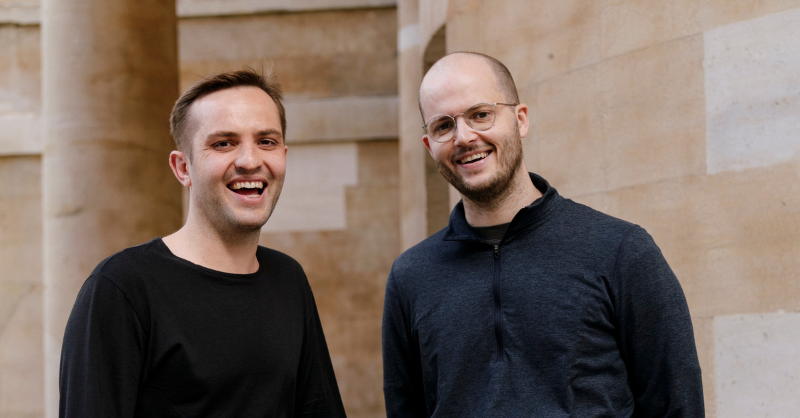
- Scarlet has attracted $50 million in its Series B financing round, with Headline acting as the lead investor and Notion Capital joining as a new investor.
- The team that previously worked on medical AI at Babylon Health is now focused on getting AI medical devices certified.
- The recently raised funds will allow Scarlet to expand its operations in the United States and the Asia-Pacific region and hire more reviewers. The company has not disclosed its present valuation.
James Dewar and Jamie Cox were both involved in the development of medical AI at Babylon Health, a London-based telehealth company that had a market value of $3.5 billion following its 2021 SPAC transaction. The UK portion of Babylon entered administration in August 2023.
The company they have set up, Scarlet, is now responsible for deciding whether other companies’ AI medical devices can be sold. Today, Scarlet announced its $50 million Series B funding round, with Headline acting as the lead investor.
Notion Capital is joining the round as a new investor; the London-based company recently completed a $130 million growth fund and also supports Kraken Technology Group, a maritime defence unicorn. The existing investors Atomico, Creandum, Kindred Capital and Entrepreneurs First are also participating in this round.
Scarlet raised £6 million in a seed round organised by Creandum in August 2022 and $17.5 million in a Series A round led by Atomico in June 2024. Based on these calculations, Scarlet’s total funding is now estimated at more than $75 million after the most recent round.
From Babylon engineers to three years of regulatory work
Founded in 2021, Scarlet works with regulatory authorities to obtain the necessary designations before it can issue certificates. It is currently regarded as an EU notified body, is approved by the MHRA as a UK approved body, and appears on the US Food and Drug Administration’s list as a recognised third-party review organisation under Scarlet NB B.V.
Scarlet claims that its greatest benefit is speed. It points out that it takes only a few weeks to train an AI diagnostic model, but assessment can take 12 to 18 months, and minor updates can take an additional six to eight months.
On each day that safe and effective medical technology is not available, a person’s life takes a different turn. That is why Scarlet was created, said Dewar in the announcement. The company is developing AI-native certification to help its customers bring cutting-edge innovations to patients worldwide.
Who pays, and who else is involved
Customers can upload technical documentation in any format to Scarlet’s platform. Qualified reviewers check the documentation against applicable regulations and decide whether a product can be released. The subscription includes continuous surveillance, annual audits, and product adjustments.
Scarlet says it records all findings, enabling regulators to examine the reasons for each decision at any time. For example, Flok Health, which is based in Cambridge, operates an AI physiotherapy clinic and aims to release device upgrades twice a month.
Scarlet’s list of customers includes Flo Health, which has reported more than 500 million downloads; the US radiology provider DeepHealth; NHS England; the cancer-detection company Skin Analytics; and the two AI scribe companies, Heidi and Tandem Health.
Scarlet states that it is the sole specialist in software and AI among the approximately 52 bodies designated under the EU Medical Device Regulation. While well-known notified bodies such as BSI, TÜV SÜD, and DEKRA certify devices across a variety of categories, Scarlet concentrates exclusively on software and AI.
How Scarlet plans to use the $50 million, and the market outlook
The money will help Scarlet expand its operations in the United States and the Asia-Pacific region, hire additional AI reviewers and engineers, and provide a broader range of certification services. The company has not stated how many people it currently employs.
As Xiao McLaughlin, partner at Headline, stated, “Scarlet helps regulation work with and for, not against, innovation. James and Jamie experienced the legacy certification process firsthand and decided to become the AI-native market enabler, starting with certifying AI and software as medical devices.”
The market for AI medical devices will reach $12.46 billion by 2025, up from $10.08 billion in 2024. The other report forecasts $12.8 billion for 2024, with the market rising to $124.6 billion by 2033 at an annual growth rate of 28.7%. The tenfold difference by 2033 illustrates just how uncertain these predictions are.
Scarlet’s customers can decide how frequently they want new products released, but Scarlet decides how quickly these products are approved. The real difficulty arises if Scarlet has to publicly refuse certification to a manufacturer who is paying for it in the US, the Asia-Pacific region, or Europe.



