


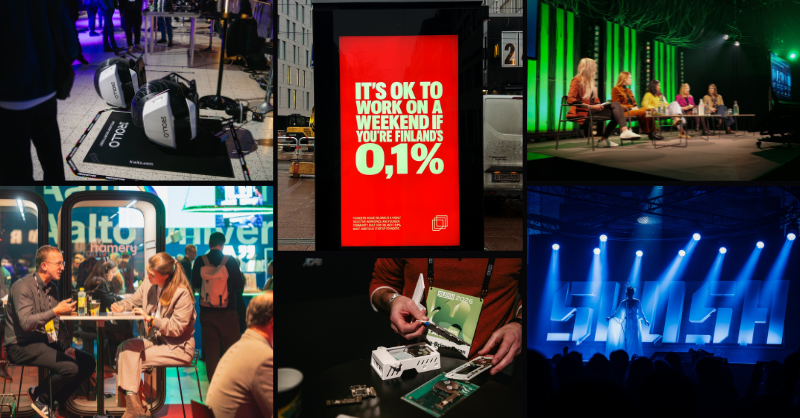
Returning to Helsinki for Slush 2026, Tech Funding News was on the ground to observe an intentionally scaled-back event: overall attendance was trimmed by 10% to engineer a tighter, near one-to-one ratio of founders and investors.
Still, over 12,000 attendees packed into Messukeskus for an intense schedule comprising more than 50,000 scheduled meetings and over 200 speakers across four stages.
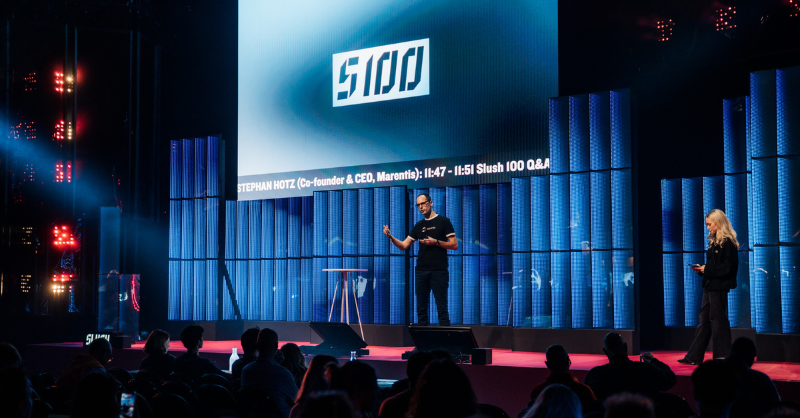
The smaller crowd changed the conversation. Now that software is cheap to generate, European investors are looking for moats that cannot be copied in a weekend: physical assets, deterministic precision, and institutional trust.
Software is no longer the moat
In a conversation with TFN, Patrik Backman, general partner at OpenOcean, said software alone no longer sets a company apart, as tools like Claude can build a working app over a weekend. His firm is skipping another subscription product for small businesses and buying slow, manual ones to automate from the inside.
Other investors wanted precision over novelty. Sebastian Peck, partner at Kompas VC, which manages €300 million across two funds backing heavy industry, manufacturing, and construction, told us work such as fluid dynamics and aircraft design needs models of cause and effect, not the educated guesses of a language model.
Meanwhile, Andreas Riegler, founder and general partner at APEX Ventures, brought the same scepticism to a 50-company portfolio that includes microgravity biotech labs, re-entry capsules, and satellites that run AI in orbit before sending an alert.
“We don’t have a data problem, we have a decision problem,” he emphasised.
Founders House shows the new builder baseline
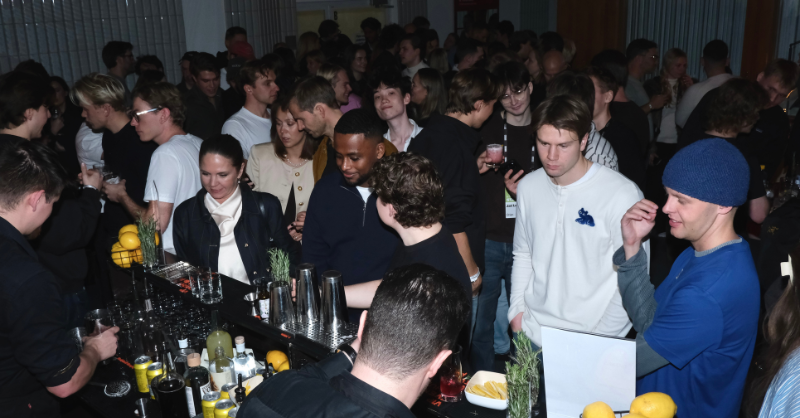
Founders House Helsinki, a startup space co-hosted with OpenAI, held a reception on November 17, which we attended. Its CEO, Kia Kanninen, said resident teams have raised money at a combined valuation above $100 million in eight months, without a single demo day.
Most of the startups on stage were chasing paperwork. Treat, which launched that day, helps patients find specialists and understand what insurance covers; meanwhile, Tulova automates invoicing for the EU’s one million or so repair and maintenance businesses, a headache co-founder Lauri Handin knows from running one.
Stoa, an operating system for construction, tracks $4 billion in site value. Way, launched in June, is raising a seed round for a fleet manager aimed at tradespeople, and Ailion helps private equity firms screen acquisition targets 10 times faster, co-founder Lauri Hänninen said.
Antti Törrönen, a veteran angel and quantitative investor who has attended Slush since 2014, shared with TFN that many founders put AI on their slides but still outsource product development to outside teams. If anyone can build, the edge moves to distribution and trust.
Proof is expensive
Hard evidence costs real money in industrial deep tech. Jacob Nathan, founder of London-based Epoch Biodesign, said the company uses AI to design plastic-eating enzymes and predict how they scale.
To prove the economics, Epoch bought and restarted a Spanish nylon plant with a capacity of 52,000 tonnes a year, which Nathan said is roughly 10% of the region’s capacity and lets Epoch compete with oil-based plastics on price. It has raised $50 million, including from Lululemon, Inditex, and VW Group.
That capital intensity runs into a funding wall. Slush’s Startup Struggle Survey of 607 early-stage European founders found 58.1% name fundraising as their top challenge, down from 63% in its 2024 edition.
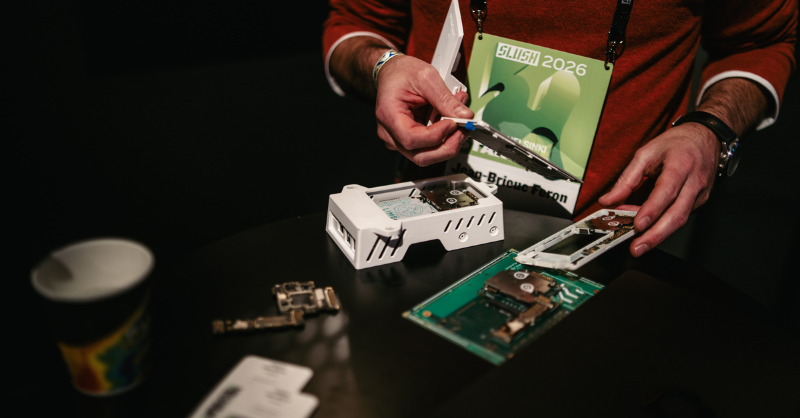
Juha Riippi, CEO of Quanscient, added that aircraft makers such as Airbus and Embraer can spend up to $150 million on wind tunnel testing for one model. Combining classical physics simulation, quantum computing, and AI could cut that bill by 75% to 80%, he said, with early quantum advantage one to three years away.
A separate report from Amazon Web Services, released at Slush on November 19 and based on interviews with nine venture firms, found European health startups hit a gap at Series B, just as clinical and regulatory costs peak.
“AI compresses the cost of creation, not the cost of trust,” added Samantha Jérusalmy, partner at Elaia. Building is cheap. Selling into hospitals, factories, and regulators is not.
Climate stayed in the room
Nathan conceded climate is out of favour as a label. At a brunch on November 19, which we visited, Chris Stein, partner at Lightrock, which manages $6 billion, noted energy shortages and AI’s appetite for power are reviving investor interest anyway.
Atomico’s State of European Tech report forecasts $81 billion of European startup investment in 2026, even as early-stage funding fell 30%.
The next 12 months are the test. Cheap code has made the pitch easier to write and the business harder to prove. The roll-ups, restarted plants, and AI tools that Slush’s investors backed will show whether proof at scale is a trend or just this year’s slogan.
Disclosure: TFN’s coverage of Slush was supported by Helsinki Partners. Editorial coverage remains independently produced by TFN.



