- The AI recruiting platform Jack & Jill has obtained $40 million in its Series A funding round, with Air Street Capital acting as the lead investor.
- A $20 million seed round took place ten months ago, bringing the company’s total funding to $60 million.
- Matt Wilson, a co-founder, previously sold his final startup, Omnipresent, to Deel for a reported $15 million.
The AI recruiting platform Jack & Jill, based in London, just raised $40 million in a Series A funding round, led by Air Street Capital, with Madrona and Antler joining as new investors, while Creandum, Ada Ventures, Entrepreneurs First, Expedite Capital, and Repeat.vc were among the previous investors.
This financing comes after Jack & Jill raised $20 million in its seed round ten months ago, bringing the total amount raised so far to $60 million. The company states that its candidate network has increased tenfold to 350,000 people.
“The next leap in hiring will not come from better searches over the same resumes or more automated outreach. It will come from putting an agent on both sides of the table and making the introduction only when both sides would take the call,” said Nathan Benaich, a general partner at Air Street Capital, a firm that has previously invested in Synthesia and Wayve.
In a competitive job-hiring environment where candidates can use AI to send out hundreds of applications every day while employers can reject them just as swiftly, trust fails on both sides.
“Candidates struggle to be seen, while employers cannot tell who is serious. More applications and better filters will not solve that. It requires a fundamentally different solution: a marketplace brokered by agents that understand what both sides want,” added Saaras Mehan, co-founder and chief technology officer.
A founder’s second chapter
Matt Wilson co-founded Omnipresent, an employer-of-record company, in 2019 and took it to a $600 million valuation before it was acquired by Deel in October 2025 for $15 million, according to Dealroom.
Ten months on, he is now seeking from investors four times the amount paid when the company was acquired, with the aim of building a company with a much larger objective: to provide a hiring agent for a billion people by 2030.
Mehan, who is also a co-founder, had earlier founded Kular, an AI sales startup that received funding from Y Combinator, and had at one time played chess for England before entering the recruitment field.
The fact that this partnership combines a person who sold a company at a price below market expectations with an engineer renowned for his strategic thinking underscores the background of this financing.
How Jack and Jill work in practice
Jack conducts telephone interviews with candidates to learn about their job preferences, collecting insights that Mehan believes databases or scrapers cannot capture. Jill conducts similar interviews with hiring managers and then matches candidates with employers based on these conversations rather than on keyword matches alone.
When both agents agree that a match has been made, the candidate is given a direct introduction to the hiring manager, bypassing the normal application procedure.
Jack & Jill are now operating in a competitive environment. Mercor has raised $100 million at a $2 billion valuation for its AI-driven technical interviews; Juicebox has secured $30 million for its PeopleGPT search tool; and smaller firms such as AINA are also pursuing similar concepts.
While most competitors focus on improving resume filtering, Jack & Jill believes that resumes should not be the starting point and that voice conversations provide unique insights. It remains an open question whether this approach can be scaled to serve more than 5,000 companies without simply becoming yet another database.
The money, the growth, and the open questions
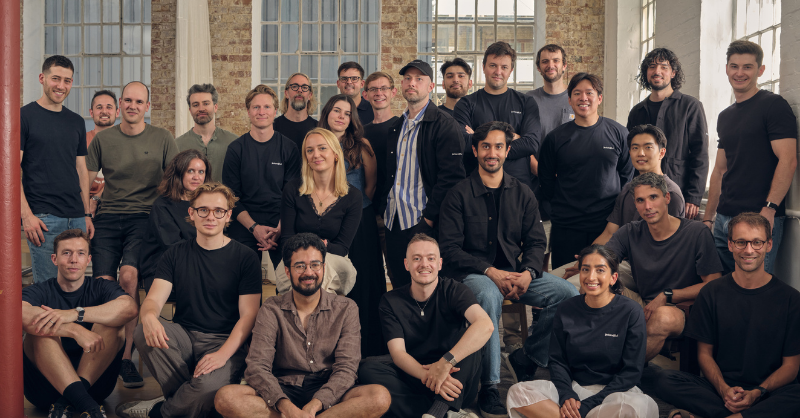
The money it has received will be used to fund its expansion in the United States, following launches in San Francisco in January and in New York in June. Since the seed financing round, Jack & Jill has seen its revenue increase by forty times. The company’s team of 25, based in London and San Francisco, includes 15 former founders.
On the clients’ side, Jill has dealt with 5,000 companies, including Ramp, Attio and Fyxer.
The global recruitment software market was worth $3.4 billion in 2025 and is expected to reach $7.5 billion by 2034, while other research firms provide markedly different estimates, underscoring the uncertainty around the market size.
It is clear that if Jack & Jill’s agent-matching model fails to beat out traditional recruiters and job boards, it will come under close examination. Wilson is already aware of the difficulties involved in having to sell the business for less than anticipated.
The current funding round will indicate whether investors see his experience as having made him a better founder or merely more determined.