


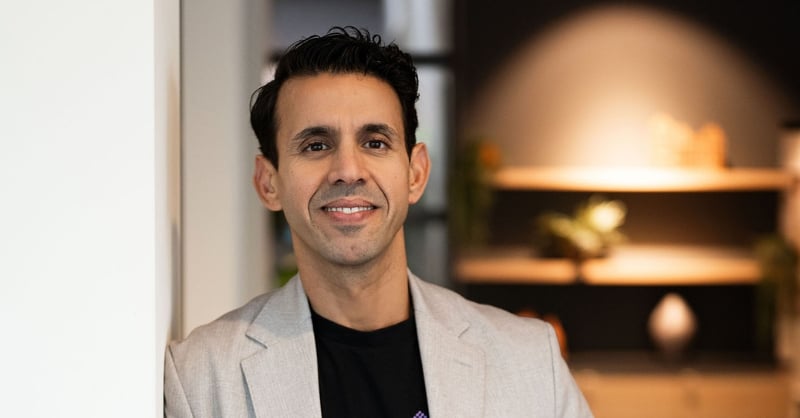
- Dutch startup Indurex has raised €7M in a round led by Contrarian Ventures.
- Its software flags risky changes to plant engineering and safety settings.
- SANS found 22% of surveyed organisations had an industrial cyber incident in 2025.
Most industrial cybersecurity tools watch the network. Indurex looks at the data underneath it: the engineering settings, protection configurations and safety functions that decide whether a plant runs within safe limits. The Amsterdam startup has raised €7 million in a round led by Contrarian Ventures, with Axeleo Capital and Curiosity participating.
Indurex, founded in 2025 and out of stealth since January 27, 2026, sells a platform called SafeGuard AI to operators in oil and gas, energy, utilities, manufacturing and data centres. It pulls data from distributed control systems, which run a plant’s processes; safety instrumented systems, which shut a process down when conditions turn dangerous; industrial historians, which record process data; and existing security tools.
AI agents then flag anomalies and engineering deviations that need a human to look at them. Gartner named Indurex a Cool Vendor in its Coolest Vendor Innovations in Cyber-Physical Systems Security, 2026 report, published on September 14. Gartner says it does not endorse the vendors it lists.
“Cyber defenses in these critical sectors have focused solely on the network. We focus on the core industrial data itself: the engineering, process and safety signals that determine whether a plant is operating within safe limits. Cybersecurity and operational excellence have too often been managed as separate disciplines — Engineering Intelligence is the missing layer, and this funding allows us to bring that capability to more operators across critical infrastructure,” said Jalal Bouhdada, founder & CEO of Indurex.
Why watching the network is not enough
Traditional operational technology security platforms, which protect the hardware and software that run physical equipment, mainly monitor network activity and connected assets. Indurex says that misses a different kind of risk: changes to engineering configurations, protection settings and safety functions that could create physical danger.
Its platform pairs that view with threat detection, automated compliance reporting and recommended actions for people to carry out. The reporting matters to operators working to the international industrial security and safety standards IEC 62443, IEC 61511 and IEC 61508, and to the EU’s NIS2 cybersecurity directive.
A climate fund leads an industrial security round
Contrarian Ventures is better known for climate tech than for cybersecurity. The Vilnius-based fund, founded in 2017, invests at pre-seed and seed stage with cheques of 1 million to 4 million euros, and has backed PVcase, BeZero Carbon and Zoomo. TFN covered the launch of its second fund, targeting €100 million, in August 2022.
“Electrification is putting more critical infrastructure online, and attacks on it are rising, with the damage felt in the physical world: cold homes, dark hospitals, water that stops flowing. Detection alone is no longer enough. Operators need to understand what an alert means for the physical process behind it. Having built and sold a company in this space, Jalal knows what operators across oil and gas, power and manufacturing need, which makes Indurex one of very few companies that understands both the network packet and the physical process,” said Peciulaitis, founder & managing partner at Contrarian Ventures.
The other two backers are early-stage specialists too. Axeleo Capital, a French venture firm, backs business-to-business software and counts Yogosha and Alsid among its cybersecurity exits. Amsterdam-based Curiosity, founded in 2021 by Herman Kienhuis and Maurice Beckand Verwée, backs pre-seed and seed AI software startups and announced a €17 million first close for its second fund on June 9, 2026.
The money will fund research and development and commercial expansion across Europe and the Middle East, with growth in the US and Asia-Pacific to follow. Indurex has not said which investors are new, or disclosed its total funding, valuation, headcount or round type. In January, Bouhdada told SecurityWeek the company was preparing a pre-seed round.
A crowded field, and its biggest names are being bought
Indurex is entering a category that large buyers are consolidating. Accenture agreed in June 2026 to take a majority stake in Dragos at a $3.25 billion valuation. ServiceNow agreed in December 2025 to buy Armis for about $7.75 billion. Mitsubishi Electric’s acquisition of Nozomi Networks has followed the same pattern. Claroty took a different route and raised $150 million in a Series F in January 2026, led by Golub Growth, with up to $50 million more committed by existing investors.
Rome-based Exein, which TFN covered when it raised €100 million in December 2025, then secured $270 million at a $1.7 billion valuation in a round led by Headline, announced on September 15. Exein is aiming at a different target: security for robots, drones and vehicles.
Money is plentiful for early rounds but thin per deal. Axeleo’s quarterly index, published by an Indurex investor, counted 459 million euros raised across 33 European cybersecurity deals in the third quarter of 2026, and Exein’s round alone made up 55% of it. Pre-seed and seed deals were 70% of the total by count.
The demand case rests on a survey. The SANS Institute’s 2025 State of ICS/OT Security survey, which drew on 330 practitioners, found that 22% of organisations reported a cyber incident in their industrial control or operational technology environments in 2025. Of those incidents, 40% disrupted operations, and nearly one in five took more than a month to fix. Unauthorised external access started half of them. Accenture, which bought into the category in June, estimates that OT security will be worth about $27 billion in 2026 and almost $59 billion by 2031.
Consolidation leaves room for a specialist, and it raises the stakes on the one claim Indurex has to prove: that physical risk shows up first in a plant’s engineering data. Operators will settle that with contracts, and the announcement names no customer.



