


- NEA led Corma’s $125M Series A at a $1B valuation.
- The round comes three months after a $60M seed led by Sequoia.
- Corma says its server capacity has grown 24-fold since August.
As AI makes cyberattacks faster and more sophisticated, enterprises are under pressure to strengthen their defences. Corma, a frontier AI lab developing foundation models for defensive cybersecurity, has raised $125 million in Series A funding at a $1 billion valuation.
NEA led the round, with existing investors Sequoia Capital, Khosla Ventures and Coatue also taking part. It arrives three months after Corma emerged from stealth on August 10 with a $60 million seed round led by Sequoia, and takes total funding to $185 million.
Corma says demand has surged since August across the Fortune 100, Fortune 500 and Fortune Global 500. Its customers span healthcare, financial services, energy, retail and telecommunications. To keep up, Corma says it has expanded server capacity 24-fold.
Building AI specifically for cyber defence
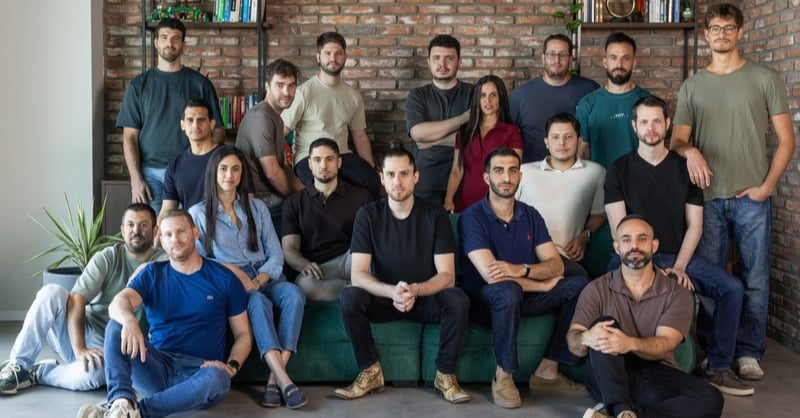
Corma was founded in 2025 by Alon Pluda, its CEO and co-founder and an alumnus of Israel’s Unit 8200. It is headquartered in Tel Aviv and San Francisco and employs about 25 people.
Its argument is about imbalance. Frontier labs are pouring resources into coding, and a model that gets better at writing software also gets better at finding vulnerabilities.
Corma says defence is a different job. It means digging through audit logs, security events and network flows, correlating weak signals across systems over long periods, and staying consistent across thousands of decisions in a row.
The team includes researchers from Google DeepMind and cybersecurity specialists from Unit 8200.
An autonomous AI workforce for security teams
Corma does not sell a standard security product. It deploys its foundation model as an AI workforce that operates inside an organisation’s existing security tools and, it says, handles tasks across the full range of defensive work.
The pitch got a boost in October. A wave of critical vulnerabilities and breaches, including serious flaws in the PHP programming language, sent security teams scrambling. CNBC reported that some experts had dubbed the moment “Black October.”
“Cybersecurity is now a battle of intelligence against intelligence, and Black October made that impossible to ignore. Since we came out of stealth, demand from the world’s largest organizations has been overwhelming, and one of our hardest problems has been securing capacity fast enough to keep up with the demand,” said Pluda.
Competition in autonomous cybersecurity
Corma is not the only startup selling AI to security teams. Qevlar AI raised $30 million in March for an autonomous security operations centre platform. Brava Security raised a $15 million seed round in November to find the attacks AI security agents miss. London-based Geordie AI raised a $30 million Series A led by Balderton in May to secure the AI agents themselves.
Each of those works on one slice of the security stack. Corma positions itself differently, as a model lab whose systems are built to generalise across defensive tasks.
AI cybersecurity market attracts investment
Grand View Research valued the AI in cybersecurity market at $31.5 billion in 2025 and expects it to reach $182.9 billion by 2033, a compound annual growth rate of 24.7%.
“Corma is building the intelligence layer that defensive security needs.As AI gives attackers an advantage, Corma’s combination of frontier AI research and deep cybersecurity expertise has the potential to help organizations defend against these threats at scale. Corma is the only company taking this on in a way that is scalable across organizations to prevent the next big cyberattack,” said Aaron Jacobson, a partner at NEA.
Corma has not said how it will split the new money. It says it is scaling its models and AI workforce, and capacity is the constraint Pluda named.
The harder question is whether a defence-only model can stay ahead of general-purpose labs whose coding gains also make attackers better.



