


- Brava Security has raised a $15 million seed round, led by Pitango and F2 VC.
- Brava’s AI agents check whether a company’s security logs can detect potential attacks.
- Markets and Markets say the AI security operations market will be worth $47.07bn by 2031.
When Idan Basre led product management for Microsoft Defender, he saw security teams struggling with investigations because they couldn’t get the data they needed. Basre is now CEO of Brava Security, which he co-founded with Itay Gabbay, and which just emerged from stealth with a $15 million seed round led by F2 Venture Capital and Pitango.
Brava’s multi-agent AI creates simulated attack logs without carrying out any attacks. The security tools then pull that telemetry for analysis. Brava identifies what attacks current defences would miss and helps close those gaps, without requiring any of the companies’ existing tools to be replaced.
AI agents are increasingly used in security operations centres, known as SOCs, that monitor company systems for attack. Basre points out that this rapid adoption completely bypasses a crucial step.
“Everyone is racing to put AI in charge of the SOC. You can’t automate a decision based on evidence no one ever proved. We’re solving the problem that comes before AI can make the right decision: making sure the security infrastructure actually sees the threats it’s supposed to detect,” said Basre, co-founder and CEO of Brava Security.
Checking how well SOCs can see attacks
As organisations use more cloud services and AI tools, the risk grows that the logs we need aren’t collected, data pipelines break without anyone noticing, and detection rules miss attacks. AI agents can review alerts quickly, but they can’t investigate an attack no one has seen.
The startup, founded in 2024, focuses on modelling attacker behaviour and how each technique would appear in the logs. For each customer, they determine what an attack would look like in their environment and then test what defences would catch. They then update the detection rules and data feeds that would have missed the attack.
Those rules go into the SIEM, the security information and event management software that collects and searches logs. Brava also works with security teams during an investigation.
“The hard part of security was never writing detections. It’s knowing exactly what an attack will look like in a specific environment, across all of its log sources, before it ever happens. That’s the problem our models were built to solve,” said Gabbay, co-founder and CTO at Brava Security.
Brava says it provides initial insights in the 10-15 minute window after onboarding and can connect to Splunk, Google SecOps, CrowdStrike, and over 70 other sources and destinations. The company describes the technology as working without ever running an attack.
Brava says it has Fortune 100 clients across retail, energy, and hospitality, including Cushman & Wakefield and WELL Health, one of Canada’s largest healthcare companies.
The competition to manage the SOC
The AI security operations market is expected to be worth $18.10 billion in 2026 and $47.07 billion by 2031. Most investment to date has gone to AI agents: Torq raised $140 million in a Series D at a $1.2 billion valuation in January 2026, and Exaforce secured $125 million in a Series B. In Europe, French startup Qevlar AI also uses AI to investigate alerts.
Brava takes a different approach and checks whether the alert would have been triggered in the first place.
Closer to Brava’s ground, Fig Security was founded in March 2025 by ex-Israeli military tech unit personnel and raised $38 million in seed and Series A in March 2026 to look for security failures. Pentera raised $60 million at a valuation above $1 billion in March 2025 to run attacks against its defences. Cribl acquired detection-engineering startup CardinalOps in July 2026.
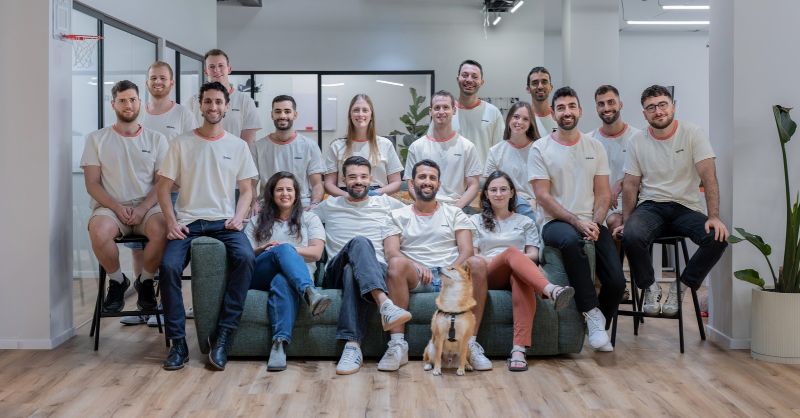
The funding will help Brava develop its technology and expand in North America, focusing on financial services and government. Brava has about 20 people in total, with R&D based in Israel and a growing commercial team in the US.
The question for Brava’s investment is whether security leaders will buy into that validation before they hand over decision-making to AI agents.



