


Glycosylation is a natural cellular process in which sugar molecules, called glycans, are attached to proteins, lipids, or other molecules. It is one of the most common post-translational modifications of proteins.
It occurs in both normal and cancer cells. It helps proteins fold correctly, remain stable, communicate with other molecules, and reach the correct location within a cell.
These sugar structures are not simply added randomly. Cells use specific enzymes to build and modify glycans in a controlled sequence. Since cancer cells can alter:
- Gene expression
- Enzyme activity
- Cellular metabolism
- Availability of sugar building blocks
- Protein processing pathways
This further contributes to the development of abnormal glycosylation patterns. This is often called cancer-associated glycosylation. As a result, processes such as cell adhesion, signaling, migration, immune recognition, and tumour progression get affected. This is why researchers study proteins and enzymes involved in glycosylation when investigating cancer biology. Here is where anti-FUK antibody come into play.
What is anti-FUK antibody?
FUK, or fucokinase, is an enzyme involved in the metabolism of fucose, a monosaccharide found in many biologically important glycans. Fucose can be incorporated into glycoproteins and glycolipids and contributes to the structural and functional properties of glycans.
Fucose metabolism is connected with the cellular pathways that supply substrates for glycan biosynthesis. Changes in these pathways may influence the availability and utilisation of fucose in cells.
Cancer cells frequently undergo metabolic and molecular changes that support rapid growth and adaptation. So, researchers study proteins involved in fucose metabolism using anti-FUK antibody. This helps them investigate whether altered fucose-related pathways are associated with tumour development, cellular signaling, or other cancer-associated processes.
Anti-FUK antibodies are antibodies designed to recognise the FUK protein. Depending on the antibody and its validation, researchers may use them to detect FUK in biological samples such as cell lysates, tissue extracts, or cultured cells.
Common research applications may include:
- Western blotting
- Immunohistochemistry
- Immunofluorescence
- Immunoprecipitation
- Protein localisation studies
Role of anti-FUK antibodies in cancer-associated glycosylation research
Study altered glycosylation in cancer cells
Researchers use anti-FUK antibodies to investigate whether FUK expression or localisation changes between normal and cancerous cells.
They compare FUK protein levels in:
- Normal tissues and tumour tissues
- Non-transformed and cancer cell lines
- Different cancer subtypes
- Cells exposed to different growth conditions
- Primary tumour samples and matched controls
They use techniques like western blot to compare relative FUK protein abundance between samples. They also use immunohistochemistry to understand where the protein is expressed within tissue.
These experiments can help establish whether changes in fucose metabolism accompany cancer-associated changes in glycosylation.
Investigate the relationship between fucose metabolism and tumour biology
Cancer-associated glycosylation is not simply a change in the amount of glycans. It can involve changes in glycan structures, branching, terminal sugars, and the enzymes and metabolic pathways responsible for producing them.
Since FUK participates in fucose metabolism, researchers examine its relationship with these broader processes.
They investigate whether changes in FUK expression occur alongside alterations in glycan profiles usinf anti-FUK antibodies. They combine protein detection with glycomic or glycoproteomic techniques to provide complementary information.
This approach can help connect changes at the protein level with changes in cellular glycosylation.
Support cancer cell signaling studies
Glycosylation can influence receptors, adhesion molecules, and other proteins involved in cell signaling. So, altered glycosylation affects processes such as proliferation, migration, adhesion, and interactions with the tumour microenvironment.
Anti-FUK antibodies can support experiments designed to determine whether FUK-associated changes occur alongside alterations in these cancer-related pathways.
Researchers compare FUK protein expression with markers of:
- Cell proliferation
- Cell migration
- Cell adhesion
- Apoptosis
- Cellular differentiation
- Tumour-associated signaling
Such studies can help determine whether fucose metabolism is associated with specific cancer phenotypes.
Examine FUK protein localisation
Where a protein is located within a cell can provide important information about its biological role.
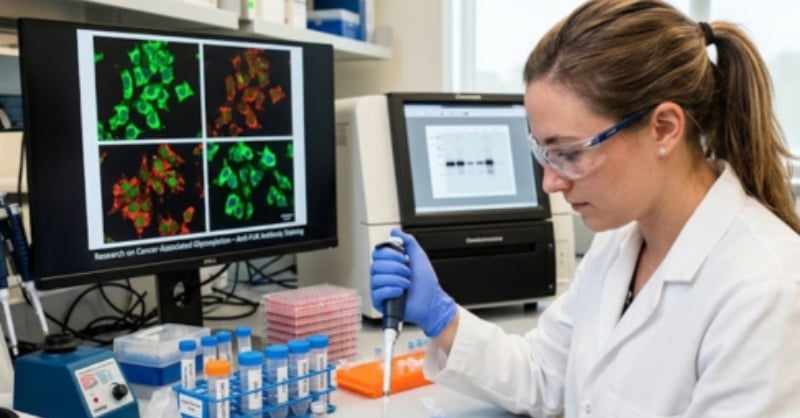
So, researchers use immunofluorescence techniques and anti-FUK antibodies to visualise FUK distribution in cultured cells. This helps them examine whether the protein is predominantly associated with particular cellular compartments and whether its localisation changes under specific experimental conditions.
When combined with other cellular markers, these experiments can provide a more detailed picture of how FUK-related processes may fit into cellular metabolism and glycan biosynthesis.
The bottom line
Cancer-associated glycosylation involves complex changes in the production, modification, and utilisation of cellular glycans. Researchers investigate fucose metabolism to understand these changes.
They use anti-FUK antibodies to detect and localise the FUK protein in cancer-related experimental models. They combine antibody-based protein analysis with glycomic, proteomic, genetic, and functional approaches. This helps them build a more comprehensive understanding of how fucose metabolism relates to cancer-associated glycosylation.
However, selecting a well-validated anti-FUK antibody and confirming its specificity for the intended FUK target is crucial for research applications. Otherwise, you may end up having inaccurate results. So, find a trusted supplier to buy high-quality antibodies now!



