


Nvidia announced planned minority investments in nine European startups, four in France and five in the UK, without disclosing a single cheque size or valuation.
The move comes amid a wave of major funding rounds, including Mistral AI’s €3 billion Series D and Oxford photonics startup Salience Labs’ $125 million raise, alongside Helsing’s €1.8 billion Series E to scale AI-powered defence technology.
Nvidia’s latest investments span healthcare, robotics, drug discovery, enterprise planning and quantum computing, although individual investment amounts have not been disclosed. Alongside these minority stakes, the chipmaker has pledged $250 million worth of computing resources over five years to support UK AI safety and security research.
Tech Funding News covered the French and UK announcements separately. This piece looks at all nine together, and at what Nvidia is likely buying.
Genesis AI

Founder/s: Zhou Xian, Théophile Gervet
Founded year: 2025
Total funding: $105M
Genesis AI builds foundation models for robots and a physics simulation engine that generates their training data. It was founded in late 2024 by Zhou Xian, who holds a robotics PhD from Carnegie Mellon, and Théophile Gervet, formerly of Mistral.
The Paris and Palo Alto company emerged from stealth in July 2025 with a $105 million seed round co-led by Eclipse Ventures and Khosla Ventures, with Bpifrance, Eric Schmidt and Xavier Niel also in.
Bloomberg has reported talks for about $500 million at a $3 billion pre-money valuation, led by Premji Invest. Genesis has not confirmed them.
Pigment

Founder/s: Eléonore Crespo, Romain Niccoli
Founded year: 2019
Total funding: $389M
Pigment sells planning software that lets finance, sales and operations teams model scenarios in one place.
Co-founders Eléonore Crespo, a former Google analyst and Index Ventures investor, and Romain Niccoli, a Criteo co-founder and its former CTO, started it in 2019. Its $145 million Series D in April 2024, led by ICONIQ Growth with Sandberg Bernthal as a new investor, was one of the rounds that lifted it into Europe’s unicorn ranks.
French daily Les Echos first reported the Nvidia stake.
Doctolib

Founder/s: Stanislas Niox-Chateau, Jessy Bernal, Steve Abou-Rjeily
Founded year: 2013
Total funding: $536M
Doctolib is the largest of the four by reach. Founded in 2013 by CEO Stanislas Niox-Chateau, Ivan Schneider, Jessy Bernal and Steve Abou-Rjeily, it says it serves 100 million patients and 580,000 professionals. Its AI consultation assistant has documented more than 12 million visits.
Nvidia’s stake is a minority one with no board seat. That is small next to Doctolib’s recent history: its valuation fell from €5.8 billion in 2022 to about €3.6 billion in a secondary sale of roughly €300 million this spring, a discount near 38%. It reported €422 million in annual recurring revenue for 2025, up more than 30%, and says it is profitable.
Entalpic
Founder/s: Mathieu Galtier, Victor Schmidt, Alexandre Duval
Founded year: 2024
Total funding: $9.4M
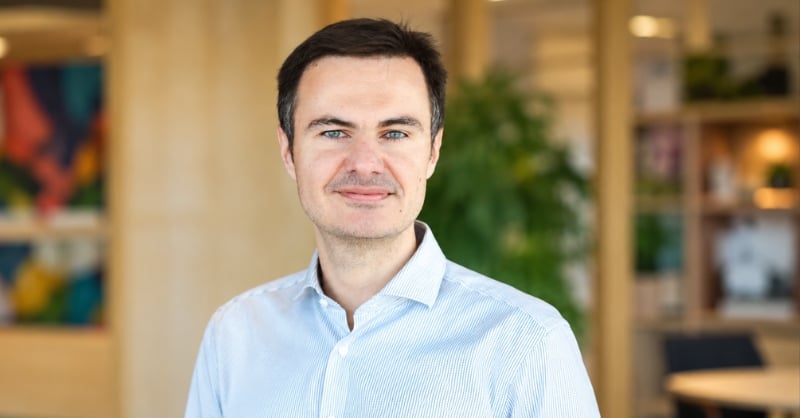
Entalpic uses AI to search for new materials, with semiconductors and electronics as target markets. Founded in 2024 by Mathieu Galtier, an early Owkin employee, with Victor Schmidt and Alexandre Duval from Montreal’s Mila institute, it raised an €8.5 million seed in September 2024 led by Breega, Cathay Innovation and Felicis, with angels including Yoshua Bengio.
Cathay Innovation’s €1 billion fund counts it as a portfolio company. Materials simulation eats compute, which makes it the cleanest fit with Nvidia’s own business.
Boltz

Founder/s: Gabriele Corso, Saro Passaro, Jeremy Wohlwend
Founded year: 2025
Total funding: $28M
Boltz develops open-source biomolecular models, the Boltz series, that predict how proteins and other molecules fold and bind. It sits in the field of Isomorphic Labs, the DeepMind spinout reportedly eyeing a $40 billion valuation.
Boltz raised a $28 million seed on Jan 8, 2026, led by Amplify, a16z and Zetta at a reported $125 million valuation, and announced a Pfizer collaboration the same day. Angels include Hugging Face’s Clement Delangue.
Co-founders Gabriele Corso, Saro Passaro and Jeremy Wohlwend all trained at MIT.
Riverlane

Founder/s: Steve Brierley
Founded year: 2016
Total funding: $132M
Riverlane works on quantum error correction, the layer that keeps fragile qubits from corrupting calculations.
Founded in 2016 by Steve Brierley, it raised a $75 million Series C in August 2024 led by Planet First Partners, after a £15 million Series B led by Molten Ventures in 2023. Trackers put its total at roughly $120 million. Nvidia’s own blog says Riverlane has shown GPUs speeding up the recalibration of error-correction decoders.
“Quantum error correction is the critical enabler for the industry’s next huge wave of progress,” Brierley said at the Series C. It is one of the UK quantum startups TFN has profiled.
Foresight
Founder/s: Igor Shifrin, Dr. Atif Ansar
Founded year: 2018
Total funding: $25M
Foresight forecasts delivery dates for large construction projects, including data centres.
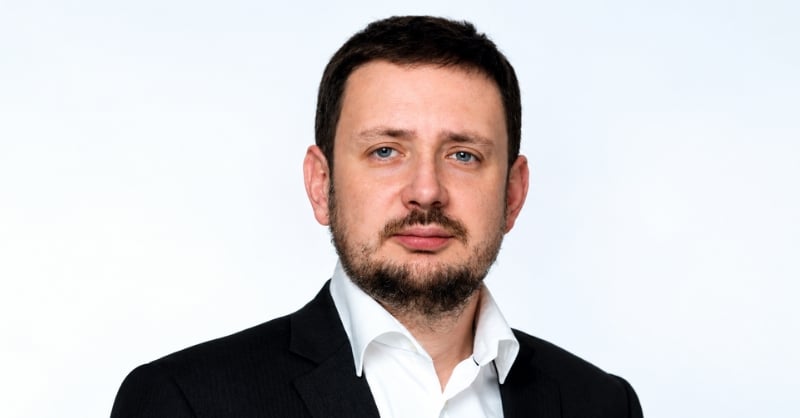
Founded in 2018 by Igor Shifrin and Oxford’s Dr Atif Ansar, it raised a $25 million Series A in March 2026 led by Macquarie Capital Venture Capital, alongside seed investor Creandum, ISAI Build, i2bf and Somersault.
About 90% of large infrastructure projects run late or over budget, and the company says customers see forecasts twice as accurate and 30% fewer overruns.
Hiverge
Founder/s: Alhussein Fawzi, Bernardino Romera-Paredes, Hamza Fawzi
Founded year: 2025
Total funding: $5M
Hiverge is a Cambridge algorithm lab founded in 2025 by Alhussein Fawzi, Bernardino Romera-Paredes, who worked on AlphaFold, and Cambridge professor Hamza Fawzi. Its platform, the Hive, claims a more than 15% gain on AI training benchmarks and a 10,000x speed-up on an aircraft-loading problem.
A $5 million seed in September 2025 was led by Flying Fish Ventures, with Ahren Innovation Capital, Alpha Intelligence Capital and Google’s Jeff Dean. Faster algorithms mean fewer GPU hours per result, a mixed message for a chip seller.
Prima Mente
Founder/s: Dr. Ravi Solanki, Dr. Hannah Madan
Founded year: 2022
Total funding: $2.4M
Prima Mente builds foundation models on epigenetic data. Its Pleiades model reports 0.89 accuracy in detecting early Alzheimer’s and Parkinson’s, rising to 0.97 when protein tests are added.
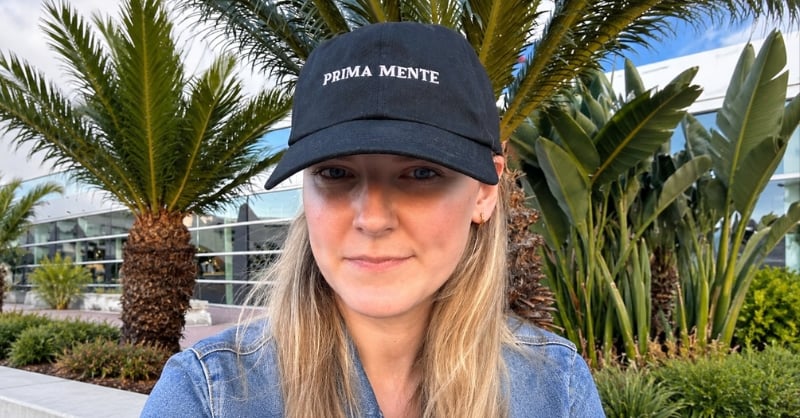
Co-founders Dr. Ravi Solanki and Dr. Hannah Madan run offices in London and San Francisco. The company won a $1 million Gates Ventures-backed prize in March, joined the first cohort of the UK’s £500 million Sovereign AI Fund in April and is an Nvidia Inception member.



