Autonomous delivery is picking up pace, and investors are doubling down on companies that can scale it. US-based drone logistics company Zipline has raised an additional $200 million, bringing its recent Series H funding round to $800 million.
The investment was led by Fidelity, with participation from Baillie Gifford, Valor Equity Partners, Tiger Global, and Paradigm. The round values Zipline at $7.6 billion, reports TechCrunch.
The new capital will be used to expand operations across the United States, with plans to launch services in at least four states this year. The company has already identified cities, including Houston, Phoenix, and Seattle, as upcoming markets.
Zipline has seen increased usage, with customers placing multiple orders per day, and average order sizes have also risen in recent weeks. The company is responding by expanding its marketplace, aiming to onboard more brands and products in the near term.
From medical deliveries to everyday logistics
Founded in 2014 and led by Keller Rinaudo Cliffton, Zipline initially focused on delivering blood and medical supplies in Africa, starting with Rwanda. Over time, it has expanded into multiple countries and sectors, including food, retail, and agriculture.
Today, the company operates across several regions, including the US, Africa, and Japan, and serves thousands of hospitals and distribution points.
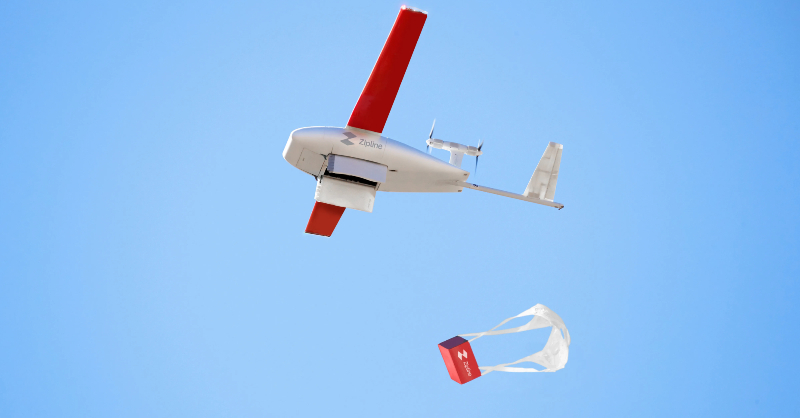
At present, Zipline operates two main drone systems. Its Platform 2 (P2) is designed for short-range, on-demand deliveries. These drones can carry packages of up to eight pounds within a 10-mile radius, targeting residential customers.
The service is already live in parts of Arkansas and the Dallas-Fort Worth area through partnerships with retailers like Walmart and several restaurant chains.
For longer distances, Zipline uses Platform 1 (P1) drones, which can travel up to 120 miles round-trip and are primarily used by governments, healthcare providers, and businesses.
Zipline has completed millions of deliveries and logged extensive autonomous flight miles, positioning itself as one of the largest players in drone-based logistics.
As demand for faster, more efficient delivery systems rises, the company is betting that autonomous drones can replace traditional vehicle-based delivery models in both urban and remote areas.