- Phantom GI has completed a $5 million seed round with Pitango HealthTech acting as the lead investor.
- The PercStoma device can create an ostomy in about 20 minutes without general anaesthesia.
- PercStoma has not yet obtained regulatory approval and is still under investigation.
In 2023, Eran Shlomovitz, who is a surgeon and interventional radiologist, treated a woman suffering from a bowel obstruction due to cancer and who was not a candidate for surgery.
Instead, he used ordinary medical equipment together with X-ray guidance to relieve the blockage. The procedure was carried out with her agreement, and it was successful, which enabled her to eat normally, return to work and continue her cancer treatment.
The experience led to the establishment of Phantom GI, a Tel Aviv-based startup. The company just raised $5M in seed financing, with Pitango HealthTech as the lead investor, and RAD Biomed and RUNI Ventures also participating.
From one patient to a device
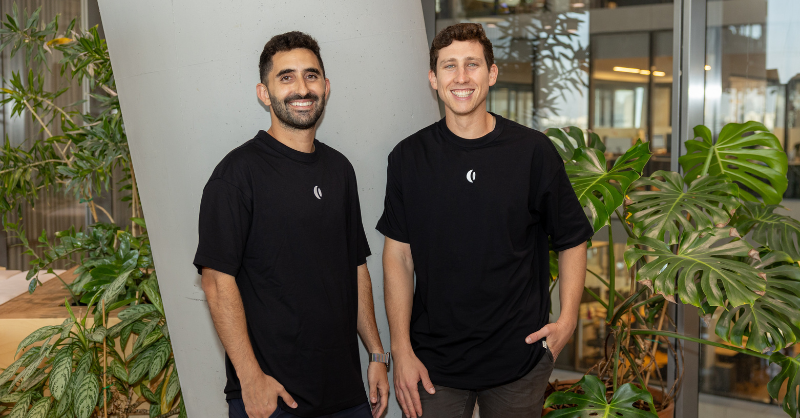
Phantom GI was founded in 2025 by its CEO, Ido Sadan, with Shlomovitz as chief medical officer and Dr. Eliahu Bekhor as chief scientific officer.
According to Sadan, there are currently some patients for whom the conventional surgical procedure is simply too invasive and in certain cases isn’t even an option. The initiative behind Phantom GI was to ensure that creating an ostomy does not have to involve major surgery. Its aim is to provide a minimally invasive alternative to surgery for all ostomy cases, achieving the same clinical outcome with a much lower healthcare burden.
In the case of traditional surgery, an incision is made in the abdomen, and a portion of the intestine is pulled up to the surface while the patient is under general anaesthesia. PercStoma, by contrast, uses a single-needle puncture performed under local anaesthesia and involves X-ray imaging.
Phantom GI believes the entire procedure will take about 20 minutes.
The company also wants to make the reversal quick. It claims the stoma can be removed in a doctor’s office, so patients can avoid further major surgery. On the other hand, with traditional reversal, up to half of the eligible patients are unable to have the second operation.
What PercStoma has yet to prove
At the moment, there is very little evidence. PercStoma is still under investigation and has not yet received regulatory approval.
According to the company, there could be as many as 100,000 such patients, together with an additional 100,000 who have conditions such as inflammatory bowel disease and who seldom receive a stoma.
According to Bekhor, malignant bowel obstruction patients who are not suitable for surgery at present have very few alternatives for alleviating their obstruction. The researchers believe a minimally invasive percutaneous method will greatly expand the range of treatments available to these patients, estimating that more than 100,000 bowel obstruction patients in the United States could potentially benefit each year.
The ostomy care market is large but growing slowly. Mordor Intelligence projects the market to be worth $3.47 billion in 2025 and $4.3 billion by 2030, which represents a compound annual growth rate of 4.42 percent. Bags make up 84.56 percent of revenue in 2024.
Who is backing it
The money will fund the development of PercStoma and support its first clinical trials in the United States.
Dr. Jonathan Glazer, a partner at Pitango HealthTech and a former head of the ambulatory care service in the emergency department at Tel Aviv Sourasky Medical Center, said: “Phantom GI’s exceptional team is challenging the surgical paradigm that has defined ostomy creation for decades. This shift to a percutaneous approach could reduce treatment complexity and significantly expand who can be treated.”
The initial studies in patients who are not suitable for surgery will tell us whether the procedure works. But they won’t fully address the main question about its wider use: whether the stent can remain open long enough in patients who would otherwise need surgery.
Check out its pitch deck