


- Atomic raised a $12.5M Series A led by Klass Capital and Madrona Venture Group.
- Its AI now automates 90% of purchasing across hundreds of DoorDash DashMart sites.
- An SEC filing shows $18.5M sold, about $6M more than the round Atomic announced.
When demand shifts at DoorDash’s DashMart business, most of the resulting purchase orders no longer wait for a person. Atomic, a Boston-based startup founded by three former Tesla planning leaders, says its software now automates 90% of purchasing across hundreds of DashMart sites.
The company announced a $12.5M Series A led by Klass Capital and Madrona Venture Group. Adrian Schauer of Klass Capital and Matt McIlwain of Madrona join the board. A regulatory filing points to a larger raise than the announcement, covered below.
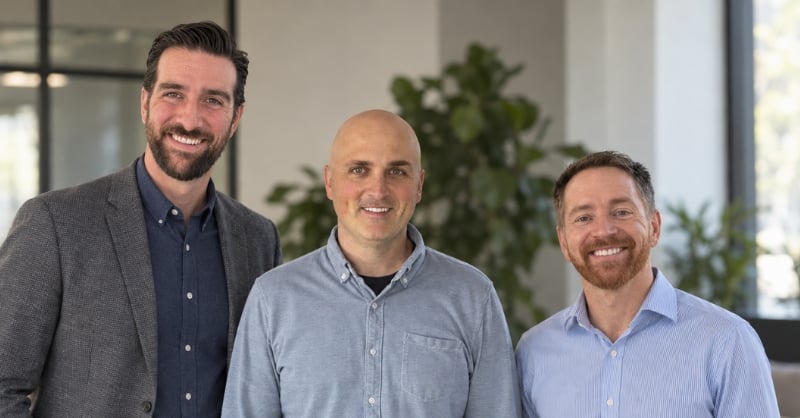
Atomic’s founders, Michael Rossiter, Neal Suidan and Jeff Goodrich, led sales and operations planning (S&OP) at Tesla through the Model 3 ramp-up and built a 50-person planning engineering organisation there. The company was incubated at DVx Ventures, the firm founded by former Tesla President Jon McNeill, who worked alongside the team at Tesla.
From spreadsheets to purchase orders
The company’s pitch is that most physical goods businesses cannot afford what Tesla built in-house.
“Most companies can’t justify building the kind of planning engineering team we had at Tesla. They’re still running critical parts of their business through legacy software, hundreds of spreadsheets and individual heroics. Atomic gives them that capability as a product,” said Rossiter, Atomic’s co-founder and CEO.
Atomic gives planning teams a model of their business at the product level, recommendations that show their reasoning, and AI agents that take on more of the work as trust builds. The new money is meant to push the platform from planning and decision support into what the company calls a control system, one that connects business objectives to the orders a company places every day. A team can improve the logic behind a decision and carry that improvement straight into daily purchasing.
The company says customers can deploy its S&OP layer in about 30 days using the data they already have. It then runs alongside an existing enterprise resource planning (ERP) system rather than forcing a business to rebuild its processes. Nucleus, its AI agent platform, is in daily use for S&OP preparation, inventory questions and supply-risk checks.
The customer results come from Atomic, and neither customer is quoted in the release. DashMart moved from a legacy software-as-a-service vendor to Atomic in about three months.
Its team recently used Atomic’s AI to build new logic for how primary and backup suppliers should be used in roughly an hour, and Atomic then applied it across daily purchases, shifting more volume to primary suppliers and improving gross margins.
At Good Chop, HelloFresh’s meat box subscription business, inventory on hand fell from eight or nine weeks to four while revenue more than doubled and the distribution network and product range expanded.
Who backed it
Klass Capital is a Toronto-based private equity firm whose portfolio includes supply chain software company Nulogy. Madrona, the Seattle firm, has announced a $770M fund. Schauer and McIlwain sit on the board alongside McNeill. Alumni Ventures, Sandberg Bernthal Venture Partners and DVx also back the company.
“Michael, Neal and Jeff helped build the system that allowed Tesla to operate at a scale and speed that traditional supply chain software simply wasn’t designed for. What gets us excited about Atomic was the opportunity to take what they learned solving one of the hardest supply chain problems in the world and turn it into something any company can use. AI now makes it possible to give companies not just better forecasts, but a system that can actually make and execute decisions,” said Jon McNeill, co-founder and CEO of DVx Ventures.
“We’ve never heard customers talk about a software vendor the way they talk about Atomic. They trust it with daily operating decisions and are asking for more,” added Daniel Klass, founder and managing partner of Klass Capital.
A crowded race to let AI place the order
Atomic is not alone in aiming AI at supply chain decisions. Lyric raised $43.5M for AI decision products across supply chains, and Freehand raised $75M for agents managing supply chain spend at companies including Meta and Unilever.
On procurement, Didero secured $30M and Magentic raised $18M, while Pelico raised $40M to cut factory delays. Incumbents are moving too: Kinaxis acquired MPO in a $45M deal aimed at real-time order execution, and Doss raised $55M for AI inventory management that plugs into ERP.
Atomic’s angle is the link between the planner’s logic and the order that goes out. Most rivals sit on one side of that line, either recommending or buying. The market is large enough to support several. Technavio expects supply chain management software to grow by $29.6B between 2025 and 2030, a 15.2% compound annual growth rate, and values the planning segment at $9.26B in 2024.
The open questions are concrete. Two named customers is a thin base for a claim about a category, and the funding gap will draw questions from anyone comparing the filing to the release. If Atomic can show that planners trust the agents with more decisions each quarter, as its own description of the product predicts, the funding buys it a lead in a field where most rivals are still selling recommendations.


