


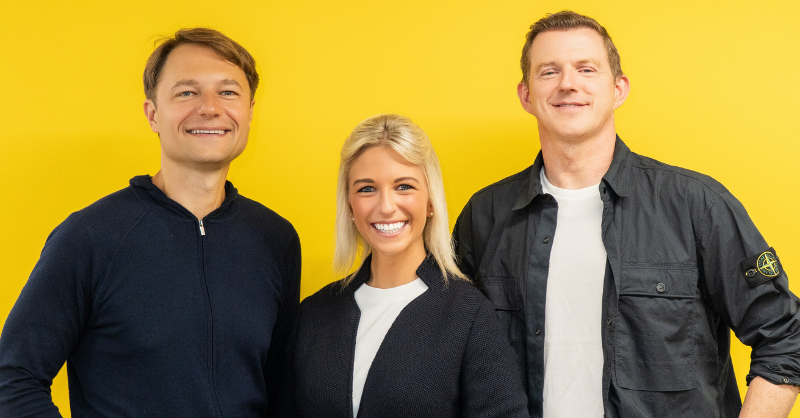
- DIG Ventures has obtained a third fund of $120 million to invest in European pre-seed and seed startups.
- The company intends to invest in around 30 firms, allocating between $1 million and $5 million to each, and expects to be the lead investor in most funding rounds.
- DIG states that Fund III is 20% larger than Fund II and was closed within just a few months.
DIG Ventures has now closed its Fund III, a $120 million fund focused on supporting European pre-seed and seed-stage startups developing AI-native enterprise infrastructure. The firm intends to make about 30 investments, to be the leading investor in most of them, and has already begun making investments.
The limited partners of the fund are Horsley Bridge, Sofina, Granite, and a large endowment of a US university. Among the entrepreneur investors are the founders of Slack, Datadog, Nord Security, Cast AI, Supercell, and Dash0.
Sofina had also invested in Fund II, which closed in April 2025 with a size of $100 million.
The operators behind the fund
Ross Mason founded MuleSoft in 2006, took it public in 2017, and then sold it to Salesforce in 2018. In that same year, he established DIG as a family office. According to the firm, the return on the first $50 million fund was 50% in 2022. Fund II, DIG’s first institutional fund, was completed in April 2025, and Fund III was launched 18 months later.
Melissa Klinger, who was in charge of UK sales at MuleSoft, and Rytis Vitkauskas have both joined Mason.
Speaking to Tech Funding News, Vitkauskas shares that his first transaction at Summit Partners was Avast, which received a $100 million investment in 2010. He then co-founded YPlan, which was acquired by the Time Out Group in 2016, and became Lightspeed’s first partner in Europe. DIG states that Vitkauskas has supported eight unicorns and one decacorn.
The fund is aiming to address a gap in Europe, according to Vitkauskas. Since DIG’s operator-led team has experience building and selling enterprise software at scale, the firm knows precisely what it takes to bridge that gap.
Control points and portfolio highlights
DIG holds that although AI reduces software development costs, it also leads to greater competition. The fund states that enduring businesses will need to take control of key areas, including data, compliance, and orchestration.
The companies in DIG’s portfolio are focused on these areas. Tower, which is involved in data, raised a $6.4 million seed round in March 2026, while Cofide focuses on identity. CUBE, supported by Hg, handles compliance. Nexos.ai, founded by Tomas Okmanas and Eimantas Sabaliauskas from Nord Security, handles orchestration and obtained €30 million in Series A funding in October 2025.
According to Vitkauskas, the aim is “enterprise infrastructure and technical software in and around AI enablement,” which is often supported at the initial stages. “All we need is a hint from a skilled technical founder or founders to become excited,” he says.
A $120 million fund closes in a challenging fundraising environment
The third fund was launched in a market which, although growing, is at the same time becoming more selective. According to PitchBook’s Q2 2026 European Venture Report, European VC funds raised €8.2 billion in the first six months of 2026, which is a 32.8% increase on the previous year. The median fund size rose from €50 million to €60 million.
Vitkauskas stated that capital is dividing into two groups: “A great deal of the LP capital is flowing into very large, multi-stage venture capital funds,” he said, adding that “according to some sources, as much as 75%” was going to the five largest funds in the first half.
Certain portfolio companies have achieved very high valuations. Dash0, founded by Mirko Novakovic, has a $1 billion valuation following its $110 million Series B funding round. Taktile raised $110 million in its Series C on June 24, 2026, with DIG taking part.
DIG intends to invest in each company, with investments ranging from $1 million to $5 million. With approximately 30 companies, the $120 million fund amounts to an average of $4 million per company before fees; therefore, reserves will affect future support. DIG anticipates leading most funding rounds, targeting the seed market.
Vitkauskas states that DIG has made investments in 13 countries and that an ecosystem is emerging as companies such as ElevenLabs and Dash0 grow, with founders becoming each other’s clients.
He is also not worried about sovereignty debates. “Basically, the major winners have, at least historically, been those who take a more global rather than a more local approach,” he concludes.
A big question is whether startups that end up serving as control points can remain independent long enough to reward their early investors, or whether they are acquired by their customers or partners. The DIG record shows that this has already occurred twice.


