


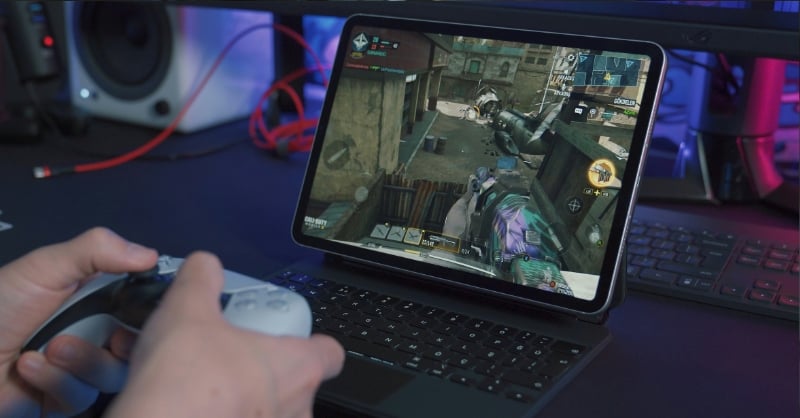
Game technology platforms have now taken an extraordinary development path. What you see on the monitor is only a small part, and the rest of it, from matches and transactions to tables and updates, is backed by several technologies communicating with each other in a fraction of a second. The key isn’t just producing graphics; it’s combining the right tech to give players a highly responsive experience.
Fundamentally, it’s about making sure that the user interface is visually striking. At the same time, developers have to think beyond the screen: build server infrastructure, set up matchmaking and payment systems, create data analysis tools, and design a UI that responds instantly. So, if they handle these parts well, the technology becomes transparent.
Faster multiplayer architecture of online poker
Few game formats demonstrate the real value of real time infrastructure as clearly as poker. When players play Texas holdem online, everyone at the table needs to receive the same cards, bets, player actions, timers, and results at the right moment. The entire network is constantly exchanging data with the server, so speed and accurate synchronisation are essential. Even a slight delay can disrupt the timing of a hand, which is why the system must process actions quickly and keep updates flowing smoothly to every player.
This is why poker services need a strong server connection and event handling. Instead of generating a fresh screen after each step, the gaming platform pushes only small updates as the round goes on, so each player can take real-time actions.
Servers are the backbone of the modern online platform
The servers that form the backbone of the game are the game platform’s server machines.
To make this kind of platform very effective, they divide the computing tasks among several computers. By distributing traffic across multiple systems, the platform can serve many players at once without compromising the speed of information delivery. Cloud computing technology is also very effective in that regard.
Latency decides how fast the game feels
The time taken for the information to be transferred between the player’s machine and the game platform is measured in a term called “latency”. The player has to wait a little before seeing their input in a real-time game, which affects whether the response feels fast enough.
Gaming developers implement a variety of methods to speed up the interaction:
- Servers in each region to reduce the distance the data has to travel.
- Data formats can be streamlined to minimise the amount of information sent between devices.
- Persistent communication allows updates to be transmitted without interruption.
All these technologies make reactions feel immediate, even with a large number of users online at the same time.
Matchmaking is what determines who gets to meet whom
Multi-game systems must rely on powerful systems to pair players. These systems examine available players and determine who can be matched.
Pairing can be done taking into account skill level, player’s region, preference for the type of game, the strength of the connection, and wait time, etc. Behind the scenes, services look up potential matches and bring players together so quickly they don’t even notice.
Money transfer needs to appear as effortless and swift as possible
Another vital segment of gaming technology is that regarding money. Customers want transactions such as funding an account or a payout to be obvious at a level they’re familiar with. They are fast and hassle-free.
Most of the time, platforms connect payment interfaces to third-party systems instead of building them from scratch. This lets the platform connect with banks, e-money accounts, payment cards, and other payment systems.
Cybersecurity is what keeps player accounts and all data safe

Because online game platforms handle personal profiles and financial data, implementing cybersecurity mechanisms is one of the main technical challenges in software development.
Different ways to secure information are :
- Secured communication links
- Password management systems are made to be resistant to password attacks
- Vigilant systems of activities monitoring
- To confirm the accounts, use of verification tools
- Analysis of the transactions
On the flip side, some companies use real-time monitoring of customer accounts, which allows them not only to react but also to warn or change the pattern.
The mobile interface brings the entire system back to life
For many players, gaming platforms are first opened on mobile phones, so the technology must deliver a smooth user experience on these devices with wireless internet.
That means the mobile interface must have responsiveness, fast loading speed, good navigation, controls that suit a smartphone’s touchscreen, and save on data usage. The difficulty is making the game player’s interface, which is a quite complicated real-time system, look and feel simple.
The best game platforms are those supported by the underlying tech so players don’t even notice it. Servers form the base, minimum latency is what guarantees that the game is not only responsive but fun to play, matchmaking ensures players get together easily, payments systems are the foundation on which the rest can be built, security solutions protect both data and account, data analysis is the driving force for constant improvements and the use mobile interfaces is how users can easily access all these features.


