


- Orakl Oncology has secured $34 million in Series A funding, led by Norrsken VC and Singular.
- The company says its AI can predict cancer trial outcomes with 90% accuracy.
- Orakl plans to move beyond colorectal and pancreatic cancers and start working on lung and gastric cancers as well.
Orakl Oncology, a Paris-based TechBio company that combines AI with patient biology, has raised $34 million in a Series A round led by Norrsken VC and Singular. Other investors in the oversubscribed round were InfraVia, Serena, the Patient Autonome Fund managed by Bpifrance, teampact.ventures, and Plug and Play.
Previous investors Verve Ventures, Speedinvest, and HCVC also participated. Angel investors included Thomas Wolf, Stan Polu, Jacques Boitreaud, and Mostafa El Sayed. With this round, Orakl’s total funding reaches $50 million.
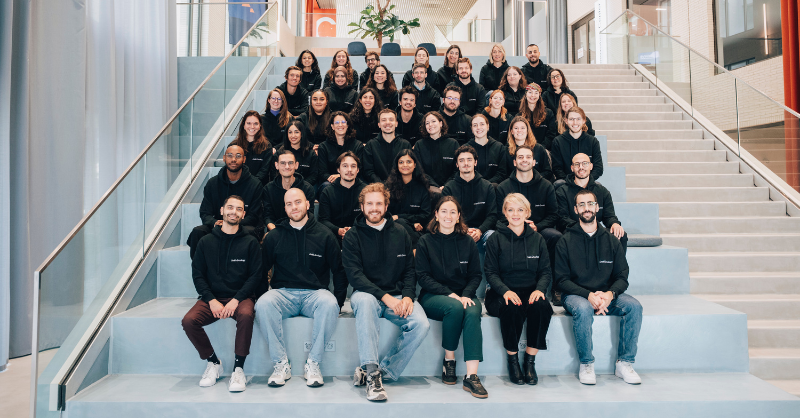
Orakl was founded in 2023 as a spin-out from Gustave Roussy by CEO Dr. Fanny Jaulin, CTO Dr. Gustave Ronteix, and COO Dr. Diane-Laure Pagès. In December 2024, the company raised an €11 million seed round led by Singular. The team has now grown to over 40 members.
Most cancer drugs fail during Phase 2 trials
Orakl points out that although AI can help design new molecules, it still struggles to predict how well treatments will work in patients. The company refers to BIO data showing that about 75% of oncology candidates fail in Phase 2 trials.
To tackle this, Orakl creates groups of virtual patients by growing real tumors in the lab and combining them with medical history and detailed biological data. These virtual patients are then tested with different drugs at scale.
“For decades, we’ve developed cancer drugs without being able to reliably predict how they will behave in patients until they reach clinical trials. We believe the next breakthrough will come from making tumor and patient biology predictable. This funding will allow us to expand Orakl’s proven capabilities across more cancer types and pharmaceutical programs to impact oncology more widely,” said Jaulin.
What the 90% accuracy figure means
Orakl claims its platform can predict cancer trial outcomes with 90% accuracy, including results for pancreatic cancer trials. However, European Biotechnology reported in July 2026 that this number is the highest value from a preprint, and the platform has not yet proven it can improve the success rate of new drugs. In the same month, Orakl gained exclusive rights to four undisclosed Sanofi oncology assets, which will serve as a real-world test for its predictions.
Orakl says that 18 of the world’s top 20 pharmaceutical companies are in its commercial pipeline, with early partnerships turning into multi-year collaborations. The company is also in contract talks with over 15 cancer centers.
Agate Freimane, general partner at Norrsken VC, said, “Too many drugs still enter expensive clinical trials without a clear view of which patients they will work for. Orakl is tackling this bottleneck with a platform combining proprietary biological data, hospital partnerships, lab infrastructure and AI that is exceptionally hard to replicate. We believe Orakl has the potential to become a defining platform for oncology R&D.”
Jeremy Uzan, Partner at Singular, added, “Fanny, Gustave and Diane-Laure bring together a rare combination of expertise in cancer research, cell biology and computational biology, alongside a clear understanding of what the pharmaceutical industry needs. They’ve translated that expertise into a platform that combines real patient biology, experimental data and AI to predict how cancer drugs will perform in clinical trials. We’re proud to continue backing the team as they scale.”
Expanding into lung and gastric cancers, and target discovery
Speaking about competition, Vivodyne raised a $38 million seed for lab-grown human tissue, Xilis landed $70 million for organoids, and Belgium’s Sightera uses organoids to design molecules.
Orakl plans to increase data generation fivefold and expand beyond colorectal and pancreatic cancers into lung and gastric cancers. New teams in the US and UK will apply its predictions to more than 10 drug programs.
The Sanofi work is the proof point. If it shows Orakl’s predictions improve development decisions, the lung and gastric expansion has a case. If not, 90% stays a preprint number.



