


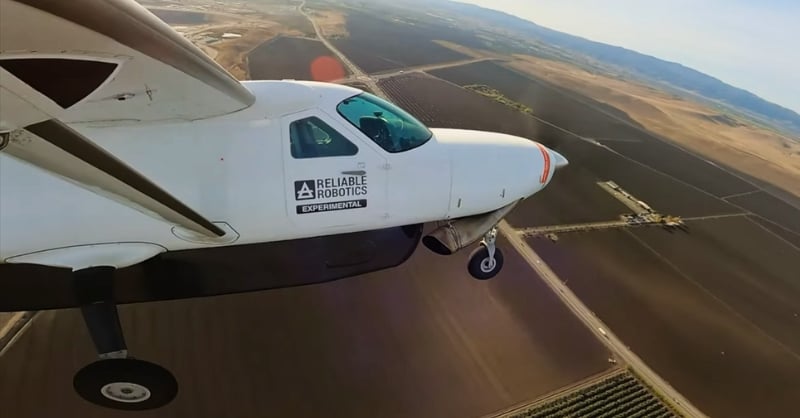
- Reliable Robotics raised $115M in Series D, bringing the round to $275M.
- The raise includes $90M in equity and a $25M bank loan, valuing the company at over $1B.
- CEO Robert Rose expects US regulators to sign off on its first system in 18 to 24 months.
Robert Rose ran flight software at SpaceX and the Autopilot programme at Tesla. Then he asked a question that sounded almost naive: “Why don’t aircraft fly themselves?”
On October 20, 2026, his startup Reliable Robotics said it had added $115 million to its Series D, lifting the round to $275 million and its valuation above $1 billion.
The $115 million is a blend, not all equity. It combines $90 million in equity, led by returning investor Nimble Partners, with a $25 million term loan from Silicon Valley Bank. It extends the $160 million round announced on April 21, 2026, when Bloomberg reported a valuation of nearly $1 billion. Reliable attributes the upsize to higher investor demand and says it has raised more than $380 million in equity to date.
Rose founded the Mountain View company in 2017 with Juerg Frefel, now chief technology officer and another SpaceX veteran who spent nearly a decade there as an engineer.
The pair started in Rose’s garage. Aviation runs in Rose’s family: his mother was a pilot, his father an Air Force aircraft maintenance officer, and both grandfathers flew in the Second World War, according to Eclipse. Reliable’s first autonomous test flight, in 2019, put a Cessna 172 in the air with nobody in the pilot seat.
Cash arrives ahead of certification
Reliable is chasing approval from the US Federal Aviation Administration, or FAA, on four fronts, Rose told TechCrunch. Its first product, continuous autopilot engagement, handles engine start, taxiing, take-off, and landing while the pilot stays in the cockpit and works through a touchscreen.
Rose expects approval in 18 to 24 months, putting it between April and October 2028. Moving the pilot to a ground-control station is at least three years away. After established suppliers declined the project, an in-house solid-state radar should be certified by the end of 2027. The fourth front is Reliable Airlines, an Albuquerque cargo operator flying six Cessna Caravans six days a week. The FAA certifies equipment and airline operations under separate rules.
The Reliable Autonomy System is designed to taxi, take off, manage the route, and land certified aircraft using today’s airports and airspace. The company says that it needs no changes to the US National Airspace System for commercial operations.
It is certifying the system on the Cessna 208B Grand Caravan, a cargo workhorse, and says the FAA has accepted its certification plan and its method for proving compliance. The system and radar target two leading causes of aviation accidents: loss of control and controlled flight into terrain, where a working aircraft flies into a mountain or the ground.
Nimble Partners founder John Burbank sees the long approval process as part of the draw. Reliable is building a system any airframe could adopt, he told TechCrunch, a “much bigger opportunity than to just build one plane.” He compared the route to the one autonomy took in cars, a path TFN has followed in Wayve’s London launch with Uber.
Military contracts and commercial aviation ambitions
Reliable has two ways to fly before certification lands. It has contracts with multiple branches of the US military and has completed several military airworthiness reviews with the US Air Force.
It was also selected for the FAA’s Advanced Air Mobility Integration Pilot Program, which lets it fly pre-certification cargo to small and rural communities in New Mexico and Colorado. In April, it said it had commitments for more than 200 systems from commercial and military customers. The October 20 release gave no revenue figure.
That dual-use pitch is pulling large cheques across defence technology. Tech Funding News has covered Tekever’s $580M Series D at a $6.4B valuation, Mach Industries’ $600M round at $3.7B, and Anduril’s $1.3B employee tender offer at $90B. REGENT raised $240M for its flying boat.
Nimble Partners led April’s round, joined by Eclipse, Lightspeed, Coatue, and Pathbreaker Ventures. It also brought in AE Ventures, a strategic Boeing partner, plus RTX Ventures, Socium Ventures, Presidio Ventures, and UP.Partners, KAS Venture Partners, What If Ventures, Calm Ventures, Gaingels, and Mana Ventures. The extension adds Gideon Capital, RockCreek, Geek Ventures, Gold Hill Capital, and Sparkwave Capital, with Island Green Partners returning and Allen & Company supporting the raise.
The money will pay for a bigger aircraft fleet, more production capacity, and more engineers. Reliable is opening offices in Seattle, which will host a centre of excellence for its radar programme, and San Diego. They join sites in Mountain View and San Martin in California and Albuquerque in New Mexico. It has more than 250 employees and is hiring across engineering roles, according to its LinkedIn page.
Rivals are listing while Reliable stays private
Rivals have taken a different financing route. Merlin, the Boston developer of autonomy software for existing aircraft, listed on Nasdaq on March 17, 2026 through a SPAC merger at an $800 million pre-money valuation. On April 29, 2026, it raised $80 million from an existing institutional shareholder through a private investment in public equity, taking expected cash to $183 million. It says it holds more than $100 million in awarded military contracts.
Elroy Air is building its own heavy-cargo drone, the Chaparral, instead of adapting existing aircraft. On September 24, 2026, it raised financing commitments of $175 million ahead of a merger with Inflection Point Acquisition Corp. VII. Lockheed Martin Ventures is among its backers. In June 2024, Joby Aviation bought the autonomy division of Xwing, which built autonomy software for existing aircraft, paying in shares on undisclosed terms.
The market is still small. ResearchAndMarkets lists a report that sizes autonomous aircraft at $7.77 billion in 2025 and $17.09 billion by 2030, a 17.07% compound annual growth rate. Estimates vary by what each report counts.
The open question is whether $380 million in equity buys enough runway for the approvals still to come.



