


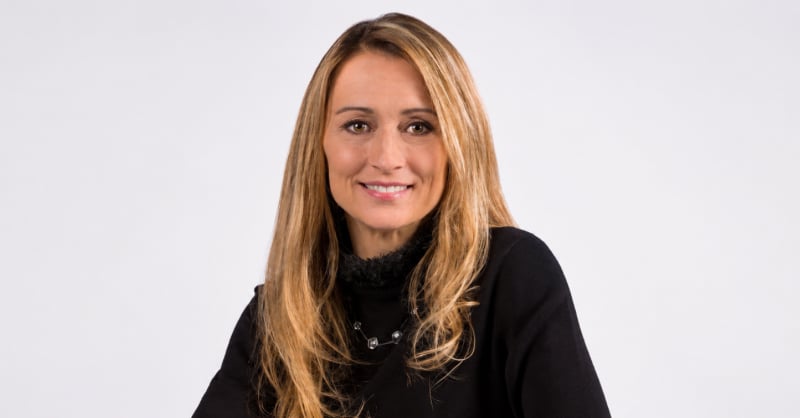
- Nvidia CFO Colette Kress is interim CEO after Jensen Huang resigned on November 12.
- Kress has been Nvidia’s CFO since September 2013 and has nearly 25 years in tech finance.
- The board is searching for a permanent CEO and will weigh internal and external candidates.
Nvidia has appointed longtime CFO Colette Kress as interim CEO following Jensen Huang’s immediate resignation. With nearly 25 years of experience in technology finance and more than a decade at Nvidia, here is what we know about the executive now taking charge of the AI chip giant.
Nvidia is entering a new chapter in its leadership history. The company announced on November 12, 2026, that its co-founder and long-serving chief executive Jensen Huang had resigned as president, CEO and a member of the board, effective immediately. TFN explained the allegations and timeline that preceded the decision, and The Dallas Morning News reported that Nvidia’s shares fell about 13% on the news.
Taking over on an interim basis is Kress, Nvidia’s executive vice president and CFO, who has been with the company since September 2013. She will keep her CFO responsibilities while leading the business until a permanent successor is appointed. The board will consider both internal and external candidates.
The appointment comes at a particularly important moment. Nvidia supplies the GPUs and accelerated computing infrastructure behind AI development, cloud computing and large-scale data centres. But who is Kress, and what does her appointment tell us about Nvidia’s next phase?
Who is Colette Kress?
Kress is a technology finance executive with nearly 25 years of experience, according to Nvidia. She joined in September 2013 as executive vice president and CFO and has overseen the company’s financial organisation as it grew from a gaming-focused chipmaker into one of the most influential companies in the AI industry.
Unlike Huang, whose leadership was closely associated with engineering, product development and Nvidia’s technology vision, Kress brings a financial and operational perspective to the CEO role.
Kress’s career journey
Kress began her career at Texas Instruments, where she held several finance positions. She then spent 13 years at Microsoft, including four years as CFO of its Server and Tools division, a business focused on enterprise infrastructure and software.
She later joined Cisco, where she spent three years as senior vice president and CFO of its Business Technology and Operations Finance organisation. There she was responsible for financial strategy, planning, reporting and business development across business segments, engineering and operations.
Kress holds a bachelor’s degree in finance from the University of Arizona and an MBA from Southern Methodist University.
13 years at Nvidia
When Kress joined, Nvidia was best known for graphics processing units (GPUs) in gaming and professional visualisation. Over the following decade it expanded into data centres, accelerated computing and AI, and she has been part of that shift from the financial leadership side.
The company’s role in AI infrastructure has also brought more complex financial decisions. TFN reported that Nvidia committed more than $40 billion to AI equity investments in the first four months of 2026. It has also signed memorandums of understanding with six asset managers, including Apollo, BlackRock and KKR, to mobilise more than $500 billion in capital over time. That makes financial and operational experience particularly relevant to Nvidia’s next CEO.
What will change under Kress’s leadership?
For now, Nvidia is signalling continuity rather than a strategic overhaul. Kress inherits several priorities: keeping its AI chip lead, managing global expansion including in Europe, strengthening relationships with cloud providers, enterprises and data centre operators, navigating US-China export controls, and keeping investor confidence through the transition. TFN recently covered Nvidia’s planned investments in four European startups, a sign of how far the chipmaker’s influence now reaches beyond semiconductors.
“NVIDIA’s strength has always come from its people, and together with our leadership team, I am committed to building on the extraordinary foundation Jensen created over the last 33 years,” Kress said in Nvidia’s release. “We will continue advancing the work that has made NVIDIA a leader in accelerated computing and AI, and execute on the opportunities ahead. Our focus remains on serving our customers, partners, developers and shareholders.”
Who is Nvidia’s new board chair?
Alongside the CEO transition, Nvidia appointed Harvey C. Jones as its first-ever chair of the board. Jones has served on the board since 1993 and has more than 30 years of experience as an entrepreneur, technology executive and venture investor. He was CEO and later executive chairman of Synopsys and has been managing partner of Square Wave Ventures since 2004.
“Colette has helped lead NVIDIA through a period of extraordinary growth and has a deep understanding of our business, customers, operations and financial position,” said Harvey Jones, chair of the Nvidia board of directors. “The Board has full confidence in Colette and the leadership team, and we expect the company’s operations, customer commitments and product roadmap to continue without interruption.”
What happens next for Nvidia?
Huang spent 33 years building Nvidia into a global technology powerhouse. Kress now has to keep that momentum going while running a business at the centre of the AI infrastructure boom. Her interim appointment does not make her the permanent successor.
Nvidia will announce its third-quarter fiscal 2027 results on November 17, 2026, with a call at 5 p.m. ET. The numbers will give an early read on the company’s finances during the transition.
The bigger question is what Nvidia needs in its next permanent CEO: a technology visionary who can continue Huang’s product-led leadership, an experienced operator who can manage the company’s growing complexity, or an executive who can combine both. Will Kress become that leader, or serve as a bridge to someone who will?



