


San Diego-based Shield AI is in discussions to raise up to $1 billion in fresh capital, claims a report by Bloomberg. This move could double its valuation in under a year.
According to people familiar with the talks, the round would value the company at $12 billion post-investment. Notably, the company secured $240 million last year at a valuation of $5.3 billion.
The terms are still being negotiated and may shift before closing. If completed, the raise would rank among the largest in the defence technology sector.
From startup to strategic powerhouse
Founded in 2015 by Andrew Reiter, Brandon Tseng, and Ryan Tseng, Shield AI has steadily climbed the valuation ladder. In 2023 alone, it raised $300 million at a $2.8 billion valuation, followed by another $200 million at $2.7 billion. This momentum accelerated last March when the company secured $240 million at a $5.3 billion valuation.
Backers include Andreessen Horowitz, defence contractor L3Harris Technologies, and Bloomberg Beta. Each round has marked a clear step in its ambition to modernise military operations through autonomous systems.
Building the autonomous arsenal
Shield AI develops software that enables autonomous vehicles to operate without GPS or constant human oversight. Its technology powers drones and aircraft designed for high-risk missions.
In October, the company unveiled the X-BAT, an autonomous fighter jet capable of vertical takeoff and landing. Unlike traditional aircraft, it doesn’t require a runway, giving it flexibility in contested environments.
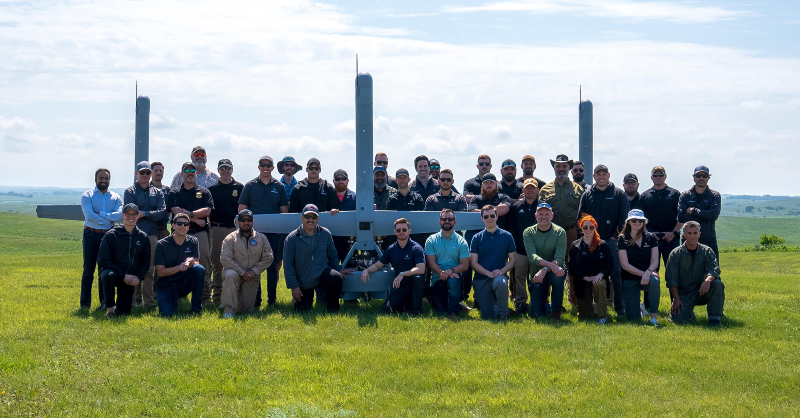
The company’s V-BAT drone, already used by the US military for surveillance and reconnaissance, shares this vertical takeoff capability. The design allows deployment from confined spaces such as ships or remote terrain, expanding operational reach on the battlefield.
Shield AI operates in a competitive landscape alongside companies like Anduril Industries, all pitching next-generation tools to governments looking to modernise defence infrastructure. Rising military budgets across the US and Europe have only amplified interest.
Europe’s defence tech rivals
Across the Atlantic, Europe is beginning to cultivate its own defence technology champions.
Germany’s Helsing recently raised €450 million in a funding round led by General Catalyst, with participation from Accel and Lightspeed Venture Partners. The company is now valued at approximately €4.95 billion. Helsing builds AI-driven software for military systems and has already secured contracts with European governments.
Meanwhile, Munich-based Alpine Eagle is carving out its niche in drone defence. The two-year-old startup raised $11.1 million in seed funding led by IQ Capital, with backing from HTGF, Expeditions Fund, Sentris Capital, General Catalyst, and HCVC. Alpine Eagle develops airborne systems that detect and intercept hostile drones using advanced sensors and machine learning.
While Europe’s ecosystem still trails the US in scale, capital is flowing steadily. As defence budgets climb and geopolitical tensions persist, autonomous systems are rapidly becoming central to national security strategies on both sides of the Atlantic.


