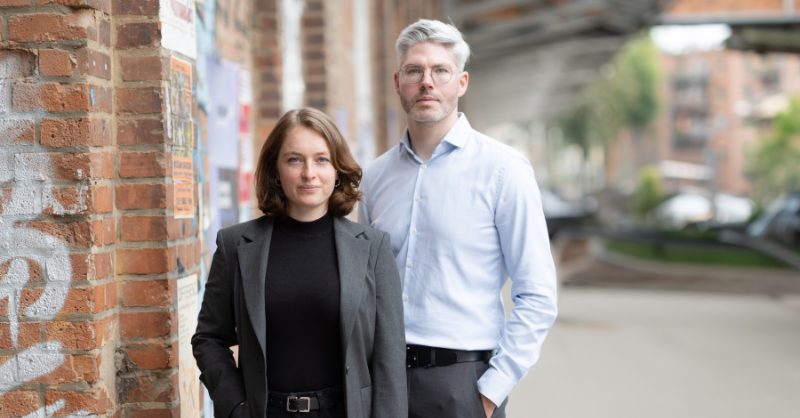
- Prodlane has raised €4 million in funding. The round was led by TGFS, a returning investor, and SBG joined as a new backer.
- This is Prodlane’s third funding round since 2022. The CEO says revenue has tripled since the last round.
- Prodlane works with clients such as Ovesco, NETZSCH, and Hoppe Marine and keeps its error rate below 2%.
Many manufacturers depend on experienced employees who hold important company knowledge. When these workers retire, their expertise is lost. Prodlane, based in Leipzig, is investing €4 million in AI to solve this problem, with extra support from a returning investor.
Prodlane’s assistant, MAIA, has completed another funding round led by TGFS Technologiegründerfonds Sachsen, a public venture fund that has now supported the company for two rounds since December 2024. SBG, investing through the Innovationskapital Sachsen program, is a new investor.
“In every company, there are people who have known every project, every deviation and every workaround for decades. When that person leaves, the knowledge goes with them. MAIA does not replace this experience. It makes it explicit, piece by piece, and available to the entire team,” says Carolin Maier, chief executive and co-founder of Prodlane, to Tech Funding News.
Identifying the problem before founding the company
Maier saw the problem firsthand during her studies and early career, working with industrial firms that struggled to access years of accumulated knowledge.
“Industrial companies, with knowledge spanning several hundred years, struggle to gather and find that knowledge to solve complex tasks. That cannot be the change. That’s why we started exploring the problem in the market, talking to many people, and that was the birth of the company,” she says.
In 2021, Maier teamed up with Mathias Jakob, who is now the chief technology officer and brought key software development skills. They spent about four years building MAIA, even before generative AI became popular in business.
What MAIA actually does, in the founder’s words
Maier describes MAIA as a colleague who remembers everything in the company’s archive. It can process old scans, technical drawings, and specification documents that most AI tools cannot handle, and it provides direct answers rather than just listing files.
MAIA’s main strength is its trustworthiness, according to Maier. It cites its sources, shows how confident it is in its answers, and points out any contradictions in documents, like outdated specifications.
“She will also give you that contradiction, and that’s how our engineers can be sure about the answers, and then check it again on the things where Maier tells you to check again,” Maier notes.
This design is meant for professionals who need accuracy. “Our users are engineers, so you can imagine they need to know if it’s true or not,” she says. When asked about competitors, Maier mentions one: Microsoft Copilot. She argues that the difference is focus, not just technology.
“Microsoft does AI for everybody, so you can work with Microsoft if you’re a software company or an industrial company. What we’re doing is really going deep into the needs of our customers,” Maier says.
She adds that while other startups are in this field, they are “more in a general direction” and not focused on industrial and medtech documentation.
Three customers demonstrate this focus: Ovesco, a medical technology company that has long used MAIA for technical documentation; NETZSCH, a German pump maker; and Hoppe Marine, which builds ship systems. All three are featured on MAIA’s website with testimonials.
Growth, team size and a faster fundraise
Prodlane has about 15 employees, and this number is expected to grow after the new funding. Maier says revenue has tripled since the last fundraising in December 2024.
TFN reported on Prodlane’s first funding round in December 2022, when the Leipzig startup raised €760,000 in pre-seed money for a product management platform for manufacturers.
The global knowledge management software market was worth $13.43 billion in 2025 and could reach $62.02 billion by 2034, growing at over 18% a year. Big players are already in the field: Glean, based in Palo Alto, has raised $610 million since 2024 and reached a $7.2 billion valuation in June 2025, with over $100 million in yearly revenue in just three years. Guru, from Philadelphia, has raised about $70 million since 2013 and reports $63 million in revenue.
What the capital buys next
Prodlane plans to use the new funding to grow its development, sales, and marketing teams, focusing on more growth in Germany, Austria, and Switzerland.
“The DACH region faces a lot of innovation and competition, and there is a shortage of skilled workers everywhere. Anyone who wants to compete here must make better use of the knowledge they already have. That is what MAIA enables, with a clear focus and high answer quality. That is why we are investing again and supporting the company into its next growth phase,” says Sören Schuster, managing director of TGFS.
The focus on skills shortages is part of a wider trend in Europe, where companies are turning to AI to fill labour gaps. Maier thinks the main challenge is getting people to adopt the technology, not the technology itself.