Sometime in late 2024, marketing teams across venture-backed B2B started seeing the same chart. Organic traffic that had climbed steadily through 2023 was peaking, then declining. By the spring of 2025, the conversation in marketing leadership circles had shifted. The question was no longer how much AI content to ship. It was why the AI content already shipped was no longer ranking. Two years of budgets pointed at AI content tooling had pushed martech to roughly 22 percent of marketing spend, per Gartner’s 2025 CMO Spend Survey, with generative AI tooling driving the growth. The organic traffic those investments were supposed to deliver kept falling.
The pressure was concentrated by Google’s March 2024 core update, which folded the company’s helpful-content signals directly into its main ranking algorithm. The rollout took an unusually long 45 days and removed an estimated 45 percent of low-quality, unoriginal content from search results. “A lot of affected site owners probably thought they were doing everything right because Google was rewarding them with traffic,” Lily Ray, an SEO analyst who tracked the affected sites for months, said at the time. Ray’s tracking surfaced a recurring pattern across the worst-hit sites: AI content published at scale with minimal editorial oversight.
By the middle of 2025, marketing teams that had over-invested in AI content production were reallocating toward editorial work. The shift has produced overlapping answers from the practitioners thinking hardest about it. SEO advisor Eli Schwartz puts the emphasis on understanding users, which sits upstream of the draft. “AI shouldn’t be used to create content; it should be used to understand your users and figure out who they are,” Schwartz argued recently, framing user research as the highest-value use of AI tooling. Hassan Rashid, an SEO content strategist, agrees with that diagnosis, and argues that what happens downstream of the draft matters just as much.
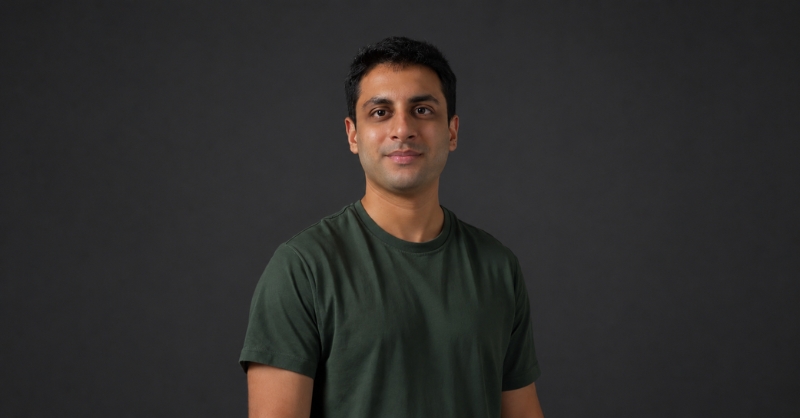
Rashid is a managing editor at GrowthX AI, an AI-augmented B2B content startup that closed $12 million in Series A funding last year. GrowthX AI belongs to a small but growing category of startups built specifically to put editorial discipline over AI-generated drafts. Rashid came to content from a product background, spending two years at Addepar as an associate product manager working on the data infrastructure behind a platform that now supports more than $9 trillion in client assets and was co-founded by Joe Lonsdale in 2009. He approaches editorial work the way a product manager approaches engineering: as a discipline of inputs, outputs, and the judgment calls in between.
“AI and human writing aren’t competing; they complement each other,” Rashid said. “Helpfulness is the only metric that matters. AI drafts that pass through real editorial judgment can rank #1 on Google and convert customers. Human-written content can sit at position 50 forever if it is vanity content nobody needed. What is important is whether the reader actually gets value from the page.”
Rashid argues that the wave of AI content tools through 2024 and 2025 solved the output-volume problem. Production speed is now commoditised. The remaining bottleneck is the editorial work that comes after reading the drafts: applying the experience and expertise that turn AI output into content readers actually find helpful, the qualities Google’s E-E-A-T signals are designed to reward.
“Editorial taste is the moat,” he said. “AI raised the floor on production speed. The differentiator is whether you have judgment sharp enough to catch the AI output that is bland, generic, or wrong. Most companies lack that judgment, and it can tank their rankings six months later.”
The failures fall into a small number of recurring patterns. One is the unverified claim, where a model produces a confident assertion no source supports. Another is voice drift, where the draft converges on a generic startup register instead of the cadence the client’s audience actually reads. A third is the generic comparison frame, which produces a side-by-side any competitor could have written. None of these are obvious to the marketer approving the draft, though a careful reader can pick them up quickly. Google catches on eventually, and the rankings reflect it.
Rashid’s prescription is unromantic. He recommends the SME-interview model: record a conversation of at least five to ten minutes with the founder or domain expert, feed the transcript into the AI workflow, and let the article emerge with the expert’s reasoning intact rather than as rephrased internet content. AI handles the production lift, and the editor decides which lines come out, which sections get rewritten, and which arguments need a second SME pass. The judgment shows up earlier than most marketing teams expect: in the questions asked of the expert and in the choices made before the draft ever reaches a content management system.
The implication for marketing org charts is unsentimental. “The first content hire at a post-PMF startup should be someone with editorial judgment, not just a fast writer,” Rashid said. “If your first hire can’t catch what’s wrong with an AI draft, you end up at the same ranking wall that took everyone else down in 2024.”
Rashid sees his thesis as building on Schwartz’s. They agree on the upstream piece: user research grounds the work in real audience needs. Rashid is adding the downstream piece: editorial judgment decides whether the AI output actually delivers on those needs. Many of the heavy-AI-content sites that lost ground after March 2024 had editorial reviewers of some kind, and those reviewers did not save them. Rashid’s framing is different: a human envelope around the production layer, with real user grounding upstream, real editorial judgment downstream, and AI doing the production lift between.
Rashid is testing this in practice. At GrowthX AI, he runs editorial systems for B2B companies including Vercel and Ramp, tracking AI citation rates and search rankings as parallel signals of whether the editorial envelope is doing its job. The pattern in that data, he says, is what gives him confidence in the moat thesis.
What the next two quarters of helpful-content updates show will probably settle the details. For Rashid, the working picture is already clear: AI raises the floor on production, and the inputs and outputs are where humans still earn the ranking. “The production layer is the easy part,” he said.