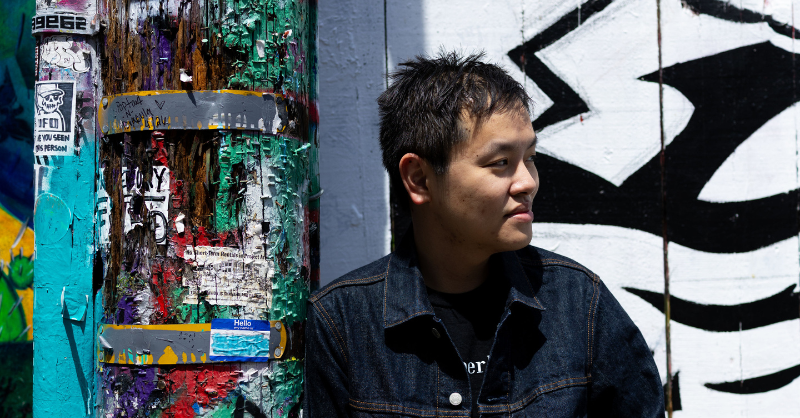
Featherless.ai, a serverless inference platform founded in 2023 by Eugene Cheah, Harrison Vanderbyl, and Wesley George, has secured $20 million in Series A funding co-led by AMD Ventures and Airbus Ventures.
Additional investors include BMW i Ventures, Kickstart Ventures, Panache Ventures, and Wavemaker Ventures.
Featherless addresses a structural challenge that is often overlooked outside the developer community. While Hugging Face hosts over 30,000 open-weight AI models, many tailored for specific languages, domains, and tasks that flagship models from OpenAI and Anthropic do not handle well, accessing these models in production remains difficult.
“Typically, the models available from providers are only the most popular ones. Accessing models trained on more niche areas is very difficult. Making those available continuously online, at a price where you don’t have to rent thousands of dollars of compute to have a conversation with a chatbot that can speak your language — that’s the genesis of Featherless,” says George to Tech Funding News.
Together AI, Replicate, and Baseten provide API access to open models, while Groq offers high-speed inference on custom silicon. Featherless contends that none are truly neutral, as each has hardware preferences, model partnerships, or ecosystem alignments that recreate the lock-in the platform seeks to avoid.
The startup stands out with a hot-swapping technique that loads models into GPU memory on demand in under five seconds and releases them when idle. This enables a flat-rate pricing model, offering fixed monthly capacity instead of per-token billing.
“Most inference providers have 50 to 100 models available in their public cloud. We have the entire catalogue of 30,000 models available online. You can’t run 30,000 models by dedicating $2,000 of hardware to each one. That’s what our competitors do. That’s the differentiation,” explains George.
Enterprises gain cost predictability not available from major cloud providers. For niche and bespoke models, this makes deployment economically viable for the first time.
The investor lineup reflects the company’s global-first orientation. AMD’s involvement is strategically specific: Featherless ensures the most popular open models run natively on AMD’s ROCm platform, providing a competitive alternative to Nvidia’s ecosystem.
“AMD knows we can do great things with their hardware. They’re very committed to open source. There’s a very natural fit,” says George. Airbus, which backed the company at the seed stage, is focused on deploying open-weight models in enterprise settings.
That sovereignty angle is increasingly the company’s biggest growth opportunity.
“A year ago, there was still a question of whether open models would be intelligent enough to do productive work. Today, that’s no longer the case. The focus is now shifting to who controls the AI, especially in markets outside the US, where there is a big push to control your models, your infrastructure, and the freedom to take whatever you’ve built wherever you want,” George concludes.
The funding will support infrastructure expansion into new regions, development of a marketplace for specialised open models, and enhanced integration with hardware architectures beyond Nvidia’s platform.