


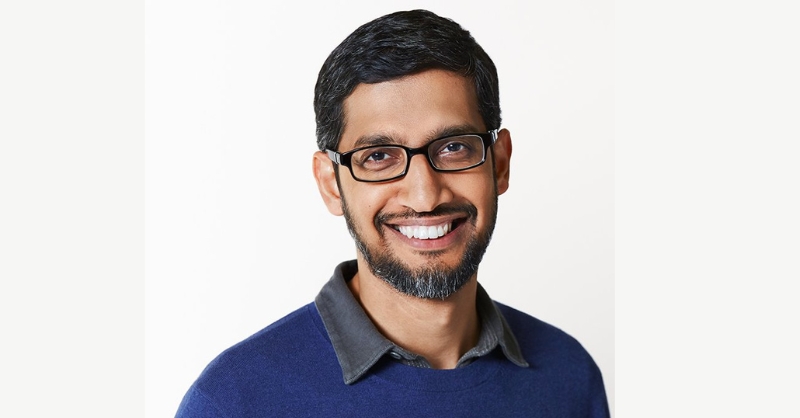
- Alphabet has announced an $80B equity raise, the largest single equity capital raise in US history, comprising $30B in underwritten public offerings, a $40B at-the-market programme, and a $10B private placement to Berkshire Hathaway.
- The raise is being driven by a supply crisis: demand for Alphabet’s AI compute is outstripping what it can currently provide, with Google Cloud backlog nearly doubling quarter-over-quarter to $460B.
- Berkshire Hathaway’s new CEO Greg Abel is committing $10B, one of his most significant capital deployments since taking over from Warren Buffett in January 2026.
Warren Buffett once admitted he “screwed up” by not buying Google earlier. His successor Greg Abel just wrote a $10 billion cheque into Alphabet, the same week he spent another $6.8 billion acquiring homebuilder Taylor Morrison.
Alphabet Inc., the Mountain View-based parent of Google, on June 1 announced equity offerings totalling $80 billion, the largest single equity capital raise in US corporate history. The deal comprises three concurrent tranches: $30 billion in underwritten public offerings (split evenly between common stock and mandatory convertible preferred stock), a $40 billion at-the-market programme beginning Q3 2026, and a $10 billion private placement to Berkshire Hathaway. Goldman Sachs, JPMorgan, and Morgan Stanley are acting as joint book-running managers.
Why Alphabet is raising equity now
Alphabet generated $174 billion in operating cash flow over the 12 months to March 31, 2026, and has raised over $85 billion in debt across six currencies in the past year. It is not raising equity because it is short of cash. It is raising equity because its 2026 capital expenditure guidance, $180 to $190 billion, is so large that even its cash generation cannot comfortably absorb it without balance sheet strain. Management has indicated 2027 capex will increase further still. The company stated directly that demand for its AI solutions from enterprises and consumers is “outstripping its current supply.”
Google Cloud revenue grew 63% year-over-year in Q1 2026, reaching $20 billion, with a backlog of more than $460 billion, nearly doubling quarter-over-quarter. Approximately 50% of that backlog is expected to be recognised as revenue within the next 24 months. Overall, Alphabet revenue grew 22% year-over-year to $110 billion in Q1 2026, with 350 million paid subscriptions and 8.5 million developers building on its models monthly.
The Berkshire signal
Berkshire first bought Alphabet shares in Q3 2025. Under Abel – who officially became CEO on January 1, 2026 – the position grew 224% in his first quarter, reaching approximately $16.6 billion across ~57.8 million shares by end of March, making Alphabet Berkshire’s seventh-largest equity holding. The additional $10 billion private placement, priced at a roughly 6% discount to Alphabet’s June 1 closing price of $376, pushes Berkshire into the top tier of non-insider shareholders. The investment is structured as $5 billion in Class A Common Stock at $351.81 per share and $5 billion in Class C Capital Stock at $348.20 per share.
The Berkshire commitment matters beyond the dollars. Abel spent his first six months deploying capital with rare aggression for a Berkshire CEO. An anchor investment from one of the world’s most scrutinised capital allocators provides institutional credibility for a raise that, in structure and scale, has no precedent in US markets.
What the ATM programme actually does
The $40 billion at-the-market component which drew criticism from Wall Street commentators including Jim Cramer is primarily designed to cover a specific administrative purpose: Alphabet is changing how it meets tax obligations on vesting employee equity awards. Approximately $30 billion of the ATM proceeds will be used to settle 2026 tax obligations on behalf of employees, mimicking a “sell to cover” model. The mechanism issues new stock on the open market to fund those tax payments rather than withholding shares directly. This is not unusual in structure, though the scale is.
The competitive context
Alphabet is not alone in this capex arms race. Microsoft committed $80 billion in AI infrastructure in fiscal 2025. Amazon deployed over $100 billion in capex in 2025. Meta spent $72 billion in 2025, nearly double its prior year and has guided $125 to $145 billion for 2026. As TFN previously reported, Alphabet itself raised $20 billion in bonds earlier this year to help fund the same infrastructure push, making this equity offering a second tranche of a broader financing strategy. What distinguishes this move is the instrument: its peers have primarily funded infrastructure through operating cash flow and debt. Alphabet is the first of the hyperscalers to tap public equity markets at this scale for AI infrastructure — a structural signal that the capital requirements of the AI era are moving beyond what even the most cash-generative companies can absorb through conventional means. The scale of that demand is visible in TFN’s coverage of Anthropic raising $65 billion at a $965 billion valuation, a company whose primary infrastructure runs on Google Cloud.
GOOGL shares fell approximately 1% on the day of the announcement and slipped a further 1.5% in after-hours trading on dilution concerns. The real question is whether Alphabet’s Cloud backlog and the AI revenue growth behind it is large enough to absorb the dilution and justify the spend.


