


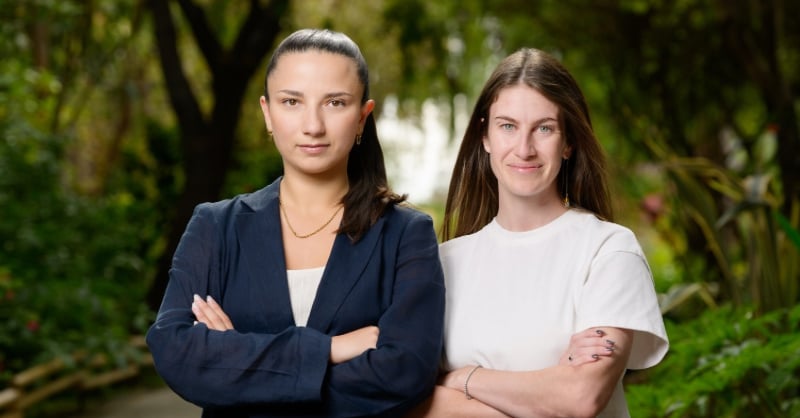
- Mosaic Intelligence Labs exited stealth with a $47M seed round.
- It is building sensing instruments and AI to help surgeons navigate blood vessels.
- 8VC, Fundomo, Lingotto Innovation and Obvious Ventures are among its backers.
Surgery has moved beyond large incisions. Physicians can now reach organs deep inside the body through a needle puncture, guiding flexible instruments through the vascular system. But navigating those pathways still depends heavily on individual surgical skill, live X-ray imaging and years of experience
Mosaic Intelligence Labs wants to change that. The San Francisco-based startup emerged from stealth with $47 million in seed funding to build intelligent surgical machines that can sense their surroundings, understand anatomy and help physicians navigate the body with greater precision.
The round includes backing from 8VC, Fundomo, Lingotto Innovation and Obvious Ventures. Mosaic is starting with endovascular intervention, a category of procedures in which physicians guide wires and catheters through blood vessels to deliver treatment.
8VC counts Anduril and Saronic among its portfolio, while Obvious Ventures lists AI robotics company Dexterity and drug discovery firm Recursion, and Lingotto Innovation, whose founding investors include Exor and Covéa, manages about $1.8 billion. Fundomo also took part in Mercor’s $750 million Series D.
Turning surgical experience into machine intelligence
Mosaic was founded by Dr. Ileana Pirozzi and Dr. Alison “Ali” Kight Mackanic, who met during their doctoral studies at Stanford. Their work alongside clinicians revealed a recurring problem: minimally invasive techniques have expanded what medicine can treat, but performing complex procedures still depends on knowledge held by individual surgeons.
“We spent years in operating rooms watching extraordinary people do extraordinary things. But what really stayed with us was just how much depended on knowledge that lived in the hands and minds of the person holding the instrument. We kept returning to one question: what would it take to scale the knowledge of the very best surgeons? We believe that starts with making our machines aware, and turning surgical repetition into experience we can learn from,” said Pirozzi, co-founder and CEO of Mosaic.
Today, physicians combine live X-ray images, preoperative scans, and the physical feedback of instruments to determine where they are inside the body. Interpreting those signals takes years of practice, and much of that expertise remains difficult to capture or transfer.
Mosaic is developing instruments with sensing capabilities that work alongside computational systems to reconstruct the vascular environment. Its platform aims to give physicians a continuously updated, three-dimensional view of anatomy and instrument position, supported by a robotic interface for precise control.
Building a world model for surgery
The company’s broader ambition is to bring embodied intelligence into the operating room. In robotics, a world model represents an environment and helps a machine predict how its actions will change it. Biology offers a related idea, the umwelt: the perceptual world an organism builds from its senses and its interactions with its surroundings. Mosaic is applying a similar principle to surgical instruments.
By capturing synchronised information about anatomy, instrument movement and physician actions, the company wants to create an evolving feedback loop between perception and action.
“There is no evolving loop between perception and action, and as a result they are structurally locked out of the ability to become intelligent,” said Mackanic, co-founder and CTO of Mosaic.
Mosaic wants machines to relate what they sense to what happens when they move, and to learn from repeated procedures. The immediate aim is to support physicians, with the longer-term goal of making surgical experience a source of cumulative learning.
Over time, the company says, catheters could also carry drugs, energy and biologics directly to a target site, widening the treatments and settings clinicians can offer.
Nanoflex, XCath and MDA are also bringing intelligence into surgery
Mosaic is entering a market where startups are already working to improve surgical precision through robotics and AI. In endovascular robotics, XCath, which has campuses in Houston and Pangyo, South Korea, raised a $30 million Series C on March 12, co-led by Crescent Enterprises and Dr. Fred Moll. Magnendo, which originated at MIT, raised an $18 million Series A in July, led by thrombectomy company Penumbra, for a magnetic robotic navigation platform it is preparing for first-in-human studies.
Swiss-based Nanoflex Robotics, an ETH Zurich spin-off, is developing a system that uses electromagnetic controls to move specially designed catheters through the vascular system. It raised more than $12 million in a Series A round led by Ascend Capital Partners in 2023, as reported by Tech Funding News, and in June won €12.5 million from the EIC Accelerator to support clinical validation towards CE marking in Europe.
Germany’s Medical Decision Alliance is approaching the problem from the intelligence side. The Leipzig-based startup raised €3.3 million in seed funding in May 2025, led by High-Tech Gründerfonds, to build AI systems that give surgical teams real-time, expert-driven guidance by learning from experienced surgeons’ techniques and decision-making.
Other companies are building adjacent parts of the surgical intelligence stack. Uncovr raised a $7 million seed round in June, led by Index Ventures, to analyse surgical video and generate operative reports. Caresyntax raised $180 million in August 2024, made up of $80 million in equity and up to $100 million in growth debt, for AI-powered software for surgical data and operating-room workflows. In eye surgery, ForSight Robotics raised a $125 million Series B in June 2025 for its robotic platform.
Mosaic’s proposed distinction is its focus on giving instruments their own sensing capabilities and combining that information with three-dimensional anatomical reconstruction and robotic control. It is attempting to build the infrastructure that connects perception with physical action.
A growing market, but clinical adoption remains the test
The wider market offers a substantial opportunity. According to Grand View Research, the global surgical robots market was valued at $14.1 billion in 2025 and is projected to reach $45.6 billion by 2033, a compound annual growth rate of 14.9% from 2026 to 2033.
A narrower category is also gaining attention. The Business Research Company estimates that the global interventional robotics market reached $2.26 billion in 2025 and could grow to $4.85 billion by 2030, at a 16.5% annual growth rate. That category is closest to Mosaic’s starting point in catheter-based procedures. Investors are also writing large cheques for physical AI outside medicine, as TFN’s report on Path Robotics’ $300 million Series E shows.
Mosaic says its team includes builders who have created surgical systems used to treat more than 20 million patients, as well as rockets, cars, artificial hearts and drugs.
The company is entering a crowded field, but its pitch is about learning as much as control: it wants instruments that perceive their surroundings and build knowledge from what happens during procedures.
The open question is whether Mosaic can turn that into clinical technology regulators and hospitals trust, and whether surgical expertise can become less dependent on a single physician’s experience.



