


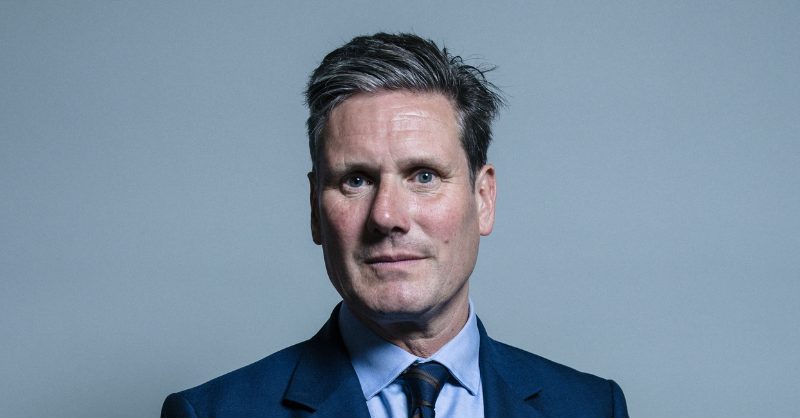
Keir Starmer stood outside Downing Street on the morning of June 22, 2026, and announced he would resign as Labour leader and prime minister. It had been coming for weeks: 20 ministerial resignations during his tenure, a catastrophic set of local election results in May, and the final pressure of Andy Burnham winning the Makerfield by-election and confirming he would seek the leadership.
Starmer accepted the answer “with good grace.” The UK tech industry had a less gracious response.
Tech Funding News spoke to founders, operators, and investors across the ecosystem about what a seventh prime minister in ten years means for British startups, venture capital, and the policy frameworks that the last government had finally started to build.
What came back was something more precise: a deep, practised frustration with the particular cost of political transition.
‘Drift is what kills us’
The most immediate concern is not who Burnham is, or what he stands for, or whether his economic platform is right for tech. It is what happens between now and September 1, the deadline Starmer himself set for a new Labour leader to be chosen.
Kashif Nazir, senior technical architect at cloud software firm Cloudhouse, put it plainly.
“The risk in a moment like this isn’t that Britain stops producing good startups. It’s that delivery stalls. Funding decisions, procurement programmes and the direction of regulation all tend to drift while a government changes hands, and drift is the thing founders and overseas investors like least, because it’s the thing they can’t plan around,” he says.
The policy architecture that could drift includes an AI Opportunities Action Plan, five designated AI Growth Zones with accelerated planning permissions, and a £500 million Sovereign AI Unit formally launched on April 16, 2026 — each one hard-won, each one vulnerable to a change in priorities at the top.
The structural problem political churn can’t fix
Every founder and investor TFN spoke to made the same distinction: the leadership change is not the cause of the problem. It is a symptom of something older and more stubborn.
UK pension funds allocate less than 1% of their assets to venture and growth equity, compared with 5 to 15% at leading US endowments. Fourteen times more capital flows into UK funds from overseas pensions than from domestic ones.
A parliamentary committee warned earlier this year that Britain risks becoming an incubator economy, generating promising startups only to watch them scale, list, and pay taxes somewhere else. Revolut has signalled a preference for a US listing rather than London; Monzo has indicated the US market remains under consideration alongside London.
Shah Ramezani, co-founder and chief executive of stablecoin payments infrastructure provider Noah, said the rot runs deeper than who is in Downing Street.
“The UK has been strong on talent and regulation but weak on actually pushing fintech innovation, and the tax environment has pushed a lot of high-net-worth individuals out. This quietly thins the pool of domestic capital available to back founders. A few years ago we had big US investors like a16z opening London offices with real fanfare, and several have since pulled back. The UK can’t take that confidence for granted,” he notes.
What the industry actually knows about Burnham
Andy Burnham’s record in Greater Manchester is the clearest signal available. He oversaw the growth of a significant northern tech cluster, delivered the Bee Network integrated transport system, and built a reputation as a pragmatic, delivery-focused operator rather than an ideologue.
In his Makerfield victory speech, he framed his ambition as “a new politics based on unity and hope” and said the moment was “a final chance to change.” What he has not yet defined is his national position on AI strategy, fintech regulation, or the scaleup financing gap.
Ben Parker, chief executive of compliance software firm eflow, expected a harder regulatory line.
“He has previously spoken about how regulation has a vital role to play in stimulating growth and investment, not just protecting the public, so I expect him to take a tougher stance on big tech in particular,” he notes.
Tom Wallace Smith, chief technology officer and co-founder of deep-tech company Astral Systems, said the UK’s scientific foundations are a genuine competitive advantage, but only if the next government actively protects them.
“The UK remains one of the best places in the world to build deep-tech businesses, thanks to its concentration of scientific talent, leading universities and strong engineering heritage. Long-term support across government for critical infrastructure, advanced manufacturing, nuclear innovation and skills development would send a strong signal that the UK is committed to remaining a global leader in science-led industries,” adds Smith.
Ramezani saw the transition as an opportunity if Burnham chose to take it.
“A new leader is a chance for a reset. We need to treat fintech as infrastructure worth competing for, get serious about backing innovation rather than only regulating it, and rethink a tax regime that is currently pushing wealth and capital offshore. Real tax growth for the UK won’t come from squeezing what’s already here. It will come from planting seeds of the next generation of tech companies. The UK risks not even being in that game soon, and that’s a tremendous amount of opportunity lost,” he said.
The talent question no one wants to answer
Beneath the policy debate sits the question that is hardest to quantify and most damaging if the answer changes: whether the UK is still the kind of place that ambitious people — founders, engineers, AI specialists — want to build their lives in.
Dima Eremin, co-founder of Bluedot, an AI note-taking company built by immigrant founders, said the tone of what comes next matters as much as its substance.
“Founders do not build in a vacuum. When there is constant political change, persistent inflation, higher interest rates and no clear sense of what comes next, people delay decisions, investors wait, customers postpone deals and ultimately hiring plans get pushed back. That waiting is what really kills growth. If political instability starts pushing the country towards more hostile rhetoric on immigration, that becomes a real concern. Not because every founder will suddenly leave, but because the next generation of ambitious people may ask whether the UK is still the place where they want to build their company, career and life,” he adds.
For founders in sectors where policy momentum is hard-won and easily lost, the stakes are especially concentrated. Anastasia Shubareva-Epshtein, founder of Carea, a pregnancy and postpartum wellbeing platform, said femtech has watched its window open and close under five successive prime ministers.
“Every change in leadership brings a reset on priorities like women’s health, digital health and startup investment, just as momentum was building. It’s incredibly hard to build a company on a foundation that keeps moving. I’d like to see the next prime minister commit to the Women’s Health Strategy and fund it properly. The founders who will define the next decade of UK healthtech are already here — we just need a government that actually shows up for us,” she concludes.
The message to Burnham
Taken together, the voices TFN spoke to are asking for three things: stability long enough to plan around, a domestic capital market that backs British companies rather than outsourcing that function to US pension funds, and a government that treats tech infrastructure — AI, fintech, deep-tech, femtech — as seriously as it treats roads and railways.
If Burnham is unopposed, he could be in office within weeks. If there is a contest, the party has until September 1. Either way, the UK tech industry’s window of patience is considerably shorter than that.
Britain excels at creating startups. The question Burnham will have to answer is whether it still wants to keep them.


