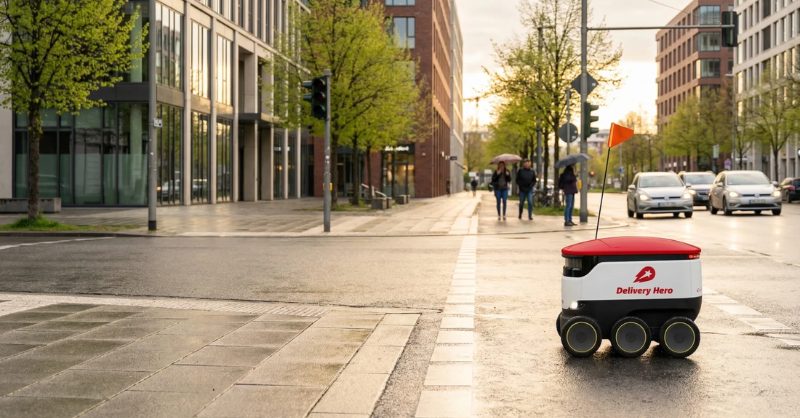
- Uber plans to pay €41.50 per share in cash to Delivery Hero shareholders. This values the German company at $14.8 billion.
- With this deal, Uber’s mobility and delivery platform will reach 99 markets. Prosus has agreed to sell its shares.
- Delivery Hero will sell its operations in 14 overlapping markets to SSW Partners, a New York firm, for about $1.6 billion. This move is meant to address expected EU antitrust issues.
Uber first offered about €10 billion for Delivery Hero two months ago. Today, the final deal has increased by nearly 50%. Berlin’s last big independent food delivery company is now owned by a US firm.
Uber is offering Delivery Hero shareholders €41.50 per share in cash, putting the company’s value at $14.8 billion, or $13.7 billion after considering Uber’s current stake. The offer increased quickly from Uber’s first approach in May 2026, which valued Delivery Hero at about €10 billion. By July 14, as talks progressed, the valuation reached €12.5 billion. The final offer is 8.7% higher than Delivery Hero’s last closing price, according to Investing.com.
Before the deal was announced, Uber directly owned about 24.77% of Delivery Hero’s voting shares and held another 11.74% economic exposure through equity derivatives, for a total of around 36.5%. Prosus, which owns about 17% of the shares, has agreed to sell all of its shares, bringing Uber’s total economic interest to about 53%. Delivery Hero’s management and supervisory boards both support the offer.
The takeover requires a minimum acceptance of 50% plus one share, as well as merger control and financial regulatory clearances. Uber has committed not to enter into a Domination and Profit Transfer Agreement for three years, the legal mechanism that allows direct control of Delivery Hero’s operations and profits as a subsidiary.
Closing is expected in the second half of 2027, with the offer document submitted to Germany’s financial regulator, BaFin, for approval under the German Securities Acquisition and Takeover Act.
Uber will pay for the acquisition with its own cash and a €14 billion bridge loan. The company’s capital allocation plans, including share buybacks, will remain unchanged.
This is Uber’s biggest acquisition so far, and it’s the second time in just over a year that a major US delivery company has bought a European rival instead of competing head-to-head. DoorDash bought Deliveroo for £2.9 billion in May 2025, less than half of Deliveroo’s 2021 IPO valuation, resulting in up to 830 job losses. At the time, Tech Funding News predicted Uber Eats would be the next to make such a move, and that prediction has come true.
Why Brussels was the obstacle
Delivery Hero is based in Germany, operates in several EU countries, and is active in over 60 markets worldwide. EU regulators have usually been tougher on tech mergers than those in the US. For example, the UK’s Competition and Markets Authority once blocked Amazon’s investment in Deliveroo over similar concerns.
To get ahead of possible regulatory issues, Delivery Hero agreed to sell its businesses in 14 markets to SSW Partners, a New York firm, for about $1.6 billion. These markets include places where Uber Eats and Delivery Hero both operate, such as Glovo in Moldova, Poland, Portugal, Romania, and Spain; foodora in Austria, Czechia, Norway, and Sweden; efood in Greece; Foody in Cyprus; PedidosYa in Chile and Ecuador; and Yemeksepeti in Turkey. In 2025, these 14 markets brought in $11 billion in gross bookings.
Uber will keep the other 50 markets, which made $42 billion in bookings. These include Baedal Minjok in South Korea; talabat in Bahrain, Egypt, Iraq, Jordan, Kuwait, Oman, Qatar, and the UAE; Hungerstation in Saudi Arabia; foodpanda in nine Asian countries; PedidosYa’s remaining operations in Latin America; and Glovo’s business in the Balkans, Caucasus, and Africa.
What Uber is buying
Together, the combined company will be active in 99 markets, with estimated gross bookings of $236 billion in 2025. The number of markets where Uber offers both mobility and delivery will almost double, from 34 to 58. Uber says that users who use both services generate about three times as many bookings and profit as those who use just one.
Uber CEO Dara Khosrowshahi says, “Delivery Hero’s talented team has built an extraordinary business, with beloved local brands and leading positions across many of the world’s fastest-growing delivery markets. Together, we’ll nearly double the number of markets where we offer both mobility and delivery services, scaling a proven platform that we believe will create significant long-term value for our customers and shareholders.”
Niklas Östberg, Delivery Hero’s CEO, adds, “We are excited about this opportunity with Uber and the possibilities it offers for our employees, shareholders, and partners. Uber’s global mobility and delivery platform and our shared commitment to innovation make this the right partnership to build on Delivery Hero’s strengths in local food delivery and Quick Commerce, and to take our Everyday App strategy further for our customers.”
Uber has promised to keep Delivery Hero’s headquarters in Berlin and not make any workforce changes there until at least 2029. The company will also invest €2 billion in Germany over the next five years, supporting its local staff, business operations across the country, and partnerships with German carmakers on autonomous vehicles.
Delivery Hero was one of the last independent European tech companies valued at over $10 billion. FREENOW was another, but Lyft bought it for $197 million in April 2025 as US mobility firms moved into Europe. Even Deliveroo’s first investors have said they would have chosen a US stock listing over London if they could.
Uber is paying for most of this deal with borrowed money instead of new investment. Having two major acquisitions in just over a year points to a new trend in the industry: which companies are buying and which are being bought.