- Tesorai raised a $5.3M seed round, taking its total funding to $8M.
- Perplexity Fund, IQT and South Central Ventures are among eight investors.
- Its AI recovered an Alzheimer’s marker that five brain studies had never reported.
Millions of scientific experiments generate vast amounts of data, but much of it remains difficult to access, compare or reuse. AI startup Tesorai wants to change that by extracting insights from raw experimental data, including information buried in studies run years ago.
The San Diego-based company announced a $5.3 million seed round on November 18, bringing its total funding to $8 million. Investors include Perplexity Fund, IQT, South Central Ventures, New Stack Ventures, NextGen Venture Partners, f7 Ventures, VitalStage Ventures and ZAKA.
Tesorai will use the money to work with more biopharmaceutical and research customers, build partnerships across the life sciences tools industry and extend its platform beyond proteins to other molecular data.
Turning overlooked experiments into usable intelligence
Raw data from biology experiments is scattered across public repositories, institutional archives and company databases. Different processing methods, formats and annotations make it hard to compare findings across studies.
Tesorai goes back to the underlying raw data rather than indexing papers or aggregating existing analyses. Its AI harmonises results across experiments and makes them searchable, so researchers can ask what the experiments themselves reveal, not only what a paper reported.
The platform has three products. Tesorai Search processes raw mass spectrometry data from new and historical studies, and was peer-reviewed in the Journal of Molecular Biology.
Tesorai Chat runs downstream analyses from conversational prompts, which usually need bioinformaticians, and can also be reached through a connector to large language models. Meanwhile, Tesorai Trove is an AI-ready catalogue of curated public proteomics datasets that researchers can use to validate and compare their own results.
According to the company, its patented model has processed thousands of files and terabytes of data in a few hours, work that previously took months.
Recovering an Alzheimer’s marker nobody reported
The clearest example came from an Alzheimer’s panel published in JAMA Neurology on August 10. Tesorai’s team reprocessed raw files from five public brain studies and recovered p-tau217, one of the panel’s seven proteins and a leading Alzheimer’s marker.
The company also says its data can help train AI models of biology. In an August preprint, its researchers reported that adding protein data let a small single-cell model match or beat larger models trained only on RNA data on multiple benchmarks. One of those models was more than 40 times its size.
“Life science R&D is accelerating and becoming increasingly autonomous, which makes it more important to extract as much insight as possible from every experiment,” said Charlie Kim, co-founder and chief scientific officer of Tesorai.
He adds, “Tesorai does this for a lab’s new data and for thousands of published studies. The gains compound as each experiment builds on the last, and ultimately, this helps the industry develop better medicines faster.”
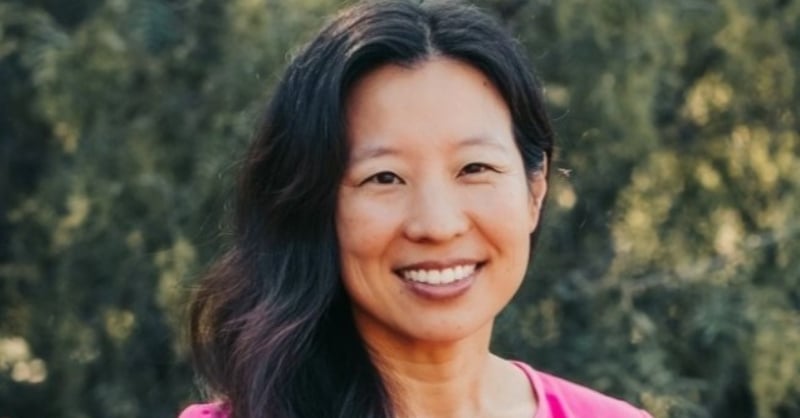
“Every experiment produces far more data than its paper can report, and most of it is never revisited. Our platform reclaims the value of experiments that have already been done and amplifies each new experiment with the relevant evidence that already exists,” added Melissa Miao, co-founder and CEO.
“The quality of data and metadata a model learns from can matter as much as the size of the dataset, and much of the data that biology’s AI models need has already been collected,” said Peter Cimermancic, co-founder and chief technology officer.
Former Verily leaders bring life sciences and AI experience
Miao, Cimermancic and Kim worked together at Verily, Alphabet’s life sciences company. Miao led business initiatives and strategic partnerships there, Cimermancic led AI teams, and Kim launched and led the Molecular Science programme.
Since its pre-seed round, Tesorai has signed contracts with biopharmaceutical and research organisations. It has collaborated with MD Anderson Cancer Center, NYU and the Michael J. Fox Foundation, and received its first US patent, for one of its AI models.
Investors say the data is the bottleneck. “AI has the potential to dramatically accelerate scientific research, but its impact will depend on access to high-quality experimental data,” said Joanna Lee Shevelenko, co-founder and general partner of Perplexity Fund. “Tesorai is building the infrastructure to make that data usable at scale, giving scientists and AI systems a stronger foundation for advancing research.”
“Labs are generating more experimental data than ever, but its full value depends on processing that data efficiently,” added Tatjana Zabasu Mikuž, managing partner at South Central Ventures.
Where Tesorai sits among AI biology startups
Most AI-for-biology money goes to models rather than data. London-based Isomorphic Labs raised $5 billion in Series C funding to move AI-designed medicines towards clinical trials. Manchester-based Imperagen secured £5 million in seed funding to combine AI, quantum simulation and laboratory automation for enzyme engineering. Amsterdam-based Cradle raised $73 million in Series B funding for generative AI tools that help scientists design and optimise proteins.
Tesorai takes a complementary route, reprocessing data labs have already collected. It also plans to catalogue more public repositories and supply processed data to companies building AI models of biology.
If the next gains in AI drug discovery depend on data quality rather than model size, will the winners be the groups that generate new data or the ones that learn to read what labs already have?