


- StandardX has raised £10 million in seed funding to establish an isotope refinery specialising in cancer care.
- Vsquared Ventures and East X Ventures led the funding round, with four other investors.
- In May 2026, the UK achieved only 69.6% of its cancer treatment target.
Certain cancer patients in the UK fail to receive treatment due to the global shortage of key isotopes, not because of any scientific obstacles. StandardX, a deeptech startup from London, has secured £10 million in seed funding to establish an isotope refinery. This new facility will produce rare radioactive materials which are essential for medicine and for future fusion energy.
The funding round was led by Vsquared Ventures and East X Ventures, two European deep tech investment firms, with firstminute Capital, the UK Innovation and Science Seed Fund, Brevan Howard Macro Venture, and Geometry also taking part.
This marks StandardX’s first financing since the company was established in 2025 by nuclear engineers Richard Pearson and Ross Allen, the two of whom aim to remedy the current situation in which the isotope supply chain is both reactor-dependent and fragmented.
A refinery for the rarest atoms on Earth
Different forms of chemical elements, known as isotopes, are important for cancer diagnosis, targeted radiotherapy, and new kinds of immunotherapy. Yet the world depends on an outdated system of reactors and cyclotrons, located in only a few countries, for the production of these isotopes.
StandardX is developing a compact particle accelerator in London that will enable a large number of isotopes to be produced on a commercial scale using a single portable device, rather than relying on the usual isotope-specific equipment.
Other companies are likewise addressing this issue. In the United States, NorthStar Medical Radioisotopes uses a combination of reactors and accelerators. Nusano raised $41 million in seed financing in 2018 and completed its Series C round in 2024.
While most of the competitors concentrate on just a few isotopes or rely on a single production method, StandardX aims to differentiate itself by providing a standard, portable design that allows it to produce isotopes close to hospitals and vary the output according to changes in demand, even though this concept has not yet been demonstrated on a large scale.
The therapy known as targeted alpha therapy can treat tumours without damaging healthy tissue, but because the required isotopes are so rare, clinical trials have been halted in the UK and Europe, the company states. StandardX intends to send its first isotopes to a medical research partner in 2027 and hopes to achieve industrial-scale production by 2029.
Pearson emphasises the urgency: “Isotopes underpin the next era of innovation across several key sectors, but all share the same constraints around supply. Shortages are most acute in cancer medicine, already impacting patients today, and stalling progress in the development of next-generation treatments. This problem will only get worse, with new cancer cases projected to increase 67% by 2050. So we’re building the platform the world needs to address this.”
From hospital wards to fusion reactors
The platform is also intended to produce tritium, the fuel used in fusion reactors. StandardX states that there are only about 25 kilograms of tritium in the world, whereas a single commercial fusion plant would need tens of kilograms each year. The company has entered into supply agreements with fusion developers, although it has not made public the names of those developers.
It isn’t a hypothetical bet concerning East X, since the firm was one of the co-leads of Proxima Fusion’s €411m fundraising earlier this year, one of the biggest fusion fundraising rounds in European history.
Theodore Mollinger, general partner at East X, stated: “StandardX is tackling a supply problem that matters enormously today in medicine, while building a platform that could become critical infrastructure for fusion tomorrow. What makes the opportunity particularly compelling is the asymmetry: StandardX can build a valuable isotope business without relying on fusion timelines, but if fusion scales, tritium could become one of the defining industrial bottlenecks of the sector.”
Lise Rechsteiner, a general partner at Vsquared, added: “Radiopharma is approaching an extraordinary inflection point, but isotope supply simply hasn’t kept pace. StandardX is building a fundamentally flexible production platform that can move with the science, from the isotopes medicine needs today to those that will define the next generation of cancer treatment.”
A market that hasn’t kept up
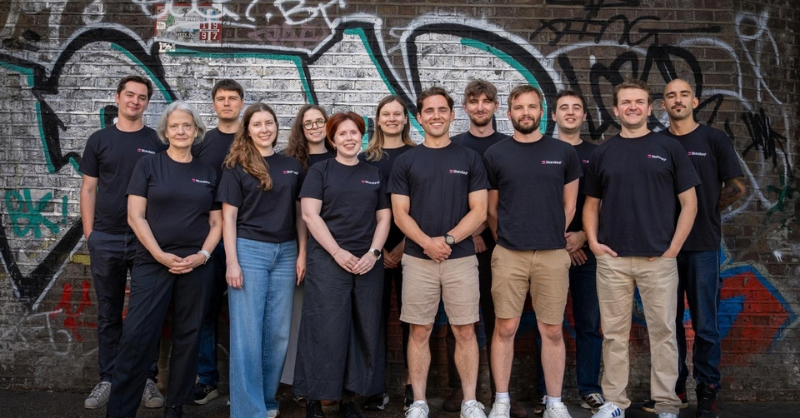
The £10 million investment will enable StandardX to expand its team to more than 15 scientists and engineers, a number of whom have previously worked at companies and institutions such as SpaceX, The London Clinic, Oxford, Cambridge, Fermilab, and the UK Atomic Energy Authority. The funds will also be used to secure an industrial site in London to build the first refinery system. This is all the money that the company has raised to date.
In 2025, the global medical isotopes market was valued at $7.26bn and is projected to reach $10.05bn by 2030, representing an annual growth rate of 6.6%. The majority of this growth is due to rising cancer rates and greater demand for targeted radiotherapy, a demand that the existing supply chain cannot fully meet.
StandardX does not anticipate beginning to supply its isotopes until 2027, and industrial-scale production is scheduled to start three years later. The key issue, then, is whether StandardX will be able to meet these targets before its competitors do, or before the fusion developers decide to look for other sources of tritium rather than relying solely on this seed round.


