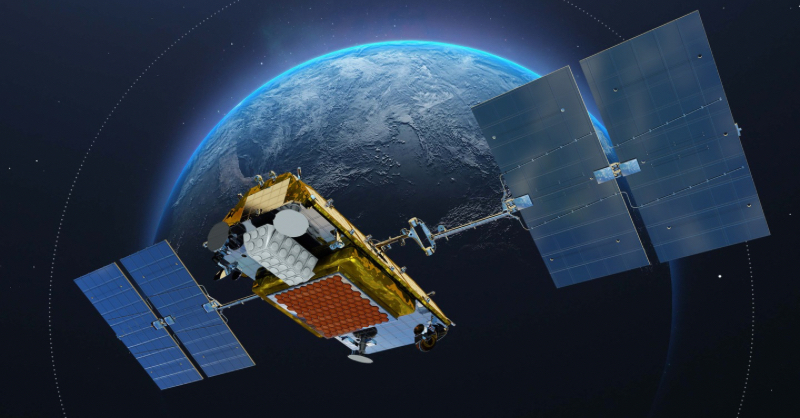
- Rocket Lab will buy Iridium for $8 billion, its fifth acquisition in roughly a year.
- The deal gives Rocket Lab a 2.5-million-subscriber satellite network and L-band spectrum.
- Iridium went bankrupt in 1999 and rebuilt itself into a profitable telecom supplier.
Rocket Lab has agreed to buy satellite operator Iridium Communications for $8 billion. This is Rocket Lab’s fifth acquisition in roughly a year, and together they show a company assembling itself, piece by piece, into something far more ambitious than a rocket company.
Under the agreement, Iridium shareholders will receive $27 in cash plus Rocket Lab stock, valuing the deal at approximately $54 a share, a 24.1% premium to Iridium’s previous closing price. The transaction is expected to close in mid-2027.
It hands Rocket Lab a satellite network already serving more than 2.5 million subscribers, licensed L-band spectrum, and customers across government, defence, aviation and maritime markets, assets that would typically take years and billions of dollars to build from nothing.
“We have a very profitable business being Iridium to start with, essentially a brand new constellation, and of course, the all-important spectrum,” says Peter Beck, founder and chief executive of Rocket Lab.
A pattern rather than a one-off
TechCrunch reported that Iridium is Rocket Lab’s fifth acquisition within about a year. It bought space robotics company Motiv in May 2026, laser communications provider Mynaric in April 2026, a precision component manufacturer in February 2026, and defence sensor maker Geost in 2025. Each deal adds a different layer of the stack: hardware, components, communications, and now an entire satellite network with an existing customer base.
Founded in 2006 by New Zealand engineer Peter Beck, Rocket Lab built its name on the Electron rocket, a smaller, cheaper alternative to the heavy launchers that dominated the industry for decades. It has spent the years since expanding well beyond launch into satellite design, spacecraft components, and satellite buses, while preparing Neutron, its reusable medium-lift rocket, which is due to make its first flight in the fourth quarter of 2026.
The logic behind buying rather than building is straightforward, even if the price tag isn’t. Standing up a competitive satellite communications network from scratch can take the better part of a decade and burn through billions before a single paying customer signs on. Iridium generated $871.7 million in revenue in 2025, according to Notebookcheck.
Beck has been explicit that the appeal is the existing, profitable business rather than a speculative bet, saying Rocket Lab is “not investing in hopes and dreams.”
Iridium’s second act
Iridium’s own history adds an unusual layer to the deal. Founded by Motorola in the late 1980s, it built one of the world’s first low Earth orbit satellite communications networks, then filed for bankruptcy in 1999 amid one of the most expensive telecom collapses on record.
It rebuilt itself over the following two decades into a steady, profitable supplier of mission-critical communications for governments, militaries, airlines and shipping companies. That turnaround now ends in an acquisition by a company that was a small New Zealand launch startup when Iridium was already digging itself out of bankruptcy.
The deal also fits a wider consolidation wave moving through the space and satellite industry. Viasat acquired Inmarsat, a private equity firm took Maxar private in 2023, and now Rocket Lab is absorbing Iridium.
Rocket Lab’s most direct rival on the integration front is the obvious one: SpaceX combines launch, satellite internet through Starlink, and defence work through Starshield under one roof, and its record-breaking IPO weeks earlier reignited investor appetite for exactly this kind of vertically integrated space business. Amazon is pouring billions into Project Kuiper to build a comparable network, while Eutelsat merged with OneWeb to compete on the same turf.
Rocket Lab’s roll-up puts it in that same conversation, but it is getting there by acquisition rather than building everything organically, a meaningfully different bet on how to win the same race. SpaceX itself has leaned more aggressively on a similar strategy in recent months: the company has been raising capital and taking on debt at a rapid pace to fund its expansion beyond rockets, including its acquisition of Musk’s AI company, xAI.
What integration requires
Buying five companies in a year is one thing. Turning Electron, the upcoming Neutron rocket, laser communications, defence sensors and now a global satellite network into one coherent business is another. Each acquisition needs to be integrated technically and commercially, not just absorbed onto a balance sheet, and the Iridium deal alone will not close until mid-2027, leaving more than a year for integration risk, regulatory review and market conditions to shift.
For now, Beck is betting that owning the whole stack, built through acquisition rather than from the ground up, is worth the price and the execution risk that comes with it. Rocket Lab’s pitch to investors is no longer simply that it is the second SpaceX. It is a company arguing that the fastest way to compete with SpaceX is to buy its way into every layer of the business at once.