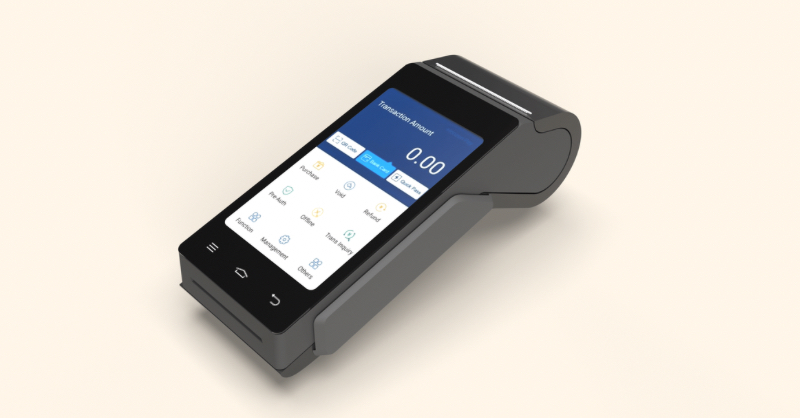
- Flutterwave has secured a strategic investment from Ripple as part of its Series E round, valuing the company at $3.2 billion.
- The deal embeds Ripple’s RLUSD stablecoin and XRP Ledger into Flutterwave’s infrastructure to replace slow correspondent banking.
- Flutterwave has processed more than one billion transactions worth over $50 billion since its founding in 2016.
Flutterwave, the African payments company that has processed more than $50 billion in transactions, is overhauling its underlying infrastructure to run on stablecoins, dollar-backed digital currencies that settle in seconds rather than days. Blockchain payments company Ripple has made a strategic investment in Flutterwave as part of its ongoing Series E round, valuing the Lagos-founded company at $3.2 billion.
Flutterwave will embed Ripple’s USD-backed stablecoin, RLUSD; its Ripple Payments network; and the XRP Ledger directly into its payment infrastructure. The result, the company says, will be a settlement layer that connects African businesses to global markets without routing through the slow, expensive correspondent banking system that currently handles most cross-border flows.
“This investment marks a pivotal moment in our journey. By unlocking faster settlement and lower-cost cross-border payments, we are building a payment superhighway that connects African commerce directly to the global economy,” says Olugbenga Agboola, Flutterwave’s chief executive.
Why the timing matters
Cross-border payments in Africa remain among the most expensive in the world. Businesses moving money between markets routinely pay steep foreign exchange fees, wait days for settlement, and navigate a fragmented banking infrastructure that was never designed for digital commerce. Stablecoins are increasingly seen as a way to bypass those bottlenecks entirely, offering programmable, near-instant settlement at a fraction of the cost.
Ripple has been steadily building its presence in Africa ahead of this deal. It has already rolled out RLUSD through partnerships with Chipper Cash, VALR, and Yellow Card, and its 2025 New Value Report found that 64% of finance leaders in the Middle East and Africa cited faster settlement and reduced costs as the primary reasons for integrating blockchain-based currencies into payment flows.
Backing Flutterwave, a company that has processed over one billion transactions, takes that strategy to a different scale entirely.
From Lagos startup to Africa’s payments infrastructure
Flutterwave was founded in 2016 by Agboola, Iyinoluwa Aboyeji, and Adeleke Adekoya to solve a problem that was simple to describe and hard to fix: making it easier for African businesses to accept and send payments.
At the time, accepting a payment from a customer in one African country and settling it to a merchant in another could involve half a dozen intermediaries, each taking a cut and adding days to the process.
The company, founded in San Francisco with operations across Africa, works by sitting between the business and the fragmented patchwork of local banks, telecoms-run mobile money systems, and card networks that make up Africa’s payments landscape, enabling businesses to accept cards, bank transfers, and mobile wallet payments across markets through a single integration.
Over the years, it expanded into remittances, merchant services, and enterprise payments, raising more than $500 million along the way.
With the Ripple integration, it is now adding a parallel rail for cross-border settlements where speed and cost predictability matter most.
A different bet from its rivals
That is what separates this move from a standard fintech funding round. Competitors like Moniepoint, which closed a $200 million Series C round in October 2025 and holds a unicorn valuation above $1 billion, are scaling business banking infrastructure. Chipper Cash, which once reached a $2 billion valuation on the back of backing from now-collapsed FTX and SVB Capital, competes in remittances and consumer transfers.
Flutterwave is positioning itself differently as the settlement infrastructure layer sitting underneath African commerce, with blockchain rails running alongside traditional ones.
“Flutterwave has built one of the most advanced payments networks in Africa, and as its infrastructure evolves, stablecoins are becoming central to that story,” notes Reece Merrick, Managing Director, MEA at Ripple.
Flutterwave has now raised more than $500 million in total. The new capital will be used to scale its infrastructure and expand its stablecoin-enabled payments roadmap, covering settlement, liquidity, and cross-border payment corridors across the continent.