- Mirendil is in talks for a $5B valuation, five times where it stood three months ago.
- Kleiner Perkins may lead the up-to-$1B round; Andreessen Horowitz is negotiating too.
- The San Francisco lab, founded by four ex-Anthropic, xAI and OpenAI staffers, still has no public product.
Three months ago, Mirendil didn’t have a product. It still doesn’t. That hasn’t stopped Kleiner Perkins from discussing a deal that would value the AI research startup at $5 billion, five times where it stood in June.
Kleiner Perkins is in talks to lead a new round of up to $1 billion, according to people familiar with the discussions cited by Bloomberg. Andreessen Horowitz, which co-led Mirendil’s seed alongside Kleiner Perkins, is also in talks to invest again. Neither firm has commented publicly.
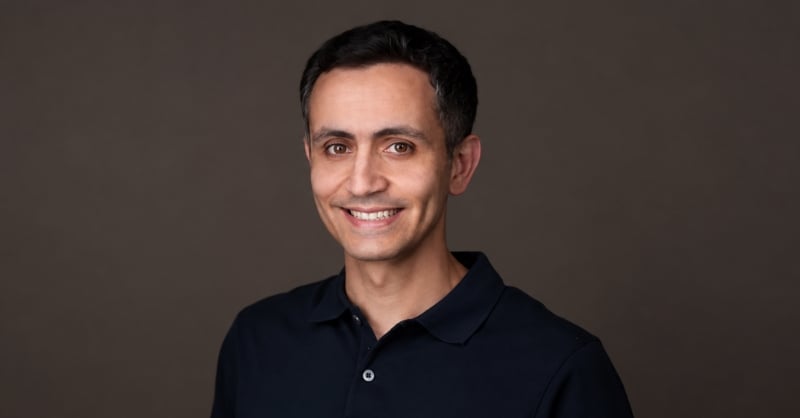
When Behnam Neyshabur announced the seed round in June, he put the company’s whole vision in one line: “the most important application of AI is AI itself.”
That vision is why investors keep writing bigger checks into companies with nothing to sell yet. The biggest labs already use AI to speed up their own research — Anthropic has said Claude now writes the majority of the code merged into its own codebase. What they don’t do is sell that capability to outsiders.
Mirendil wants to be the company that does, and it’s part of a wider wave: so-called neolabs have pulled in tens of billions of dollars in the past year on the same premise, that automating AI research itself is the highest-leverage bet in the industry.
An experienced founding team
Neyshabur and Harsh Mehta met at Google in 2019, after Mehta cold-emailed him. Neyshabur went on to co-lead Google DeepMind’s Blueshift team, working on reasoning and math for Gemini.
Mehta built the first version of Anthropic’s internal AI-research platform, at one point as a team of one. The two joined Anthropic in late 2024 and left together in December 2025, taking with them Shayan Salehian, an early xAI engineer, and Tara Rezaei Kheirkhah, a 23-year-old MIT graduate and Olympiad medalist.
The startup, founded in December 2025, works by training models that are specifically good at doing AI research, then wrapping them in a system that plans experiments, runs them, and iterates on the results with progressively less human input. The pitch is that a university biology lab or a materials-science team could get frontier-grade research tooling without first building a frontier AI lab of their own.
A self-improvising AI lab
Mirendil isn’t alone in chasing that idea, and the field it sits in is getting expensive fast.
Safe Superintelligence, led by Ilya Sutskever, has raised roughly $3 billion in disclosed equity at a $32 billion valuation, plus a separate $5 billion Nvidia compute deal, with no product to show for it. Recursive Superintelligence raised $650 million at $4.65 billion for a broader recursive self-improvement thesis. Thinking Machines Lab, Mira Murati‘s company, raised $2 billion at $12 billion, watched a $50 billion round collapse, and is now back in talks near $40 billion — but at least it has shipped products, Tinker and Inkling. Periodic Labs, also backed by Andreessen Horowitz, raised $300 million at $1.3 billion to focus narrowly on materials science, and was in talks for around $7 billion as of March.
Against that field, Mirendil’s edge is specificity: it isn’t trying to out-scale a frontier lab, it’s trying to license out the loop those labs already use privately.
That’s the real question hanging over this entire category, not just Mirendil: how much of this valuation is priced on research pedigree, and how much on an actual product roadmap nobody outside these labs has seen. Kleiner Perkins and Andreessen Horowitz are about to find out which one they’re betting on — again.