- Polysense recently raised $10.7 million in a seed round led by Felix Capital, which is five times more than its last funding round.
- The Belgian startup’s AI now runs on food production lines in Europe, the United States, and the Middle East.
- One potato processor cut peeling time by 45% using real-time quality monitoring.
A 45% faster potato-peeling process might not sound like a typical funding story, but results like this convinced Felix Capital to lead a $10.7 million seed round for Polysense. The Ghent-based startup uses cameras and AI on food factory lines to replace manual inspection.
Fortino Ventures, Syndicate One, and angel investors like 100IN also joined the round. This new funding comes almost a year after Polysense’s $2.2 million seed round. The company says the timing reflects real progress, not just growth.
“The past twelve months have been incredible. The traction is real. We went from early pilots to live deployments with some of the largest food manufacturers in the world, and they are growing their rollouts. The food industry has been waiting for a solution to this problem. Polysense delivers one that works. This funding lets us move faster and reach many more lines around the world. We are just getting started,” says Yarne De Munck, Polysense’s co-founder and chief executive
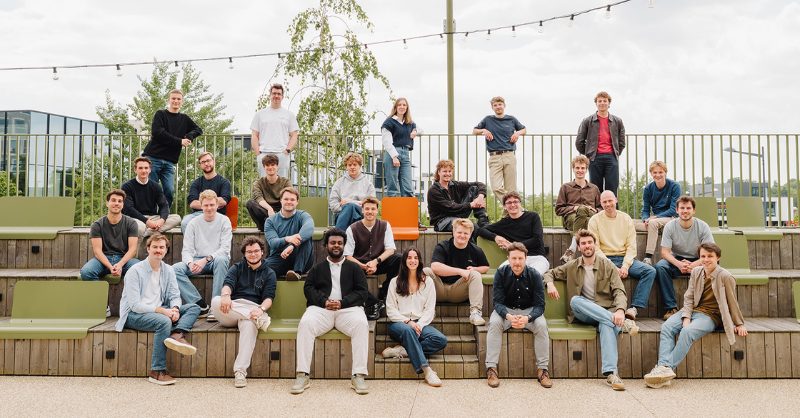
Polysense’s 30-person team now works with clients such as Agristo, Poppies Bakeries, Darta, and Fourneo Flatbreads, as well as former customers Roger & Roger and Coroos. One major European potato processor cut peeling time by 45% using real-time monitoring and automated adjustments. A bakery manufacturer also increased yield by automatically controlling oven temperature.
“What sets Polysense apart is their deep understanding of food manufacturing. They understand the complexity of our production environment and the challenges we face every day. The technology works on the production floor, delivers measurable results, and helps our team make better decisions in real time,” adds Kristof Lefever, owner of Fourneo Flatbreads.
Why do factories create food waste before products reach consumers
In the European Union, food and drink manufacturing makes up 19% of all food waste, according to Eurostat. This runs counter to the idea that most waste occurs at home or in stores. Raw materials can vary in moisture content, density, and other properties from batch to batch, but production settings often remain the same. By the time human inspectors notice something is wrong, the product is already wasted.
De Munck, chief technology officer, Lucas Van Dijck, and Jarne Bogaert started Polysense in 2022 after meeting as engineering students at Ghent University. Before working on food manufacturing, they built an autonomous race car together for the university’s Formula Student team.
The startup works across three main areas. Polysense Qualify provides nonstop inspection, checking quality every second, and quickly spotting any changes or foreign material. The Polysense Platform brings all this data together for a clear view of quality and performance. Polysense AutoControl changes machine settings in real time, adjusting for ingredient and condition changes to fix problems before they cause waste.
“I am incredibly proud of what our engineering team has built. For the first time, food manufacturers have a system that inspects every single product on the line in real time and automatically corrects the process when something drifts. This is not an incremental improvement. It unlocks a level of quality control the food industry has never had access to before,” Van Dijck notes.
Existing players like TOMRA Food, which uses machine learning to sort and grade produce, Bühler Group, the Swiss industrial equipment giant that builds inspection into its processing lines, and Cognex, a machine vision company serving food and beverage plants among other sectors, mostly focus on detecting defects and sorting output.
Polysense is trying to close the loop instead, automatically adjusting the machine itself rather than just flagging a problem, which it argues is what actually cuts waste. That closed-loop approach puts it closer to the broader wave of industrial AI systems that act on machines directly than to conventional inspection vendors. Rivals in the wider agrifoodtech funding wave, meanwhile, tend to focus on new ingredients or crops rather than fixing the manufacturing line itself, which is where Polysense is positioning its edge.
How investors are thinking
Angela Chou, an investor at Felix Capital, says the London firm had been looking at the food value chain for a while before meeting Polysense.
“At Felix, we have studied and invested in many parts of the food value chain, and have a deep appreciation for the size of the market as well as the depth and complexity of the problem that Polysense solves. When we first met Polysense, we were immediately impressed with the team’s knowledge, ambition, and deep technical rigour. Within a few months of launch, Polysense won the trust of some of the biggest food manufacturers in the world, and has delivered tangible value to their customers. We are excited to be a part of this journey alongside a remarkable group of partners,” Chou says.
Felix Capital has invested in food and consumer brands such as YFood, which Nestlé acquired, as well as Mirakl and Pigment. The firm is one of several venture capital investors focusing on the food and agriculture value chain, following moves like Oyster Bay’s €100 million second fund for future food and Anterra Capital’s $100 million first close for its third fund aimed at food and agriculture technology.
The new funding will help Polysense cover additional production stages, expand its engineering, sales, and customer success teams, and accelerate deployment. It remains to be seen whether Polysense can keep its edge as larger auto-specialisations also seek to reduce waste.