


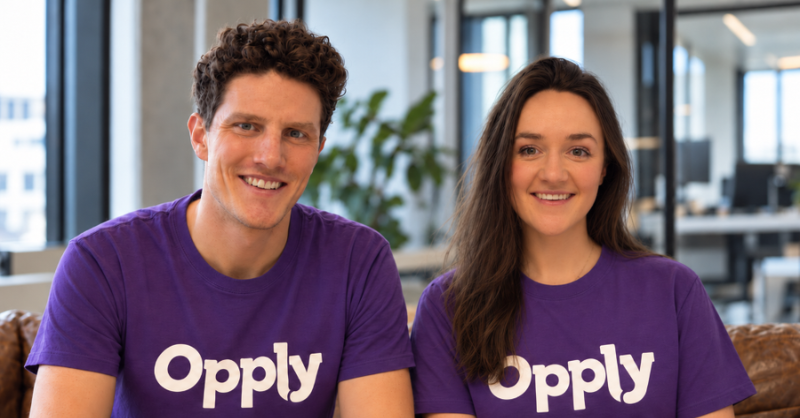
- Opply has obtained $7.5 million in financing, with Chalfen Ventures heading the round.
- The London-based startup says its gross revenue has increased 15 times over the last year.
- Freehand and Didero are other major players in AI procurement, with Freehand having raised $75M and Didero $30M.
Helen Murphy previously managed Procter & Gamble’s biggest e-commerce account and also launched a pet and baby food business. Her company, Opply, has now secured $7.5M and says its AI agents handle purchasing for consumer brands.
Chalfen Ventures led the fundraising round, joined by Index Ventures, Anthemis, Entrepreneurs First, In This Together, and Ventures Together. Chalfen, Anthemis, and Entrepreneurs First had also taken part in Opply’s $4 million seed round in June 2022.
From supplier marketplace to ‘brain’
Murphy and co-founder Martin Postel, who completed his training at ETH Zurich and has since become chief technology officer, founded Opply in 2021 with help from Entrepreneurs First, a talent investor that raised $200M in March 2026.
The company’s first product was a marketplace that linked up small food and drink brands with suppliers. When it raised its seed funding, Opply said its customers saved an average of two months on sourcing time and 20% on costs.
According to Opply, the company developed Brain, a system of AI agents that manage operations for consumer packaged goods brands in response to customer demand. The agents locate suppliers, place and monitor purchase orders, verify compliance documents, and pay suppliers on the brands’ behalf. The brands must repay Opply within 90 days.
What agentic means in practice is that the software takes action by itself rather than just making suggestions. The Opply website states that Brain still requests approval before spending a brand’s money.
“CPG supply chains have remained fragmented and manual for far too long. By taking operational complexity out of the equation, we give ambitious brands the headroom to grow faster, invest in innovation and reach more customers. Our AI technology doesn’t just tell brands what needs to be done. It does the work, managing everything from sourcing and procurement to payments and supply chains,” said Murphy.
15x growth in a year
According to Opply, its gross revenue increased 15x over a 12-month period, and its operations in the United States grew 30x since it started in Chicago in 2025.
At the same time, clients such as the London drinks brand Agua de Madre and the US kombucha brand RMBR achieved cost reductions of 40% and a 12-fold return on investment within a year. Opply also gave the brand longer payment terms and a higher credit limit, so part of the benefit comes from improved working capital.
Mike Chalfen, the sole general partner of Chalfen Ventures in London and one of Opply’s first investors, said, “Opply has all the ingredients to become a globally significant business: custom AIs that together have proven to make customer operations work end to end; as a result, exceptional growth; and a huge market opportunity in front of it. Its rapid expansion across both the UK and US demonstrates the strength of demand for technology that fundamentally changes how CPG businesses operate and scale.”
Better-funded rivals, a different customer
Opply competes with other AI agent companies. Freehand raised $75 million on July 29, 2026, with Battery Ventures and NewRoad Capital Partners leading the round, and says its agents manage supply-chain spending at both Meta and Unilever. Didero raised $30 million in its Series A in February 2026, and the London-based company Magentic obtained an $18 million Series A on September 17.
However, Opply’s funding round is considerably smaller: about one-tenth of Freehand’s, one-quarter of Didero’s, and less than half of Magentic’s.
“This latest funding gives us the opportunity to bring that model to many more businesses, from ambitious emerging brands to major global players,” Murphy concluded.
Opply considers itself aligned with the move toward vertical AI, software developed for a specific industry. According to a McKinsey survey of 41 senior commercial leaders in the United States and Europe, many CPG companies use agentic AI primarily to cut costs and speed up existing tasks, but McKinsey believes the greater benefit lies in growth.
The greater difficulty lies in moving upmarket. While a small drinks brand may agree to let a startup place orders and provide credit as long as costs fall by 40%, a large manufacturer will most likely require information on margins, access to audit trails, and a proposal for how the credit will be funded. The key question this funding round begins to address is whether a specialised company that operates only in the consumer goods sector can win this trust before larger competitors do.



