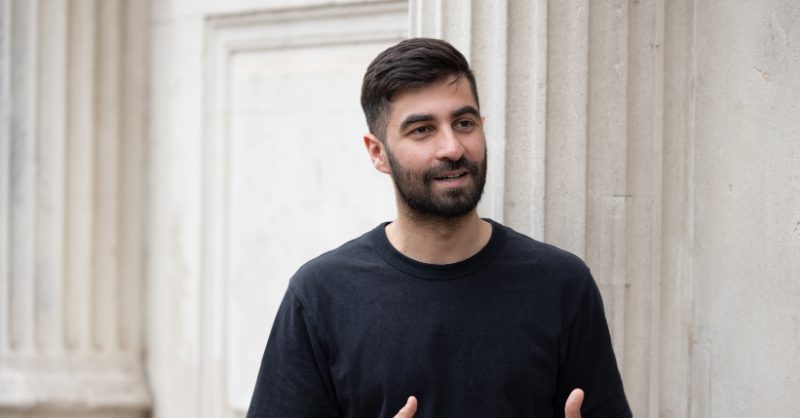
- Isometric, founded by serial entrepreneur Eamon Jubbawy, has raised $40M in a Series A led by AVP, with backing from Plural, Lowercarbon Capital, Kleiner Perkins chairman John Doerr, and investor Walter Kortschak.
- Its AI certification platform, Certify, reduces industrial certification timelines from 12 months to just hours. After proving this model in carbon removal, Isometric is now aiming for the larger $350B industrial certification market.
- Isometric has contracted more than 16 million tonnes of carbon removal across more than 200 projects, with customers including Microsoft, Boeing, JPMorganChase, and Anglo American.
If you place a tonne of green steel next to a tonne of conventional steel, you cannot tell the difference. This is the certification problem, and it is central to almost every industrial transaction worldwide.
Eamon Jubbawy, who co-founded Onfido and grew it to verify over a billion identities before its $650M acquisition by Entrust in 2024, has now raised $40M in a Series A to address this issue with Isometric.
The round was led by AVP, the independent investment platform that counts global insurer AXA as an anchor investor, with all existing institutional investors returning: Plural and Lowercarbon Capital. Personal investments came from Kleiner Perkins chairman John Doerr and investor Walter Kortschak.
The problem no one has digitised
Certification is how the industrial economy determines what is real. Before a regulator grants a permit, a buyer pays a green premium, or an investor releases capital, someone must confirm that a claim is true.
For decades, this confirmation has been slow, manual, and expensive. Auditors have sampled only a fraction of the evidence and inferred the rest, with timelines often stretching to 12 months or more. BCG estimates the total industrial certification market at $350 billion. Yet, this is still one of the last major markets where AI has barely made an impact.
Jubbawy’s argument is straightforward: the same structural problem he solved in identity verification, where humans did slow, sample-based checks on data that machines could process completely, still exists in every industrial sector.
Isometric, founded in 2022 and based in London and New York, uses AI agents to read and cross-check millions of data points behind an industrial claim, such as sensor readings, satellite images, supply chain records, and lab results. These agents flag discrepancies and highlight only the cases that need human judgment. Auditors who once checked just a sample can now review everything. What once took a year now takes only hours.
“For decades the certification industry faced a tradeoff between speed and rigour. Do it fast, or do it right. With Isometric, industrial companies can get both,” Jubbawy notes.
Isometric is not the only company to notice this gap. London-based Seamflow recently raised $4.5M to address certification delays in medical devices, showing that AI-focused startups are entering the broader testing, inspection, and certification market from several directions.
Carbon was just the rehearsal
Isometric started with carbon removal, one of the most contested and closely watched areas in certification, and used it as a testing ground.
The voluntary carbon market has long been led by incumbents using manual methods, such as Verra, which accounts for about 63% of voluntary carbon market retirements and has issued over one billion credits, and Gold Standard, a Switzerland-based non-profit founded by WWF.
Unlike rivals, Isometric introduced a different approach: AI-based verification, a flat fee charged to buyers instead of per-credit fees from suppliers, which removes the incentive to over-certify, and a public registry where every certificate is visible.
The results speak for themselves. Isometric is now the largest carbon removal certifier by contracted volume, with commitments to more than 16 million tonnes across over 200 projects.
Customers include Microsoft, Anglo American, JPMorganChase, and Boeing. In December 2024, it became the first carbon removal registry to receive accreditation at the same time from the ICVCM, ICROA, and CORSIA, which are the three organizations that oversee integrity in the voluntary and aviation carbon markets.
Why Doerr wrote a personal cheque
The mix of investors is notable. AVP, which manages more than €2.5B in assets and has previously supported companies like Deepgram and Finbourne Technology, led the round. Returning investor Lowercarbon Capital, which has backed over 100 companies in energy and carbon removal, brings strong sector expertise.
However, the personal involvement of John Doerr, the Kleiner Perkins chairman whose investments include Google and Amazon, is not easily explained as a routine institutional move. Personal investments at Series A from investors of his stature usually signal a strong personal belief that goes beyond the typical fund mandate.
“Certification has always forced a choice between speed and rigor. Isometric has eliminated that compromise. Eamon and the team have built a genuinely category-defining company, and their agentic AI platform has the potential to transform certification across the industrial economy. We’re thrilled to partner with them as they scale that vision,” says François Robinet, managing partner, AVP.
“Isometric is exactly the kind of frontier AI success story we want to see built and scaled in the UK — turning world-leading ideas into global businesses that attract top international investment. This investment shows how, with the right support to access talent and scale, Britain can be the best place in the world to grow the next generation of world-changing companies,” adds Blair McDougall, minister for economic transformation.
What the $40M funds
The capital will be used to further develop the Certify platform and expand it beyond carbon into other industrial sectors. The carbon credit validation and certification market alone is expected to grow from $161.6M in 2025 to $448M by 2030, with a compound annual growth rate of 22.6%, according to MarketsandMarkets.
If Isometric can show that AI agents are reliable enough to certify low-carbon steel, aviation fuel, and industrial energy, not just carbon credits, the $350B total addressable market becomes available.
The real question is whether regulators, buyers, and insurers will trust a certificate issued in hours as much as one that took a year. This is the challenge Jubbawy is tackling with this round, and it is a much bigger challenge than it appears.