


- Fuse Energy reaches group-level profitability just three years after launching and now serves more than 300,000 UK households.
- Revenue run rate surpasses $550 million as the company closes an additional $30 million in Series B funding from 20VC and Collaborative Fund.
- The vertically integrated energy supplier plans to hire 380 people and expand across Europe and North America.
For decades, the energy industry has operated through a fragmented model. Power generation, trading, distribution, and retail have largely been handled by separate organisations, creating layers of inefficiency that ultimately find their way onto consumers’ bills.
Fuse Energy believes there is a better way.
The London-based energy company has reached group-level profitability just three years after its public launch. The company has been EBITDA-positive every month since December 2025 and has grown annual recurring revenue to more than $550 million, following a 32% increase during the first quarter alone.
The performance has also attracted fresh investor backing. Fuse Energy has closed an extension to its Series B round, securing an additional $30 million from 20VC and Collaborative Fund.
The new investors join existing backers Balderton Capital and Lowercarbon Capital, bringing total funding to $250 million.
Rebuilding the energy value chain from scratch
Founded in 2022 by Alan Chang and Charles Orr, the former executive team behind the rapid global scaling of fintech giant Revolut, Fuse Energy was built around a simple idea: energy companies should own more of the value chain rather than relying on a network of third-party providers.
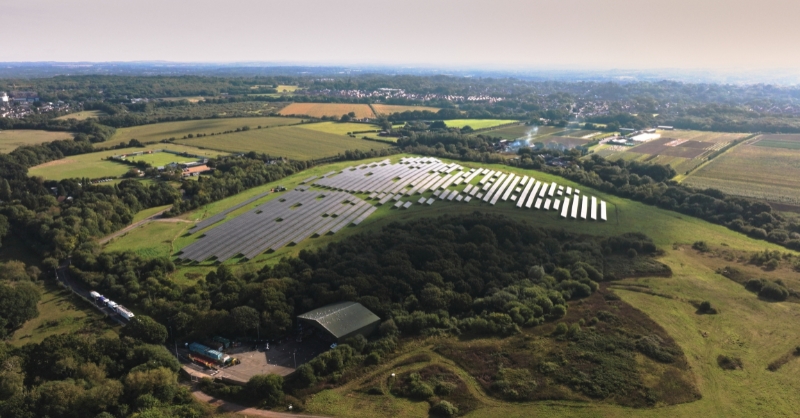
“We started Fuse Energy with a simple belief: that energy should be low-cost and abundant,” said Alan Chang, CEO and co-founder of Fuse Energy. “Getting there means owning the problem end-to-end: whether that’s writing your own trading algorithms, building your own solar farms, or engineering your own products.”
The company owns and operates generation assets, trading systems, and customer-facing retail operations. By controlling the entire process, it aims to improve efficiency, reduce costs, and shield itself from market volatility.
Today, the company supplies more than 300,000 UK households and is developing a 1GW renewable energy generation pipeline.
How AI is helping reduce energy costs
At the centre of Fuse’s strategy is technology.
One of the biggest challenges facing energy suppliers is accurately forecasting customer demand. Most providers still rely heavily on historical consumption patterns when purchasing electricity on wholesale markets.
Fuse instead uses algorithms built around a digital twin of every customer property. The system incorporates factors such as local weather conditions, building efficiency, and real-time usage patterns to predict demand at the household level.
The result is a more precise balancing of supply and demand, reducing waste across the system and allowing efficiency gains to be passed on through lower energy prices.
According to the company, this approach delivers efficiency improvements of around 17% compared with traditional suppliers while enabling it to offer one of the UK’s most affordable fixed tariffs.
Why investors are backing the model
The energy transition is creating enormous opportunities for companies that combine software, infrastructure, and renewable generation. Investors increasingly believe that future energy winners will not simply supply electricity but optimise the entire value chain using technology.
The additional Series B funding reflects growing confidence in Fuse’s ability to execute that vision. Beyond expanding internationally, the company plans to launch a plug-in solar product that will allow households to generate renewable energy directly from home.
To support growth, Fuse is also opening a new 32,000-square-foot headquarters in Canary Wharf and plans to hire more than 380 employees over the next year.
The competitive landscape
Fuse operates in an increasingly competitive market where technology-driven energy businesses are attracting investor interest.
One primary rival is Octopus Energy, now one of Europe’s largest energy technology companies, which has built a multi-billion-pound business around its Kraken operating platform and renewable energy operations. Another competitor is Ovo Energy, which continues investing heavily in smart energy management and decarbonisation initiatives as competition intensifies across the UK retail energy sector.
In the climate-tech space, companies such as Tibber that attracted¸ $100 millionto develop AI-powered energy management platforms that help consumers optimise electricity consumption and reduce costs.
What differentiates Fuse is its ambition to control the entire energy stack, from generation and trading to billing and customer experience, rather than focusing on a single part of the value chain.
The broader outlook
Profitability has become increasingly rare among high-growth energy and climate technology startups. Fuse Energy’s ability to achieve it while continuing to invest in expansion, product development, and infrastructure suggests a business model that is gaining meaningful operational leverage.
With fresh funding, a growing customer base, and ambitions that stretch beyond the UK, the company is positioning itself as more than an energy supplier. It wants to become a technology platform for the future of energy.
The challenge now is whether that model can be replicated internationally as Fuse expands across Europe and North America. If successful, it could offer a blueprint for building the next generation of energy companies.


