


- Fragment raised $56M in a Series A led by 8VC and a seed round co-led by General Catalyst and A*.
- Fragment’s agents handle purchasing and payment exceptions for Graybar and CNX through their existing systems.
- About 20% of transactional procurement is still done manually.
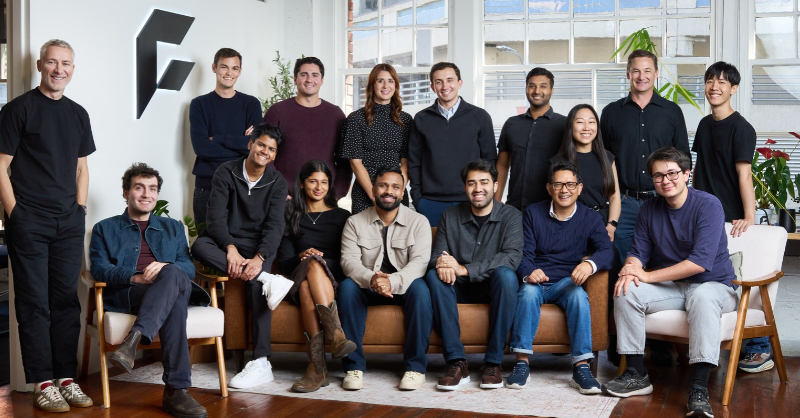
Pranav Mulgund was exposed to supply chain early in his career, later worked as a physics researcher, and led part of Zoom’s product team. His San Francisco startup, Fragment, emerged from stealth today with a $56 million Series A raise.
8VC led the funding round, and General Catalyst and A* co-led the seed round. Angel investors include Roelof Botha, Nikesh Arora, Jeff Wilke, Eric Wu and Dennis Cinelli.
The exceptions that software never fixed
Mulgund started the company with Naveen Kashyap, with whom he’s been building agentic products together long before AI agents were really a thing. The problem the duo saw with agents in large organisations is not that the AI is weak at all, but the data underneath is scattered across systems that were never designed to work together.
This is especially true in procurement. Fragment reports that global manufacturers constantly deal with order changes, invoice issues, and all sorts of exceptions. Shortages and tariff changes make it even harder. The procurement staff have to pull information from a range of systems and teams and often resort to ad hoc business rules to get things done.
Fragment’s approach is via the Autonomous Context Engine (ACE), which pulls together data from across the various systems in the business and captures the policies, relationships and knowledge that the people in the business actually use. The agents review exceptions, decide what to do, and then execute the approved resolution end to end rather than simply flagging the issue or making a suggestion.
So if an invoice doesn’t match its PO, the agent will look at that and, if it’s permitted, will resolve it. ACE works with the existing data so there’s no need for data migration or any lengthy integration projects, as per Fragment.
“Procurement teams have spent too much of their time chasing discrepancies across systems. AI now makes it possible to build software that understands the business and carries that work through. Our ambition is to make complex operational work a capability of software itself, freeing buyers to apply their expertise to the decisions and relationships that secure supply, protect margins and help the company grow,” said Mulgund, co-founder and CEO of Fragment.
Fragment’s site states the average customer has seen $5M to $10M in impacted costs, a circa 50% reduction in exceptions in the first few weeks, and over 90% of exceptions being resolved without any human intervention.
Competitive landscape and differentiated architecture
Fragment isn’t the first company to be using AI agents in procurement. Zip did a $190 million Series D in Oct 2024 at a $2.2 billion valuation. Levelpath, which positions itself as a platform for indirect spend, raised over $55M in June 2025. Pactum raised $54 million in June 2025 for its agents, which negotiate with suppliers.
Elsewhere, Didero raised $30 million in a Series A in February for agents that integrate with ERP systems and handle exceptions for manufacturers and distributors. Freehand did a $75 million round on 29th July and reports that their agents are managing supply chain spend at both Meta and Unilever.
Unlike rivals, Fragment is focused on direct procurement. Its solution works with the customer’s existing systems. Rather than charge by user seat or headcount, they charge based on the amount of work their agents do.
The market they’re targeting is growing very rapidly. Mordor Intelligence has an estimate of the AI procurement platform market growing from $4.99 billion in 2026 to $19.74 billion by 2031.
An investor list with operators in it
The funding will be used to further develop ACE, expand into source-to-pay, and to support further deployments with a number of major global enterprises.
“Most software companies earn their way into the enterprise over time. Fragment started there. By building from day one for companies with enormous scale, thousands of dependencies and immense complexity, Fragment is creating technology that can meet a much higher bar from the outset. That approach gives the company a powerful foundation for what comes next,” said Jack Moshkovich, partner at 8VC.
The business model has an inherent problem. If Fragment’s agents are working as intended, then there will be fewer exceptions, and the company will be in a position where it has to move into new workflows in order to continue to grow.
Trust is another important factor. Letting an agent decide and carry out payment resolutions goes beyond making recommendations, and so far, Fragment has named only two customers. How many more companies will allow this will be a key test of this funding round’s success.



