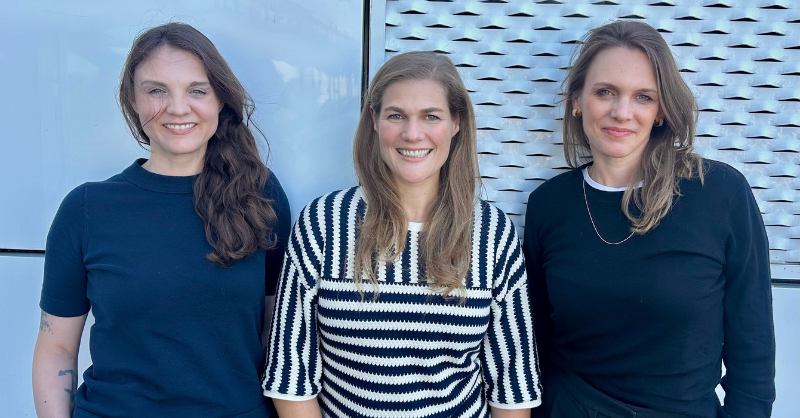
- Finches raised €2 million in pre-seed funding, with HTGF as lead and Vanagon as co-lead.
- The company’s software can identify crop risks in the fields weeks before shortages reach food manufacturers.
- Finches is entering a market in which competitors like Prewave and Everstream have already raised tens of millions of dollars.
Catharina van Delden looked after 500 pecan trees on her family’s farm in Uruguay. According to her, crop losses can be detected several months in advance in dry years, but buyers usually do not receive this information. Her startup, Finches, has raised €2 million to help bridge this gap for food manufacturers.
The pre-seed round was co-led by the High-Tech Gründerfonds and Vanagon Ventures, with Bayern Kapital becoming a new investor, and several of the existing backers, including UnternehmerTUM Funding for Innovators, as well as a number of industry and tech angels, adding more money.
“This drought made one thing clear: European food producers can no longer count on getting the raw material volumes and quality they need every season. Sourcing raw materials has become a core issue of supply security. While risk signals usually emerge weeks ahead of time, procurement teams rarely see them in time to act,” said van Delden, Finches’ CEO and co-founder.
The supply chain risk management market is valued at $3.1 billion in 2024 and is expected to rise to $5.2 billion by 2030, representing a yearly growth rate of 9.2%.
From a pecan farm to the procurement desk
Finches was founded in 2025 by its CEO, Catharina van Delden, and its CTO, Dr. Stefanie Glenn. In January 2026, Alexandra Vázquez Bea became a co-founder and took on the roles of CFO and COO. The company is located in Wörthsee, near Munich, and has a remote-first team.
Finches combines a buyer’s own procurement data, such as supplier profiles, acreage, and contracts, with external information, including weather reports, satellite images, local news, scientific research, and field reports from agronomists.
Based on this data, the system issues warnings that identify affected areas and supply chains and recommend actions to take. As the Finches states, each signal is verified against the customer’s recipes and requirements so buyers can determine which of their products may be impacted by crop problems. Meanwhile, agronomists record their farm visits using a mobile app, even when they are not connected to the internet.
“We connect hyper-local, real-time field observations with broader geopolitical trends, market data, global climate models, and internal company records. That turns an overwhelming number of variables into clear decisions, and gives teams full control over sourcing chain complexity,” noted Glenn, Finches’ CTO and co-founder.
Finches works with clients in the food and beverage, pharmaceutical, and cosmetics sectors. Finches Intelligence launched in September 2026, and among its early customers are an organic baby food producer and a North American Fortune 500 food company.
Where Finches sits among supply chain risk tools
Finches is by no means the only company offering early warnings. In June 2024, Vienna-based Prewave raised €63 million in a Series B round, with Hedosophia as the lead investor. Everstream Analytics also raised $50 million in a Series B in April 2023, co-led by Morgan Stanley Investment Management’s 1GT platform and StepStone Group. Interos has raised about $192 million across eight funding rounds, most recently a $20 million Series D-II in January 2026.
Finches differs in that it monitors crops and the specific fields where they are grown. As a result, it presents a more specialised and complicated data challenge. Although weather and satellite data are easy to obtain, Finches’ advantage lies in observations from agronomists and buyers, who provide the company with their contracts and recipes.
“The days of predictable crop yields and stable costs are well behind us. Waiting for a supply disruption to happen before taking action wrecks margins. Finches reverses that: it turns climate, pest and disease signals into decisions teams can make well before a shortfall reaches the plant. In an increasingly volatile world, operational resilience is a financial necessity,” noted Vázquez Bea, Finches’ CFO, COO, and co-founder.
Public money and Munich funds back the round
The founders intend to use the new funds to accelerate product development and expand their sales operations. Finches has not stated any particular hiring objectives.
“Finches addresses one of the most pressing challenges of our time: securing global agricultural supply chains in a changing climate. We were particularly impressed by how precisely the founding team understood the industry’s pain point and how quickly they developed a technological solution to it,” said Anna Stetter, an investment manager at HTGF.
“The food industry is seeing supply chain predictability evaporate without a real answer. Finches brings it all together, buying procurement teams the lead time they need to act before it’s too late,” added Susanne Fromm, general partner at Vanagon.
Cocoa has shown how quickly market shocks can reverse: prices fell by around 70% over 14 months before rising again. For Finches, the question is whether its alerts are useful during years of stability and whether €2 million is enough to gather field data to compete with bigger rivals.