- Agentiq has raised $4 million, led by defy.vc, to sell fans stakes in athletes’ incomes.
- Investors buy units tied to an athlete’s future on-field Brand Income, not a match result.
- Signed pitcher Hunter Dobbins faces a 12-month recovery after elbow surgery.
Hunter Dobbins is one of the athletes Agentiq says it has signed. He had elbow reconstruction surgery in early September and faces a 12-month recovery, a St. Louis Cardinals official said, according to Sports Illustrated. Injury risk like that is what Agentiq asks fans to carry.
The New York-based startup has raised $4 million, led by defy.vc and a group led by the owner of two major European football clubs, whom the company did not name. It will use the money to launch its platform, grow its team, and expand its athlete pipeline. defy.vc also led a $1 million pre-seed round.
“For too long, being a sports fan has meant paying an entertainment tax. Betting apps, fantasy platforms, prediction markets: they all monetize your passion and give you nothing durable in return. We are building the opposite. The Agentiq platform gives fans a way to back the athletes they believe in and share in their journey. A real stake and a real connection,” said Zach Kurtz, co-founder and CEO of Agentiq.
What fans buy
Each athlete offering runs through its own Delaware Series LLC. Under a Brand Advisory Agreement, the series gives the athlete non-debt capital and brand advisory services in exchange for a defined percentage of covered future on-field Brand Income, a term the release does not define. Eligible investors buy units in Regulation A, Tier 2 offerings that the company says the SEC has qualified.
The legal notice sets out the limits. Distributions depend on each series’ free cash flow after fees, expenses, taxes, and reserves, and are not guaranteed. Investors could lose everything. Non-accredited investors can put in no more than 10% of the greater of their annual income or net worth.
The offerings are small. The one tied to Ronny Cruz, a Washington Nationals prospect and Agentiq’s first signing, sells up to 12,900 shares at $100 each, or $1.29 million, Sportico reported.
Agentiq says its initial offerings are headlined by Justin Martinez and Esmerlyn Valdez. Martinez, 25, returned to the Arizona Diamondbacks on August 17 after his second Tommy John surgery. Valdez, 22, hit 12 home runs in 31 games for the Pittsburgh Pirates through July 19 and was National League Rookie of the Month for July. The company has also signed Dobbins, Cruz, and Carlos Virahonda. It does not say whether an offering for Dobbins has been filed or how his surgery affects the terms.
Agentiq wants more than 50 athletes within 12 months and says it has more than 200 in its pipeline across MLB, the NFL, and other leagues. A filing described by Sportico anticipated 10 to 20 athlete series this year and about 20 more in 2027, so the roster may grow faster than the number of public offerings.
The founders and the lead investor
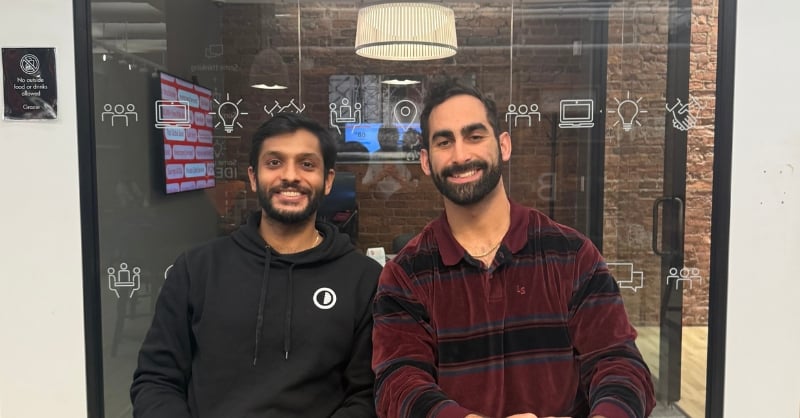
Kurtz, 30, formed Agentiq in November 2025, Sportico reported. He played Division I baseball at the University of Richmond and, according to the company, owns a sporting products company used by more than 50 professional players.
Reuben Abraham, the chief technology officer, was employee No. 10 at compensation software company Pave and previously worked at NerdWallet. He studied at the University of Pennsylvania’s Jerome Fisher Program in Management & Technology and Wharton, and the company says he represented the UAE national cricket team. The wider team includes former professional players and agents, and former data scientists from MLB front offices.
defy.vc, founded in 2016 and based in Woodside, California, closed a $300 million third fund. “Sports fans have always wanted to feel closer to the athletes and teams they love, but there hasn’t been an easy, accessible way to be part of an athlete’s journey beyond simply watching and cheering them on,” said Medha Agarwal, a general partner who joined from Redpoint Ventures in 2023.
A crowded field with a mixed record
The money in play is large. Americans legally wagered $166.94 billion on sports in 2025, and sportsbooks kept a record $16.96 billion, according to American Gaming Association figures reported by ESPN.
Prediction markets add another channel. Kalshi raised $1 billion at a $22 billion valuation in May, as Tech Funding News reported. A Roosevelt Institute analysisestimated that retail traders on the platform lost $583.5 million between its July 2021 launch and May 2026, most of it on sports. Kalshi disputes the methodology. Robinhood, meanwhile, reported 27.7 million funded customers at the end of May and launched a $200 million venture fund for retail investors in August.
Athlete income-share deals are not new, and the record is uneven. Padres shortstop Fernando Tatis Jr. and defensive lineman Gervon Dexter are both suing Big League Advantage, one of the earliest funds in the field, The American Prospect reported.
Finlete sold about $80,000 of a potential $500,000 in its first offering, Sportico reported in 2024. Its best-known major-league client, Cleveland Guardians pitcher Emmanuel Clase, was late rplaced on indefinite leave during a gambling probe. Vestible has shut down its athlete income-sharing effort and now works with college athletic departments, co-founder Parker Graham said, according to the same page.
TFN has covered adjacent sports-tech models, including esports fantasy platform FanClash’s $40 million Series B in June 2022, NIL marketplace MOGL’s $2.6 million seed round in March 2023, and fantasy tennis platform Fungiball’s €2.2 million pre-seed in October 2024. Neither gives fans a share of an athlete’s earnings.
Agentiq’s pitch is that fans want a stake, not a wager. The units it sells come with injury risk, no guaranteed payout, and no assured way to sell.