


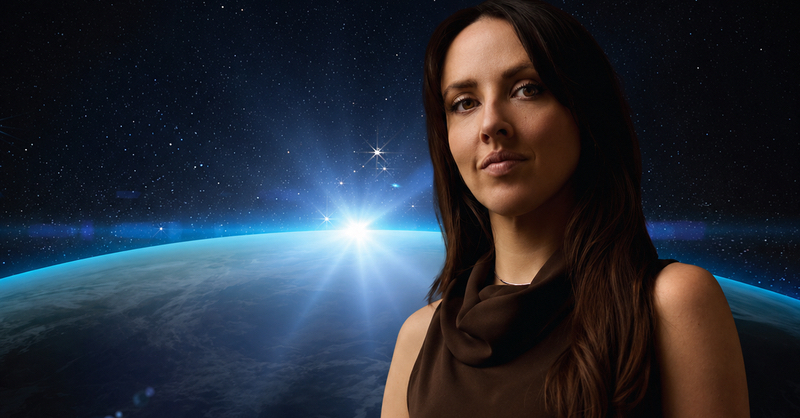
BioOrbit, a London-based in-space drug manufacturing company founded in 2023, has raised £9.8 million in a seed round co-led by LocalGlobe and Breega, with participation from Auxxo, Seedcamp, Type One, 7percent and a group of angels.
The company says it is the largest seed round ever raised for in-space manufacturing, though this has not yet been independently verified. “We are enabling the creation of more perfect crystals in orbit that unlock drug formulations simply not achievable on Earth–a paradigm shift for cancer therapies and the pharmaceutical industry at large,” says Dr. Katie King, Founder and CEO, BioOrbit.
Dr Katie King, who holds a PhD in Nanomedicine from Cambridge and interned at NASA, co-founded the company with Dr Leonor Teles, an oncology researcher. Together, they are building BOX, a compact, modular, autonomous manufacturing unit roughly the size of a microwave, designed to operate in low-Earth orbit and turn crystallisation from a one-off experiment into a repeatable industrial process.
Multiple BOX units can be deployed as production volumes scale. The UK Space Agency has already funded a £250,000 feasibility study for the system, and the company is working with the MHRA and the Regulatory Innovation Office on a first-of-its-kind pharmaceutical regulatory pathway for in-orbit manufacturing.
BioOrbit is not the only company with this idea. Varda Space Industries, the most funded US competitor, has already returned drug crystals from orbit and is working toward its first commercial pharmaceutical manufacturing mission. Space Forge, a UK rival, is focused on semiconductor and advanced materials manufacturing in space. “BioOrbit turns space into pharmaceutical infrastructure — using microgravity to create drug formulations not possible on Earth and shifting cancer treatment from hospital to home,” says Julia Hawkins, General Partner at Phoenix Court / LocalGlobe.
What sets BioOrbit apart is its focus on improving existing drugs rather than creating new ones. It turns crystallisation from a one-time lab experiment into a process that can be repeated at scale. By making medicines in space and redesigning them to be easier to use, the company aims to reduce hospital visits, cut costs, and make treatments more accessible to patients.
The antibody drug market is projected to reach $1 trillion. If BioOrbit can move even a fraction of that production off-planet and reformulate it for home administration, the commercial opportunity justifies the ambition.
Matthieu Vallin, Partner, Breega: “We couldn’t think of a better use of space than to advance cancer treatments, and Katie and Leonor are building a world-class team to make that a reality.”
Major Tim Peake, British European Astronaut: “BioOrbit is turning bold imagination into real-world progress — and their record-breaking seed round demonstrates the real market potential of space manufacturing.”
Lord David Willetts, Chair, UK Space Agency: “Manufacturing in space is one of the big new opportunities opening up as launch costs fall, and BioOrbit is an exciting British start-up well-placed to take advantage with extraordinary innovations in cancer immunotherapy.”
Space Minister Liz Lloyd: “BioOrbit is a compelling example of world-leading UK innovation — harnessing the unique environment of space to make pharmaceutical-grade materials that could transform outcomes for cancer patients.”


