


- Asynchronics has raised $3.1 million in seed funding, led by b2venture, to build a digital twin marketplace for spacecraft.
- The founders believe it’s the software and integration, rather than the hardware, that are the primary reason new space missions fail.
- The team is at 12 now and intends to grow to around 22. The target is 50 digital twins in the next 24 months.
Adam Chikha spent a year and a half in Toulouse on the virtual bench for the Jupiter Icy Moons Explorer. He started out writing C++ at an Airbus subsidiary in Poland and says that job was pretty much the same as what he does now, except back then it was all institutional missions and large companies.
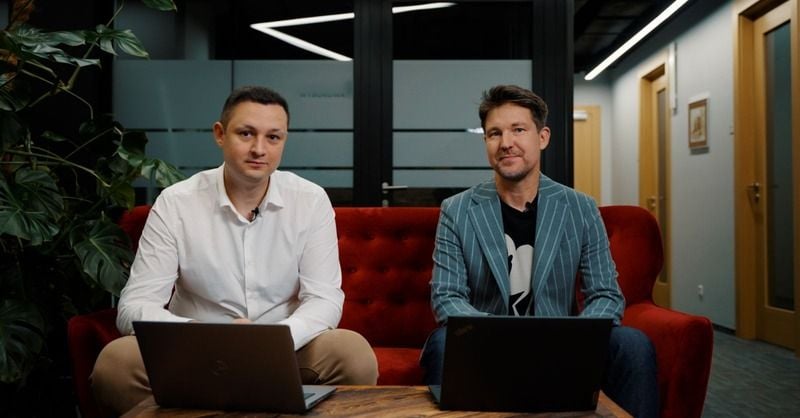
He is now co-founder and CEO of Asynchronics, a Warsaw-based startup that just closed a $3.1M seed round. b2venture led the round, with Movens Capital, Heartfelt, and Hard2beat participating.
Chikha and co-founder Serge Barral, who has a PhD in aerospace engineering, started the company in 2023. Chikha subsequently led the simulation department at Metrea, a US defence company, where he reconnected with Barral. They’d previously worked together at a services company, with Barral as Chikha’s boss at the time.
“He was a very good boss since I wanted to work with him,” Chikha told Tech Funding News.
Why the founders blame software
Chikha says circa 7% of traditional space missions fail, compared to 45% of new space missions. The published failure rates for small satellites, including the NASA data referenced by Space Daily, are closer to 40%.
“Because the hardware rarely fails, it’s mostly the software, the integration, the validation of the bench, all of flight software-related things,” Chikha says.
Asynchronics create digital twins of the specific hardware in question that can send and receive commands, report data and change their state. Engineers use these with flight software and other simulations to test spacecraft systems, including their ability to handle a failure. Often, the team has to wait for the physical hardware before they can start testing.
Barral points out that the big players in the field, such as Airbus, Thales, and Lockheed, build these tools in-house, and newcomers don’t have access to them. “They are terrible, and they are only in-house products,” he says. Each company also rebuilds simulations of the same off-the-shelf parts its rivals buy, which is the duplication a shared catalogue targets.
Rust, open core, and rivals
The models are running on NeXosim, the company’s open-source simulation engine in Rust. Barral says that safety-critical industries are moving from C++ to Rust. He claims NeXosim is the only simulation framework that automatically distributes the workload across the processor cores.
When we asked about Siemens, which provides its Xcelerator software to the startups in ESA’s incubator network, the founders were non-committal. They pointed to ESA’s own SIMULUS simulator instead. The founders say it is not truly open source and that companies with subsidiaries in Japan or the US cannot access it.
Asynchronics have built digital twins of four NewSpace Systems hardware items: a reaction wheel, a magnetometer, a GPS receiver and a sun sensor. NewSpace has run its standard reaction wheel tests on the model using the same software that would be used on the actual hardware, and the readings from the model were exactly the same as from the hardware.
“A digital twin should become as standard as the documentation that comes with a spacecraft component. We want engineers to be able to download a model of the hardware they’re buying, reuse it across missions and start testing how it works with the rest of the satellite before the physical unit arrives,” added Chikha
Infinite Orbits in Toulouse is Asynchronics’ biggest paying customer and has been for over 2 years. Asynchronics is building full virtual test benches for Infinite Orbits’ Endurance and Orbit Guard 3 missions.
What the seed buys
The bulk of the spend is on people. The team of 12 is set to grow to around 22 in 6 months, with a Toulouse office in the pipeline in 12 months and a US office in 24. The funding will be used to develop at least 50 digital twins over the 24-month period and a graphical interface for building the models and checking the results.
“In mission-critical engineering, trust in simulation results has to be earned. Asynchronics’ open-source engine gives engineers the ability to inspect and extend the software, while its team brings deep domain expertise and firsthand understanding of engineering workflows,” said Andreas Goeldi, partner at b2venture.
The founders believe growth in orbital data centres, in-orbit servicing, and European self-reliance will enable them to reach more customers. Asynchronics sees itself as the entity between integrators and component suppliers. Whether other manufacturers follow NewSpace Systems will determine whether Asynchronics becomes a marketplace or remains a modelling provider.



