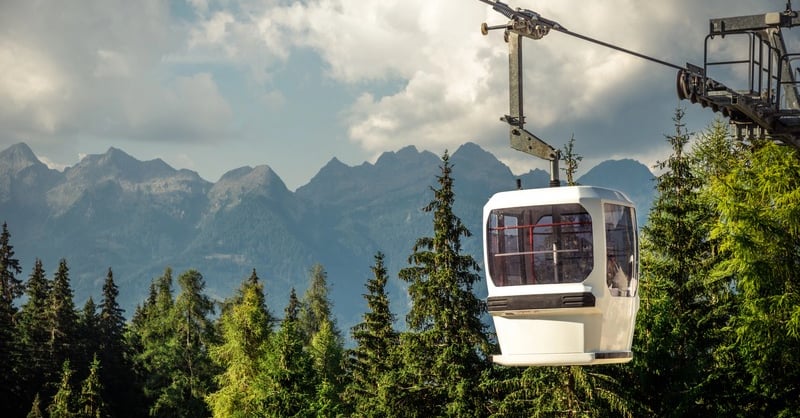
Cable cars and gondolas are no longer limited to ski resorts. They operate as sightseeing attractions, urban mobility systems and gateways to mountain, coastal and landmark destinations. That diversity makes the investment question more nuanced than asking whether the sector as a whole is “full”. The better question is where strong demand, constrained access and a differentiated visitor proposition still create investable opportunities.
Existing assets can still offer value
In mature tourism destinations, buying an operating ropeway can provide immediate access to proven demand and existing infrastructure. The investor can analyse real ridership, ticket yield, seasonality, downtime and ancillary spend rather than relying entirely on forecasts.
The opportunity may come from operations rather than expansion. Better pricing, direct booking, capacity management, premium experiences, food and beverage, retail and longer opening hours can improve economics without building a new line.
Greenfield opportunities are different
A new cable car can make sense where there is clear unmet demand, a compelling route and realistic access to land, permits and financing. Greenfield projects give developers control over technology, station design and the wider visitor experience, but they also carry construction and demand ramp-up risk.
That means the case for development depends heavily on the destination. High footfall alone is not enough. Investors need a reason why visitors will use the system, what they will pay, how often capacity can be filled and what additional revenue can be created around the ride.
What signals an attractive market?
Investors typically look for durable tourism demand, limited competing access, secure operating rights, a manageable capex profile and room to improve revenue per visitor.
They also consider whether the asset can become a broader point-of-interest platform. A ropeway that connects visitors to hospitality, events, viewpoints, retail or adjacent attractions can have a different commercial profile from a transport-only system.
So is the market saturated? Not in a simple global sense. Some destinations may have little room for another system, while others still have attractive brownfield or greenfield opportunities. The cable car and ropeway market is better understood asset by asset: location, demand, rights, technical risk and the operator’s ability to create value matter more than headline sector growth.
Where can investors still find whitespace?
One source of opportunity is under-optimised existing assets. A ropeway may already have strong demand but still rely on basic pricing, third-party distribution or a limited offer around the ride. In that situation, the investment case is less about creating a new market and more about improving conversion of existing footfall into sustainable revenue.
Another source is destinations where access itself is constrained. A ropeway can become part of the visitor infrastructure when roads, parking, terrain or environmental conditions make conventional access difficult. That does not automatically justify a project, but it can create a stronger strategic role for the system when demand and permitting are supportive.
Investors should also distinguish between markets that look crowded and assets that are genuinely substitutable. Two attractions in the same destination may serve different routes, viewpoints or visitor segments. The relevant competitive set is therefore defined by the visitor decision: what other experience can realistically replace this journey, at a similar price and with similar convenience?
What does market saturation actually mean for a ropeway?
A destination can feel mature without every ropeway opportunity being fully optimised. Saturation at sector level is less useful than understanding the economics of a specific route, catchment and visitor journey. An asset can still have room to grow if demand is established but pricing, distribution, operating hours or ancillary revenue have not been developed as effectively as they could be.
The opposite is also true. A destination with strong tourism growth is not automatically attractive if the proposed system adds little convenience, duplicates an existing route or depends on optimistic assumptions about visitor behaviour. Investors therefore need to separate destination popularity from the specific value proposition of the ropeway itself.
This is why market assessment usually works best from the bottom up: who uses the system, why they choose it, what alternatives they have, how much capacity is genuinely needed and which commercial levers remain available after the investment is made.
Why operating capability can matter as much as location
A strong location can create demand, but it does not guarantee strong economics. Ropeway businesses still need disciplined pricing, reliable operations, effective sales channels and a visitor experience that encourages additional spend. Two assets with similar footfall can therefore produce very different results depending on how well the business converts demand into revenue.
Operational quality also affects resilience. Clear maintenance planning, good availability, accurate reporting and diversified distribution make it easier to understand how the asset performs across seasons and demand cycles. They also give investors more confidence that improvements can be delivered without compromising safety or reliability.
For that reason, the most attractive opportunities are often not simply the busiest assets. They are businesses where the destination, infrastructure and operating model work together — and where there is still a credible path to improve performance after acquisition.
The investable space is selective
The strongest opportunities are unlikely to be “any ropeway in any destination”. They are assets or projects where infrastructure, visitor demand and operating capability reinforce one another.
For investors, that makes specialist diligence essential. The sector can still offer room to invest, but the returns depend on choosing the right asset and understanding exactly which risks are being underwritten.