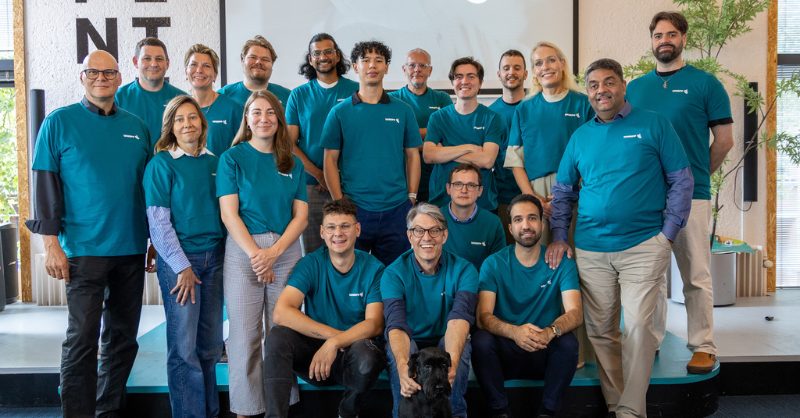
- Whispp, which first aimed to help people with stutters and ALS, has raised €5 million from LUMO Labs to work with mobile and PC device makers.
- The company says its assistive technology mission is now “waiting for the right foundation.” The new funding will go toward developing AI models, creating new products, and building partnerships with semiconductor companies.
- The global voice recognition market is expected to grow from $22.51 billion in 2026 to $61.78 billion by 2031. Whispp now plans to move beyond accessibility and enter the larger commercial market.
As a child, Joris Castermans struggled with stuttering, which led to social isolation in high school. He noticed that people who stutter often speak more smoothly when they whisper.
This realisation in 2018 inspired the creation of Whispp, which spent six years as a solution for around 300 million people worldwide with voice disabilities or severe stutters. Today, the company announced a €5 million funding round to boost AI model development, new products, and partnerships with device makers and semiconductor companies, with a focus on OEMs rather than patients.
Shifting from assistive technology to working with device manufacturers
Whispp was founded in 2019 by Castermans and chief technology officer Akash Raj Komarlu in Leiden, the Netherlands. The company’s audio-to-audio AI rebuilds a person’s natural voice in real time, all on the device. It turns whispered or impaired speech into clear speech without the lag of converting speech to text and back.
For example, someone with ALS or who has lost their voice box can make a regular phone call by whispering, and the listener hears their original voice.
The €5 million follow-on round is again led by LUMO Labs, an impact fund based in Eindhoven that also led Whispp’s €750,000 seed round in January 2024. The round also includes non-dilutive funding from the European Innovation Council Accelerator.
“With this funding round, we make a giant leap towards global implementation of our technology with mobile and PC OEMs. The current developments at Whispp exceed my boldest dreams I had for this stage of the company — stay tuned, because more good news is on the way,” says Castermans.
“We initially invested in Whispp because of its mission to help people reclaim their voice. Since then, it has become clear that the technology can address a much broader challenge: revolutionising the quality and accessibility of digital communication. As AI continues to reshape how people interact with technology, solutions that make communication more effective, seamless and inclusive are becoming increasingly important,” adds Andy Lurling, founding partner at LUMO Labs.
The commercial opportunity and other competitors
Whispp is not alone in this market. Voiceitt, a Tel Aviv-based company, has raised $28 million to develop speech recognition for atypical speech on platforms such as Zoom and Cisco Webex. ElevenLabs is reportedly seeking a $22 billion secondary valuation, showing how large the commercial voice AI market is compared to assistive technology.
While ElevenLabs focuses on synthetic voice production, Whispp stands out for running entirely on-device rather than in the cloud. Whispp recently ran a pilot with Qualcomm at Mobile World Congress Barcelona in February 2026.
The global voice recognition market will grow from $22.51 billion in 2026 to $61.78 billion by 2031, with a yearly growth rate above 20%. This commercial market is much larger than the assistive technology niche that Whispp first targeted, which may explain the company’s recent shift in funding focus.
It is still unclear whether Whispp will return to its original mission or whether that mission was primarily to attract impact investors while the company pursued larger commercial opportunities.