


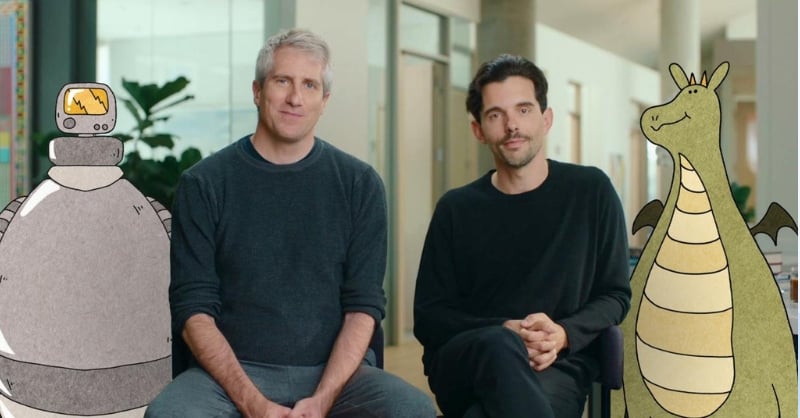
- Town has raised $108 million at a $1 billion valuation, co-led by Forerunner and Menlo.
- The startup began as an AI tax service for small businesses.
- Paying teams have grown ninefold since July, the company says.
Menlo Ventures put its entire firm on Town in June. Five months later, it is co-leading a $108 million Series B in the startup.
It values the San Francisco company at $1 billion, less than five months after it publicly launched its AI assistant. Forerunner Ventures co-led with Menlo, and existing investors Andreessen Horowitz (a16z) and First Round Capital took part.
The company’s argument is simple. AI has made each worker faster, but projects still stall while people wait for a financial model from one team, app access from another, or input from the field. Town wants each employee’s assistant to ask a colleague’s assistant instead.
“More people are trusting AI assistants with real tasks, and work is where they need the most help. Each Townie learns how its person works so it can take on their core work. Townies can ask each other questions and hand off work, so no one is stuck waiting. AI has made each of us faster on our own. Now, it can make teams faster together,” said Jean-Denis Greze, co-founder and CEO of Town.
From tax prep to a team of assistants
Greze was chief technology officer of fintech Plaid as the company grew from roughly $10 million to more than $300 million in annual recurring revenue, the yearly value of its subscriptions, according to Menlo. His co-founder, Tony Vincent, was director of applied AI product at Google and earlier started Aspen, which Google acquired, and Sold, which Dropbox acquired. The two worked together at Dropbox.
Town was founded in 2024 with a narrower product: AI-assisted tax preparation for small businesses. It raised an $18 million seed round led by First Round in March 2025, then widened the system into a general assistant. That product, the Townie, launched publicly in June alongside a $55 million Series A led by a16z.
Each employee gets a Townie that connects to email, documents, calendars and work systems, then learns that person’s projects, relationships and writing voice. Menlo counts more than 60 integrations, including Salesforce, Jira and GitHub, and says a Townie drafts messages by default instead of sending them.
What is new is that Townies now talk to each other. They can ask questions, hand off tasks and share workflows, and they can deal with customers, partners and job candidates by email and text. Town says a Townie shares only what its person would share and asks permission when needed. In the company’s example, a business operations team updates its competitor battle cards once, and every sales rep’s Townie then prepares calls with the new analysis.
According to the startup, each company owns the context its Townies build. It uses models from several AI labs, does not train any model on connected customer data by default, and says it is SOC 2 Type 2 compliant, a standard for independently audited security controls.
Growth is the part Town leans on. It says it reached at least $1 million in annual recurring revenue within weeks of launch, and that since July paying customers have grown fourfold and paying teams ninefold. The announcement gives growth rates but no customer totals.
Why Forerunner and Menlo backed Town, and who stepped back
“In 2008 Menlo backed Siri to transform the user interface to the Internet. In 2026, the technology has arrived, and the opportunity is bigger than ever. But focused companies pick their battles, and Town has wisely chosen business over pleasure. A longer way to go, with more demanding requirements, but ultimately the larger,” said Shawn Carolan, partner at Menlo Ventures.
Carolan has history here. He built Handle, an email and task assistant, in the early 2010s, Menlo wrote in its own post on the deal, and the firm lists trust as the reason it backed Town: a founder from Plaid, security certification, no training on customer data, and drafts instead of sends.
Forerunner made its case in June. “I can count on one hand the number of products that have stopped me in my tracks quite like Town,” said Kirsten Green, founding partner at Forerunner, in the Series A announcement.
The round also includes Better Tomorrow Ventures, Precedent.vc, Scribble Ventures, Serena Ventures and Sparked Ventures, plus angels Brendan Foody, Josh Silverman, Romain Huet, Scott Belsky, Steve Bartel, Taro Fukuyama and Varun Anand. With the seed and Series A, Town has raised about $181 million.
A crowded race, and a trust test
Town is not alone in betting that assistants will coordinate. Instinct, a text-based assistant aimed at consumers, raised $1 billion at a $10 billion valuation in September, about a month after it was valued at $2.5 billion. Its assistants can also coordinate with those of trusted contacts.
Closer to Town’s enterprise ground, Gumloop raised $50 million in March, led by Benchmark, to help businesses build AI agents for workflow automation across Slack, Microsoft Teams and email. Germany’s amber closed a €7 million Series A in August for autonomous enterprise agents, with a data layer it says can cut token costs, the units AI models charge for, by up to 60%. Potpie raised $2.2 million in February to give AI agents the context they need inside large codebases.
The demand is real, but so is the gap. McKinsey’s January 2025 Superagency in the Workplace report found that 92% of companies planned to raise AI investment over three years, while only 1% of leaders called their company mature, meaning AI is fully built into workflows and driving substantial business results.
For now, Town has shared growth rates rather than totals. The test at a $1 billion valuation is whether teams keep paying once their assistants start handing work to one another, and whether a Townie ever shares something its person would not have.



