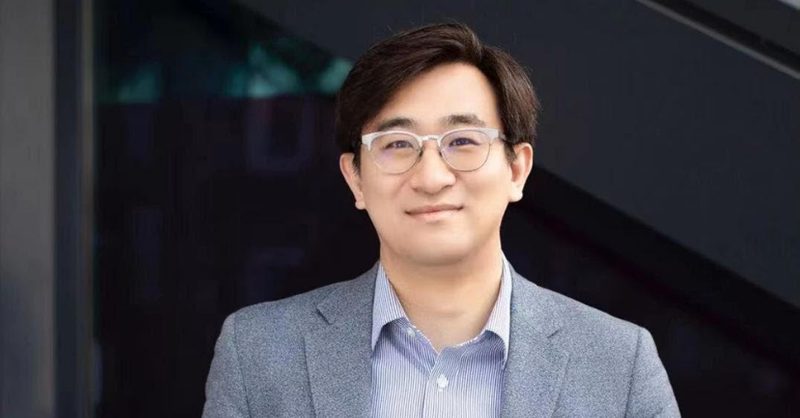
- Rick Hao, former head of Speedinvest’s deep tech team, has raised $50 million for his solo fund, Ruya Ventures.
- The fund backs deeptech founders from the very beginning, sometimes even before they officially form a company.
- Ruya attracted more interest than needed in less than a year, but Hao chose to keep the fund at $50 million on purpose.
Rick Hao used to lead Speedinvest’s deeptech investment team, where he helped more than 30 companies across AI, battery tech, quantum computing, semiconductors, energy, and robotics. That work depended on a team and shared resources.
Now, with his new $50 million fund, Ruya Ventures, Hao is working on his own. He looks to invest as early as possible, sometimes before there is a cap table, incorporation documents, or even a company name.
Hao is joining a growing number of solo general partners in European deeptech, a setup that was rare outside of software until recently.
“Deep tech is a marathon, not a sprint. Most deep tech companies stall because no one helps founders bridge the chasm between a working prototype and a product that can be manufactured at scale and adopted by the market,” Hao says.
Why a solo general partner is stepping into one of venture’s toughest sectors
Solo general partner funds are common in software, where decisions can be made quickly without extensive technical review. In deeptech, though, this setup is still unusual.
Tech Funding News has covered a few similar funds, like Carles Reina’s $15 million Baobab Ventures, Nicola Sinclair’s Twin Track Ventures, and Candice du Fretay’s Outlier Grove. All of these closed in the past year and are smaller than Ruya’s $50 million fund.
Ruya focuses on a few key areas: artificial intelligence, batteries, semiconductors, materials science, and new types of computing. The fund invests in the first financing round, and sometimes even earlier. It helps founders with things that are often missed in pitch decks, like manufacturing plans, supply chain setup, and getting prototypes out of the lab and into production.
For example, Ruya looks for opportunities, such as a materials science researcher with a working prototype but no business or manufacturing partner yet. This helps close the gap between prototype and deployment, which TFN says is a major issue in deeptech funding.
Ruya Ventures says it has already invested in five companies. These include WLF Energy, which builds energy infrastructure from generation to grid, and MegaCool, which makes cooling hardware for high-performance computing. Three more investments in AI, robotics, and semiconductors are still under wraps.
A fund with more demand than supply, kept small on purpose
Ruya closed its fundraising in under a year and, according to Hao, had much more interest than needed. He kept the fund small to match his strategy, which differs from the trend toward larger funds.
For example, Kembara recently raised €750 million for Europe’s largest deeptech growth fund, and Aldea Ventures closed €50 million for its planned €125 million second fund. Ruya plans to invest in about 20 companies worldwide, focusing on quality over quantity.
In April 2026, before it was publicly announced, Ruya Ventures was named “Newcomer of the Year” in deeptech at the EUVC Awards.
The bigger question Hao’s fund brings up
Hao’s fund launch comes at a time when European venture capital is undergoing a shift. In 2025, deeptech investment in Europe hit $20.3 billion, accounting for 32% of all European venture capital—more than double its share ten years ago—even though the overall tech market is still below its 2021 peak. This is according to the 2026 European Deeptech Report from Dealroom, Walden Catalyst, and Lakestar.
The report also says that 70% of late-stage deeptech funding in Europe comes from outside investors, and that early-stage, pre-incorporation funding is still hard to find.
The main question is whether a single general partner, no matter how experienced, can provide the technical know-how and hands-on support required in this field without the backing of a large team. Or maybe “day zero” investing works because it can move before things get complicated.