


- Osavul raised an €8.5M Series A led by 33N Ventures to sell hybrid threat AI beyond governments.
- Osavul says NATO and institutions in more than 10 countries use its platform.
- Total contract value grew fourfold in 2025, but Osavul discloses no revenue figures.
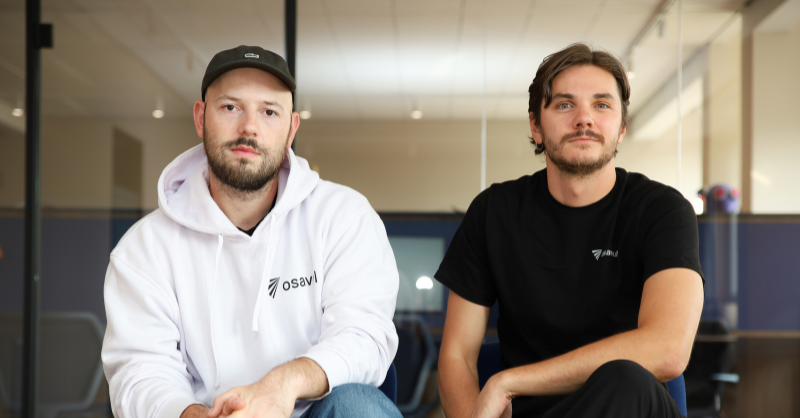
Dmytro Bilash had planned a quieter life. After a startup exit, he left the acquirer at the end of 2021 and enrolled in a master’s programme in space technologies in France. Plans changed in 2022, when he and co-founder Dmytro Plieshakov built Osavul, which has raised €8.5 million from 33N Ventures.
Osavul, headquartered in Luxembourg, announced the Series A. 33N Ventures led, with Balnord, G+D Ventures, and existing investor 42CAP. Total funding is about €12 million.
The platform reads open and privileged data to work out who is targeting a customer, then maps that intent against its people, facilities, and supply chains. The aim is to flag an attack before it lands. Assessments are evidence-traced, analyst-reviewed, and can run on-premises.
Bilash, now chief business development officer, told TFN that hybrid threats mean sabotage, espionage, information operations, and cyber-enabled activity, such as damage at an airport or arson on a railway. It is “a fairly new thing for the world at such scale and intensity, and that’s why there is a gap.”
A partner and a rival in NATO’s programme
Osavul says it is one of three technology companies delivering NATO’s Information Environment Assessment Capability. Public announcements are narrower. In February 2026, NATO’s agency selected a consortium led by Brandwatch and Blackbird.AI, with Osavul and Converseon as specialist partners.
That makes Blackbird.AI both partner and competitor. It raised $28 million in January 2026, taking its total to $58 million. Smaller rivals include London’s Refute, LetsData, and Spain’s Golden Owl. Bilash calls the category young: “I wouldn’t say that it’s a fully formed market, but there is already competition, and I think it’s going to grow.”
Carlos Alberto Silva, managing partner at 33N, said: “Adversaries operate across information, cyber and physical channels at once; most security tools are still siloed. Osavul connects all three.” His fund also led Exein’s €15 million Series B and Equixly’s €10 million Series A.
Why Europe, and what the money buys
Bilash says the investor group is deliberately European. “Hybrid threats right now are a very European problem… That’s why we see more willingness from the customers to pay for this.” Europe took only 6.2% of NATO-wide defence-tech venture funding in 2025, according to the founders of the E2D fund.
Osavul serves institutions in more than 10 countries, including the UK, Germany, Poland, and the US. It lists enterprise traction in energy, transport, and finance. The money goes into research and development and a sales push, and Bilash says Osavul intends to “grow aggressively.”
Gabriele Poteliunaite of Balnord adds that the companies running Europe’s infrastructure “are now carrying risk they were never equipped for.” Alberto Pérez Arranz of G+D Ventures says Osavul “turns fragmented signals into explainable, forward-looking intelligence.”
MarketsandMarkets projects threat intelligence will grow from $13.15 billion in 2026 to $26.68 billion by 2031, a 15.2% compound annual growth rate. The open question is proof. Osavul’s edge depends on whether airports and banks pay for early warning as defence ministries do.


