


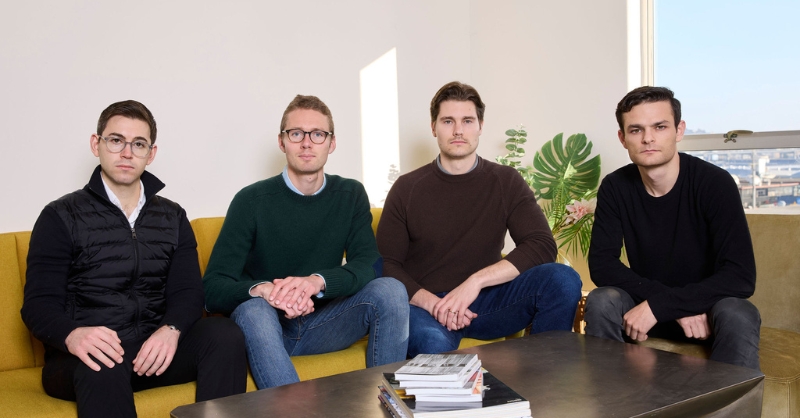
- Chai Discovery raised $400 million at a $3.8 billion valuation, tripling its worth in seven months and pushing total funding above $600 million across three rounds in eleven months.
- The round lands a day after Chai announced a collaboration with Novartis, giving it Pfizer, Eli Lilly, and Novartis as pharma partners simultaneously.
- Index Ventures led the round; new backers include Bain Capital Ventures, Battery Ventures and Baillie Gifford, alongside returning investor OpenAI.
Chai Discovery has raised $400 million in a Series C round that values the AI drug discovery company at $3.8 billion, nearly triple the $1.3 billion valuation it held seven months ago.
The round was led by Index Ventures, alongside Kleiner Perkins, Sequoia Capital and Dimension. New investors Bain Capital Ventures, Battery Ventures, Baillie Gifford, BDT & MSD, Sapphire Ventures and Avra Capital joined, while existing backers Thrive Capital, OpenAI, Oak HC/FT, Menlo Ventures, General Catalyst, Glade Brook, Avenir, Lachy Groom and Yosemite also returned.
The raise comes a day after Chai announced a collaboration agreement with Novartis, adding to existing partnerships with Pfizer and Eli Lilly.
“Tomorrow’s medicines should be designed with the precision, speed and scale of modern engineering, and this support helps us move faster towards that future. AI drug discovery has moved from promise to deployment, and Chai’s models are already unlocking progress for our partners, enabling them to design better molecules, move faster against difficult targets, and take on challenges that traditional discovery methods have struggled to solve,” says Joshua Meier, co-founder and chief executive of Chai Discovery.
A market pricing in AI-designed medicine faster than analysts can track it
The global AI drug discovery market is expected to reach $2.35 billion in 2025 and grow to $13.7 billion by 2033, at a compound annual growth rate of roughly 25%. Pharmaceutical companies are increasingly turning to foundation models to shorten development timelines and cut clinical failure rates, and venture capital is following at speed.
Chai’s valuation nearly tripling in seven months, alongside Isomorphic Labs closing a $2.1 billion Series B in May, suggests investors are ahead of the market-research firms on this one.
The company was founded in 2024 by Meier, Jack Dent, Matthew McPartlon, and Jacques Boitreaud, whose backgrounds span OpenAI, Meta FAIR, Stripe, computational biology and molecular engineering. Rather than screening existing chemical libraries, the founders believed AI could generate entirely new therapeutic molecules from first principles.
The company raised a $70 million Series A in mid-2025, led by Menlo Ventures’ Anthology Fund with Anthropic, then closed a $130 million round at a $1.3 billion valuation in December, bringing total funding above $600 million.
How the technology works
The startup, founded in 2024, works by predicting how biological molecules interact and then generating new antibodies and proteins optimised for specific disease targets before they ever reach a laboratory.
Its latest model, Chai-3, materially improves target success rates and binding affinity compared with its predecessor, producing antibodies that bind substantially more tightly to intended targets. Chai-2, released in 2025, was the first zero-shot generative platform for fully de novo antibody design to achieve double-digit experimental success rates, a step-change over prior computational methods.
Unlike many rivals focused on predicting protein structures or screening existing compounds, Chai specialises in generating entirely new molecular designs, positioning it closer to an AI-native engineering platform than a conventional drug discovery software provider.
Isomorphic Labs, Google DeepMind’s drug discovery spinout, closed $2.1 billion in May and also counts Novartis as a partner, meaning the pharma giant is now backing two competing approaches to AI-designed medicine at once. Xaira Therapeutics launched with $1 billion in funding; Recursion Pharmaceuticals has raised more than $1 billion across public and private markets; and EvolutionaryScale, another OpenAI-backed startup, recently secured $142 million to develop biological foundations and models.
What investors are seeing
“Chai combines frontier AI research with real commercial traction. The team is already deploying its technology at some of the world’s largest pharma companies, and we’re excited to support the next era of AI-driven drug discovery,” said Nina Achadjian, Partner at Index Ventures.
“Chai combines exceptional technical ambition with remarkable execution. Its models are already being used by leading pharmaceutical companies, and the team is helping redefine how drugs will be discovered,” said Ilya Fushman, Partner, Kleiner Perkins, and Pat Grady, Partner, Sequoia Capital.
“AI has long promised to transform drug discovery. Chai’s rapid product development and partnerships with companies including Eli Lilly and Pfizer show that vision is becoming reality,” said Pat Grady, Partner, Sequoia Capital, Zavain Dar, Founder, Dimension.
“This is the largest investment we’ve ever made. Our conviction in Chai has only strengthened as the team continues to advance AI-driven drug discovery with exceptional speed and scientific innovation,” added Zavain Dar, Founder, Dimension.
Drug discovery remains one of science’s highest-risk industries, where promising molecules must still survive years of laboratory validation, clinical trials and regulatory scrutiny before reaching patients. That timeline doesn’t compress just because a model can generate candidates faster.
Chai’s rise, from launching in 2024 to a $3.8 billion valuation with Pfizer, Eli Lilly and Novartis as partners, and backing from many of Silicon Valley’s leading investors, suggests the industry increasingly believes the next generation of medicines will be designed by AI rather than discovered by chance but whether that belief survives the first wave of clinical failures is the question this valuation is really pricing in.


