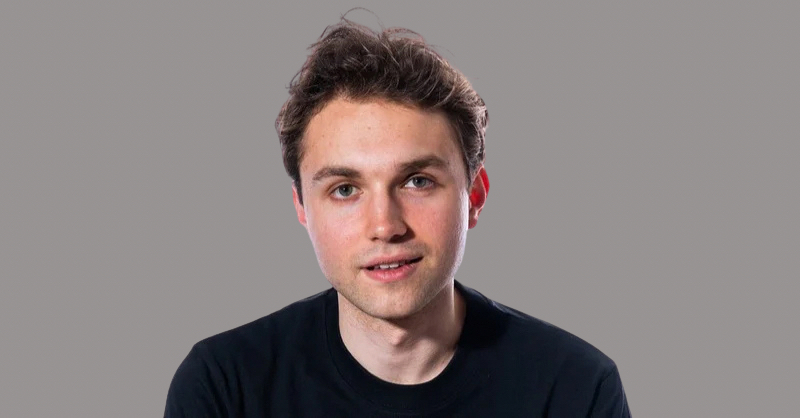
- Augustus has raised $180 million at a $1 billion unicorn valuation, led by Tiger Global, to give international fintechs and banks direct access to US dollar clearing through a federally chartered bank.
- CEO Ferdinand Dabitz, 25, a German Thiel Fellow, is on track to become the youngest CEO of a federally chartered US bank in over 140 years, pending full OCC approval expected in Q3 2026.
- The founders of Nubank, Ramp, Circle and Deel have personally backed Augustus, a signal from the operators who built the last decade of fintech that owning banking infrastructure now matters more than renting it.
Most 25-year-olds do not get conditional approval from the US Office of the Comptroller of the Currency to charter a national bank. While, Ferdinand Dabitz, the German-born Thiel Fellow co-founded a fintech startup in his early twenties, secured one of fewer than ten US national bank charter approvals granted since 2010, and has just raised $180 million at a $1 billion unicorn valuation. Pending final OCC sign-off, he is about to become the youngest CEO of a federally chartered US bank in over 140 years.
Augustus, formerly known as Ivy, has closed a $180 million Series B led by Tiger Global, with participation from Hummingbird, QED Investors, and personal checks from the founders of Nubank, Ramp, Circle and Deel. Total funding now stands at $210 million since the company was founded in 2022 by Dabitz alongside Joshua Becker, Simon Wimmer, and Peter Lieck.
From German fintech to US national bank
Dabitz co-founded the company in Germany as Ivy, an instant payments platform for merchants. In May 2026 the company received conditional OCC approval for a US national bank charter and rebranded to Augustus. What it is building is an API-first Global Dollar Bank: dollar accounts, named virtual accounts, and payments across ACH, SWIFT, SEPA, and stablecoins, run through a proprietary AI-powered core banking platform called Marble that settles around the clock rather than on bankers’ hours. The target customers are financial institutions in Latin America, Southeast Asia, the Middle East and Africa that need direct access to US dollar clearing without routing through legacy correspondent banks. Kraken, the crypto exchange, is already processing transactions through it.
Joining Dabitz as president is Greg Quarles, former CEO of Green Dot Bank, United Texas Bank, and H&R Block Bank, who spent 18 years before that at the OCC as a National Bank Examiner and Assistant Deputy Comptroller. A 25-year-old Thiel Fellow as CEO and a three-decade banking veteran as president is a deliberate pairing: the OCC does not grant charters to technology enthusiasm alone.
Why fintech’s last generation is personally buying into a bank
The investor list is the most revealing thing about this round. David Velez built Nubank into the world’s largest digital bank by working around correspondent banking. Karim Atiyeh co-founded Ramp on top of existing financial rails. Sean Neville built Circle on top of regulated banking partners. Alex Bouaziz built Deel on the same intermediary infrastructure Augustus is trying to displace. These are personal bets from the people who know best where the friction sits. “Correspondent banking is the last remaining part of the bank stack that hasn’t been challenged yet by fintechs,” said Nigel Morris, co-founder of Capital One and managing partner at QED Investors. “Augustus solves this by combining cutting-edge technology with a real bank charter.”
What the unicorn valuation is pricing
The OCC approval Augustus holds is conditional, not final. It cannot operate as a chartered bank until full approval lands. The $1 billion unicorn valuation is a bet that it will, and that when it does, the model works. Column, the infrastructure bank Plaid co-founder William Hockey built after buying a small California community bank in 2021, took years to reach scale even starting from an existing charter. Augustus is building from scratch.
Whether the history Dabitz is about to make is the kind that lasts depends on whether the bank gets built, whether the customers come, and whether the infrastructure he says is broken turns out to be as replaceable as he believes. The $180 million unicorn round and the personal checks from fintech’s most successful founders say they think it is.