- Sava has raised $36 million in Series B funding, bringing its total funding to $68 million, with Ascensia taking the lead.
- Ascensia plans to distribute the sensor in Europe after obtaining CE approval.
- Sava hopes to secure approval for insulin dosing without the need for fingerstick checks within the next 18 to 24 months.
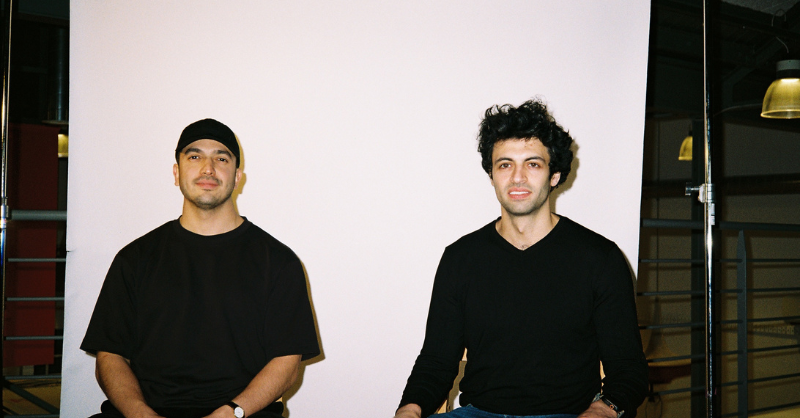
Renato Circi and Rafaël Michali, both trained as bioengineers at Imperial College London in a group that helped develop the modern glucose test strip, set up Sava seven years ago.
The company has now secured Ascensia, the firm responsible for the CONTOUR blood glucose meters, as its leading investor in the $36 million Series B raising to support a sensor aimed at eliminating the need for fingerstick tests.
London-based Sava Technologies announced the Series B and, at the same time, entered into a new partnership with Ascensia Diabetes Care, a subsidiary of PHC Holdings, to handle the commercialisation and distribution of its products in Europe.
This funding round has brought Sava’s total raised to $68 million.
The founders’ goal: ending fingerstick testing
Circi and Michali founded Sava in 2019 and operated quietly for five years before announcing an $8 million seed financing in June 2024 and a $19 million Series A round in July 2025.
When this happened, Sava published early findings from a study involving 50 people: the first 25 patients received accurate glucose readings for up to 10 days, whereas most other microsensors cease to function after five days. The company says its team has expanded to more than 60 members, including former employees from Abbott and Dexcom.
The device is placed on the skin and detects the molecules in the fluid below it. Sava states that its microsensors are about ten times shorter than those in conventional continuous glucose monitors (CGMs), causing less disruption to the skin.
The technology is designed for large-scale manufacturing and can also monitor other substances such as ketones, lactate, cortisol, sodium, and alcohol, as stated on Sava’s website.
The company plans to run a major clinical trial this year and aims to obtain CE approval for non-adjunctive use. This would allow patients to decide on their insulin dosing without having to carry out regular fingerstick tests.
Sava hopes to secure the approval and begin selling the product within 18 to 24 months. At present, however, the sensor is still in an experimental phase and has not yet received approval from either the UK’s Medicines and Healthcare products Regulatory Agency or the US Food and Drug Administration.
Why a fingerstick company is leading this investment
“For decades, continuous monitoring has been held back by the same legacy technology. This is about to change. We’re thrilled to be partnering with Ascensia, a global powerhouse in the space, to deliver, as a first step, something radically better to millions of people with diabetes,” said Circi.
Balderton Capital led Sava’s seed round, the firm that previously supported Revolut and Depop, with Exor Ventures, and co-led the Series A with Pentland Ventures. In the Series B, Balderton took part with Pentland, Norrsken VC, Simplyhealth Ventures, JamJar Investments, and some other unnamed investors, including a strategic investor who also led the round.
Can a third company enter a market dominated by two companies?
Sava believes that 12 million people currently use continuous glucose monitors, although 589 million adults have diabetes, and the International Diabetes Federation forecasts this figure will rise to 853 million by 2050. Fortune Business Insights values the global continuous glucose monitor market at $13.86 billion in 2025 and expects it to grow to $33.61 billion by 2034, an annual growth rate of 10.1%.
Other companies are taking different approaches. In April 2025, Biolinq raised $100 million for an intradermal glucose sensor. Liom is working on a needle-free glucose wearable. ViCentra, which makes insulin patch pumps in the Netherlands, obtained $85 million in September 2025. Interest also surrounds health wearables: Oura raised $875 million at an $11 billion valuation, and Clair Health raised an $11.6 million seed round to enable continuous hormone tracking.
The funds raised in the Series B round will enable Sava to expand its manufacturing capabilities and prepare for the commercial launch before the pivotal study begins.