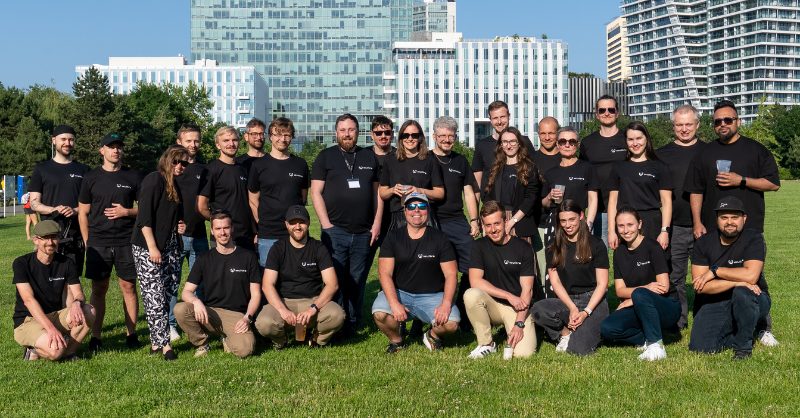
- Wultra, a Czech startup, has raised €6.8 million in a Series A round led by Seventure Partners. The funding will help expand its post-quantum banking authentication platform into the Middle East and the United States.
- Angel investors Marc Norlain and Guillaume Despagne, who co-founded ARIADNEXT (acquired by IDnow in 2021), decided to back Wultra after first using its product themselves.
- This funding arrives as Gartner warns that by 2029, quantum computing could break the standard cryptography used in most bank login systems. Nearly half of the organisations in Europe and North America are still unprepared.
Marc Norlain and Guillaume Despagne have a strong background in digital identity, having grown ARIADNEXT from a startup in Rennes to a French market leader before selling it to IDnow in 2021.
When looking for their next investment, they chose Wultra, a Prague-based post-quantum authentication startup they had already used as customers. Their choice to invest after firsthand experience is a strong endorsement.
Today, this startup raised €6.8 million in a Series A round led by Seventure Partners, which also previously backed IDnow, the company that acquired ARIADNEXT. Norlain and Despagne joined as angel co-investors, along with returning investors J&T Ventures, now making their third investment in Wultra, and Elevator Ventures, the venture arm of Raiffeisen Bank International.
“As identity experts, we believe that quantum-resistant authentication solutions will play a key role in the emerging European wallet ecosystem. We have known Wultra for years as their customers, and we are convinced they will be a leader in this field,” Norlain and Despagne say jointly.
Petr Dvorak founded Wultra in December 2014 and has spent his career focused on mobile banking security. Before that, he was a partner at Inmite, a mobile app development studio acquired by Avast in 2014, where he later led Avast’s mobile innovation incubator.
“Last year was a dynamic period for Wultra. We expanded our product portfolio beyond authentication to cover the broader digital identity journey, from onboarding and identity proofing to user authentication, transaction authorisation, and electronic signatures. We grew our team by nearly 50%, established a presence in Singapore, and now support more than 70 clients across 25 countries,” he notes.
What Norlain and Despagne recognised
Wultra offers post-quantum authentication software for banks and fintechs, replacing older login methods like passwords, one-time SMS codes, and traditional public-key cryptography. Their system is designed to resist both current phishing attacks and future quantum threats.
The platform covers the full digital identity process, from onboarding and identity verification to payment authorisation and electronic signatures. It can be integrated into existing banking systems in about eight weeks, without needing a full overhaul.
Wultra stands out because its product is easy to integrate, unlike some competitors that are hard to implement. For most banks, the biggest challenge is not finding a quantum-safe solution, but adding it without disrupting customers or launching a long IT project. Wultra’s clients include Raiffeisen Bank International, Erste Digital, OTP Bank, and Global Payments. Norlain and Despagne were also clients.
Gartner gave independent validation by naming Wultra a Sample Vendor for post-quantum authentication in its 2025 Hype Cycle for Digital Identity, a category Wultra says it helped create.
There are still a few competitors in this space. PQShield, a UK company with over $63 million in funding, works on embedding post-quantum cryptography into chips and firmware, not bank-facing applications. HYPR offers passwordless authentication but does not focus on post-quantum architecture. Post-Quantum specialises in VPN and communications, not financial services or identity.
No competitor currently meets the specific needs of Wultra’s target customers.
How the broader investor group supports this perspective
Seventure Partners is a European venture capital firm with strong fintech experience and previously backed IDnow before it acquired ARIADNEXT. By leading this Series A round in post-quantum authentication, Seventure shows that this area has become a mainstream priority in fintech infrastructure, not just a niche security concern.
“Wultra sits precisely at that intersection: a team that has built a proven post-quantum-ready authentication solution already trusted by financial institutions across multiple markets. As the industry accelerates its transition to quantum-resilient infrastructure, we believe Wultra is uniquely positioned to define the next standard in digital identity for financial services,” says Julien Cazor, venture partner at Seventure Partners.
J&T Ventures, which first backed Wultra in 2022 and returned for its €3 million Seed+ round in January 2025, is now writing its third cheque.
“We backed Wultra as the first investor in 2022, and since then, we have seen consistent growth and the team’s ability to transform security products to post-quantum resistant technology,” adds Zuzana Ondrejová, partner at J&T Ventures.
Elevator Ventures, on its second Wultra round, was direct about what is driving the urgency.
“We see the accelerating need of the global banking industry to deploy post-quantum security solutions already today. Over the last year, Wultra has proven that they are ready to grow internationally,” notes Maximilian Schausberger, managing director at Elevator Ventures.
Market pressures banks must address
Regulatory timelines strongly support Wultra’s position. NIST published its first official post-quantum cryptography standards in 2024. The European Commission released a coordinated quantum-safe roadmap in June 2025, endorsed by 18 EU states, setting 2030 as the compliance deadline for critical infrastructure.
Gartner warns that by 2029, advances in quantum computing will compromise the standard asymmetric cryptography used in most bank login systems. With only three years left, most bank technology upgrade cycles exceed this timeframe.
Market data shows how big these changes will be. The global post-quantum cryptography market will grow from $420 million in 2025 to $2.84 billion by 2030, a 46.2% annual growth rate, with banking and financial services as the largest sector.
Wultra will use the new funding to grow its digital identity platform, develop European Digital Identity Wallet features, expand into the Middle East and the United States, and hire more staff to support bigger clients. Singapore, where Wultra opened an office in 2025, now acts as its ASEAN hub.
It remains uncertain whether a Series A-stage company from Prague can capture a large market share before larger security firms such as Thales, IBM, and Palo Alto Networks launch their own post-quantum banking authentication solutions. Still, the fact that the founders of France’s leading identity technology company invested after using the product themselves is a strong endorsement of Wultra’s product.